


The history of the Russian noble estate began in the second half of the 18th century. During Peter the Great’s rule, country estates were usually empty since their owners were on duty in the city or abroad. Then term of compulsory service was reduced, and families began to live in estates all year round.
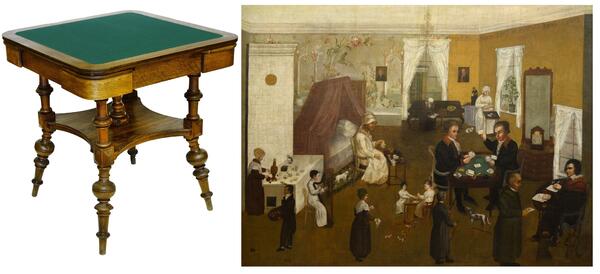
One of the halls of the Oryol Museum of Local History is dedicated to the rise of noble estates. Its central exhibit became a painting by an unknown artist “The Noble Life.” It entered the governorate museum in 1919. For more than 30 years — from the 1950s to the 1980s — the canvas was under restoration in the academician Igor Grabar workshops in Moscow.
In the work process, the restorers discovered that two paint layers were connected in the painting. The first one was laid on at the end of the 18th century, and the other — at the beginning of the 19th century. Various painters worked on them. Experts assume that they were not professionals.
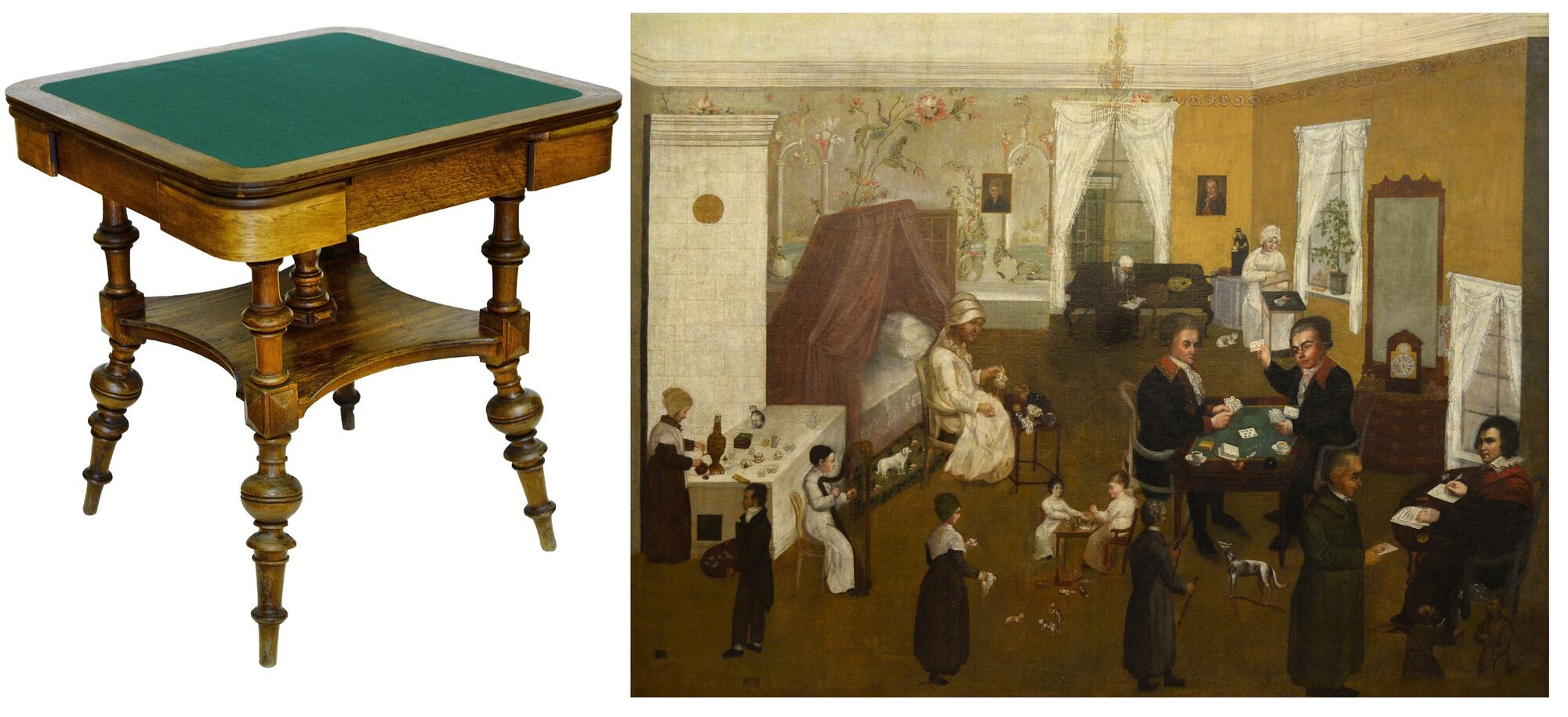
An unknown painter depicted a noble family engaged in ordinary everyday activities. The composition of the picture is pretty unusual. On one canvas, the painter placed the study of the owner of the estate, the living room, the bedroom, the children’s room, and the coffee bar. The persons in the picture were not only family members, but also servants, and even peasants. Their costumes and hairstyles make it possible to date the first paint layer from 1780 to 1790.
According to experts, in the first quarter of the 19th century, a new generation of estate owners decided to restore the painting. Another self-taught painter partially repainted it adding new figures and details.
In the lower right corner of the canvas, there is the study of the owner of the estate. A young landowner is sitting at an oval table in a housecoat, writing something with a goose-quill. The land agent stands in front of him and holds a letter with a wax seal in his hands. There are also depicted kneeling peasants who came to the owner. One of them is holding a scroll, apparently with a petition.
Closer to the center, there is a living room in which three genre scenes unfold: young people are playing cards, a young landowner is sitting at the window with an embroidery frame, and the old owner of the estate is sitting on the sofa. There is a bed with a canopy, a dog on a rug, and an elderly woman in the bedroom. In the children’s room, there is the owner’s eldest daughter playing the harp.
One of the halls of the Oryol Museum of Local History is dedicated to the rise of noble estates. Its central exhibit became a painting by an unknown artist “The Noble Life.” It entered the governorate museum in 1919. For more than 30 years — from the 1950s to the 1980s — the canvas was under restoration in the academician Igor Grabar workshops in Moscow.
In the work process, the restorers discovered that two paint layers were connected in the painting. The first one was laid on at the end of the 18th century, and the other — at the beginning of the 19th century. Various painters worked on them. Experts assume that they were not professionals.
An unknown painter depicted a noble family engaged in ordinary everyday activities. The composition of the picture is pretty unusual. On one canvas, the painter placed the study of the owner of the estate, the living room, the bedroom, the children’s room, and the coffee bar. The persons in the picture were not only family members, but also servants, and even peasants. Their costumes and hairstyles make it possible to date the first paint layer from 1780 to 1790.
According to experts, in the first quarter of the 19th century, a new generation of estate owners decided to restore the painting. Another self-taught painter partially repainted it adding new figures and details.
In the lower right corner of the canvas, there is the study of the owner of the estate. A young landowner is sitting at an oval table in a housecoat, writing something with a goose-quill. The land agent stands in front of him and holds a letter with a wax seal in his hands. There are also depicted kneeling peasants who came to the owner. One of them is holding a scroll, apparently with a petition.
Closer to the center, there is a living room in which three genre scenes unfold: young people are playing cards, a young landowner is sitting at the window with an embroidery frame, and the old owner of the estate is sitting on the sofa. There is a bed with a canopy, a dog on a rug, and an elderly woman in the bedroom. In the children’s room, there is the owner’s eldest daughter playing the harp.