Tanais is an archaeological site located near the present-day village of Nedvigovka, in the Myasnikovsky District of the Rostov Region. In the 3rd century BCE, this city began playing an important role in facilitating trade between the Greeks and local populations. In addition, it served as a major center for craft production and agriculture. Tanais was a vital economic, cultural, and political hub that facilitated communication between the cities of the Bosporan Kingdom and the northern Black Sea region with the tribes inhabiting the steppes surrounding the city.
The city enjoyed the greatest prosperity in the period from the 1st century to the first half of the 3rd century CE. Local masters created luxury goods and household items that then would spread throughout Asian and European Sarmatia.
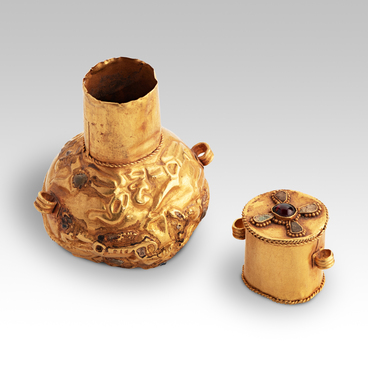
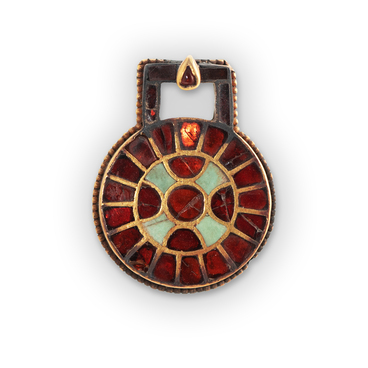
Near Tanais, archaeologists found several graves of the late Roman period where representatives of the upper social class were buried. In one of them, the grave goods included a bronze jug and personal toiletries made of silver (vial, spoon, mirror, ear scoop, and needlecase), as well as gold jewelry (torc, pendant, and necklace composed of various beads).
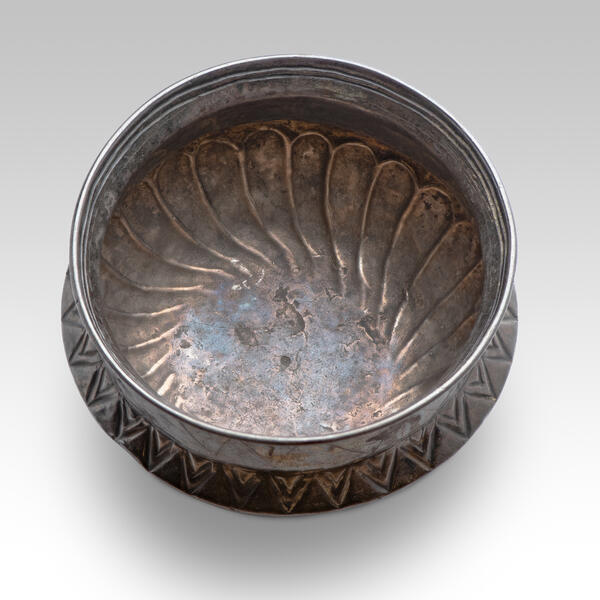
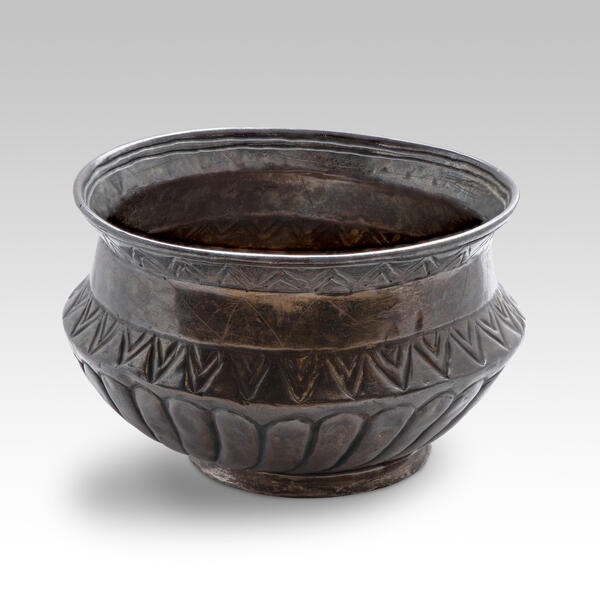
Researchers also discovered a silver kantharos among the artifacts.
This ancient Greek drinking vessel was typically shaped like a deep cup with two vertical handles.
Greek gods were said to drink from kantharoi. For instance, Dionysus — the god of vegetation, winemaking, productive forces of nature, inspiration and theater — was often depicted with these cups. Kantharoi were often used for sacrifices and as objects of worship. Hence, the kantharos had a religious significance and, initially, was likely used exclusively for ritual purposes.
The kantharos from Tanais has a biconical body with a protruding rib in the middle, sloping shoulders, a short cylindrical neck, and a short lip. On the inside, the lip is decorated with parallel mortise grooves and a hammered pattern of angles, inscribed within each other. Below the rib, there is a vertical ornament in the form of acutely pointed arches. The bottom of the vessel is convex and mounted on a circular rim that is soldered to the body.