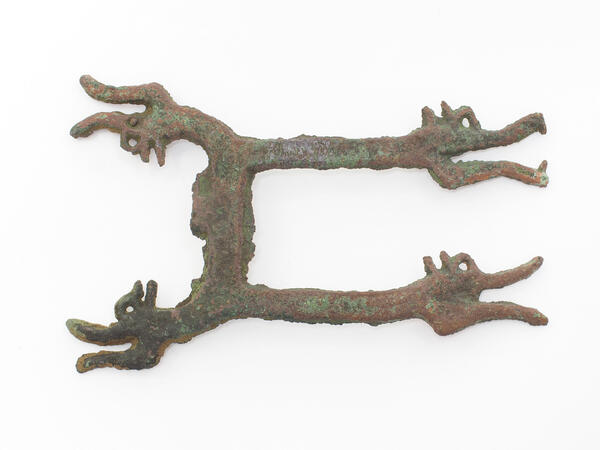
The museum collection contains a bronze figurine that resembles the letter ‘H’. The exhibit ends are decorated with the heads of chthonic creatures. They are all different: the upper ones look at each other, and the lower ones look in the same direction. One of the lower heads has teeth, and the other one does not. However, they all have a pair of horns or ears, next to which are oval holes.
In many religions and myths, chthonic beings symbolized the wild natural power of the earth or the underworld. They were often portrayed as bestial: with limbs curved forward, spiked or maned withers, and a raised head. Such creatures were considered strange and dangerous, therefore they were depicted with an open mouth — roaring or brutally grinning.
The researchers attributed the find to the Kulay culture. In Siberian mythology, chthonic creatures were associated with the idea of rebirth. They were considered aggressive creatures, werewolves, endowed with supernatural powers. Some animals — the elk, frog, pike, bear, and others — were believed to be able to turn into these creatures. The Kulays also believed that an old man could turn into a chthonic being. The monsters had no childhood, they could not have offspring, but they were not considered immortal.
The Kulays are taiga tribes that appeared in the north of the Tomsk region in the 5th century BC. They were known as good warriors. During the years of climatic changes, the Kulays settled south of the forest borders. They often fought: among themselves and with other peoples.
‘The war of all against all’ was a frequent phenomenon in ancient times. Therefore, the tribes established settlements on high places — settlements, which were fortified with defensive structures: ditches and ramparts. In the settlements, the Kulays not only lived and hid from enemies but also created bronze casting centers, where they made various products.
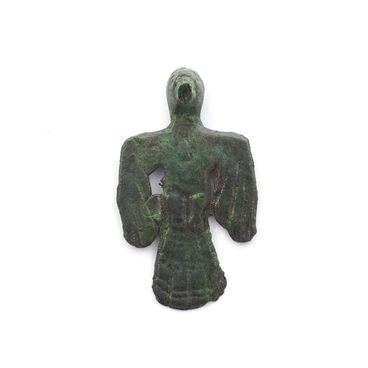
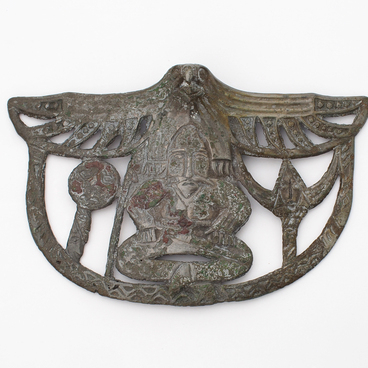
The Kulay culture is best known for its rare openwork cult casting. Local craftsmen cast figurines of people, birds, animals, and chthonic creatures, as well as various compositions with them. Most often in the Kulay culture, there were cast figures of elks and birds.
In many religions and myths, chthonic beings symbolized the wild natural power of the earth or the underworld. They were often portrayed as bestial: with limbs curved forward, spiked or maned withers, and a raised head. Such creatures were considered strange and dangerous, therefore they were depicted with an open mouth — roaring or brutally grinning.
The researchers attributed the find to the Kulay culture. In Siberian mythology, chthonic creatures were associated with the idea of rebirth. They were considered aggressive creatures, werewolves, endowed with supernatural powers. Some animals — the elk, frog, pike, bear, and others — were believed to be able to turn into these creatures. The Kulays also believed that an old man could turn into a chthonic being. The monsters had no childhood, they could not have offspring, but they were not considered immortal.
The Kulays are taiga tribes that appeared in the north of the Tomsk region in the 5th century BC. They were known as good warriors. During the years of climatic changes, the Kulays settled south of the forest borders. They often fought: among themselves and with other peoples.
‘The war of all against all’ was a frequent phenomenon in ancient times. Therefore, the tribes established settlements on high places — settlements, which were fortified with defensive structures: ditches and ramparts. In the settlements, the Kulays not only lived and hid from enemies but also created bronze casting centers, where they made various products.
The Kulay culture is best known for its rare openwork cult casting. Local craftsmen cast figurines of people, birds, animals, and chthonic creatures, as well as various compositions with them. Most often in the Kulay culture, there were cast figures of elks and birds.