

Saint Philip — his name before he became a monk was Fyodor — came from a noble boyar family of the Kolychevs, who had a place in the Boyar Duma and influence at court. He was born in Moscow in 1507.
His father prepared the young man for public service, and his mother set an example of sincere faith and deep piety. However, Philip, who was close to the Grand Duke of Moscow, Vasily III, the father of Ivan the Terrible, did not stay at the court for long. Realizing the vanity and sinfulness of life in Moscow, he secretly, without saying goodbye to his relatives, put on a commoner’s outfit and ran away.
For some time he was a shepherd in the area near the Onega River, then he became a monk at the Solovetsky Monastery, and in 1548 he became a hegumen. As a result of Philip’s energetic activity, the monastery became the largest economic and cultural center of Northern Russian lands (Pomorye).
In 1566, Tsar Ivan the Terrible announced that he wanted to see Philip as metropolitan. Philip refused to accept the dignity until the oprichnina was abolished — one of the tsar’s reforms, which included harsh punitive and repressive measures. In the end, the Solovki hegumen submitted to the tsar’s will and became elected a metropolitan by a council of bishops.
At the time of Ivan the Terrible’s repentance in the Kirillo-Belozersky Monastery, the lawlessness of the oprichnina ceased. Soon the tsar, who suspected the boyars of treason, became angry again, and executions and terror restarted.
In an effort to stop the senseless bloodshed, Philip first counseled the tsar in personal conversations, trying to set him back on the right path. Not succeeding in this, Philip publicly condemned and accused the tsar in his speeches, in the church, and refused to bless Ivan and his guardsmen.
Then the tsar set up a commission of inquiry, and, on false testimony, convened a council for the trial of the metropolitan. After reading the verdict and depriving the metropolitan of his rank, Philip was sent to the Bogoyavlensky Monastery, where he was kept in the basement and tortured. On December 23, 1569, during the campaign of Ivan the Terrible to Novgorod, Philip died as a martyr tortured by Malyuta Skuratov.
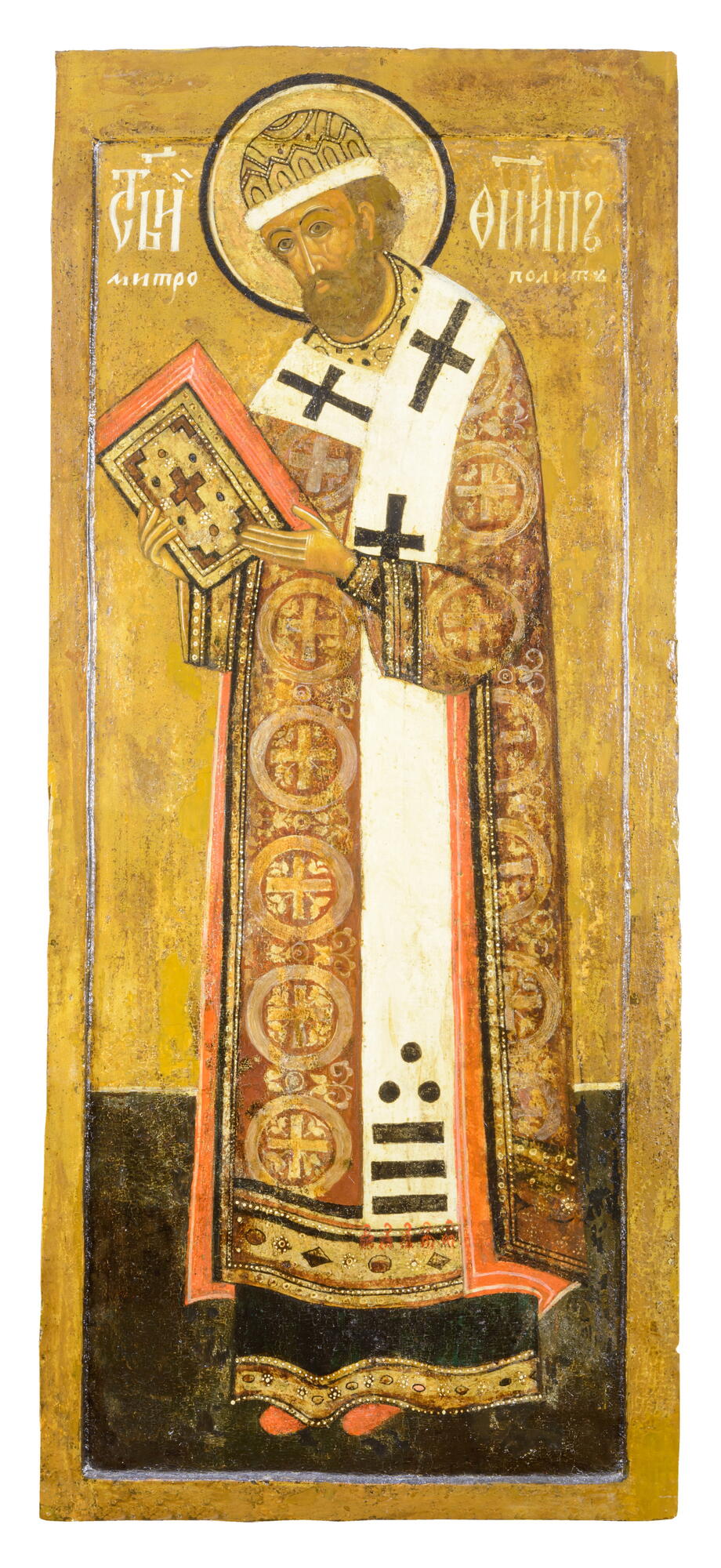
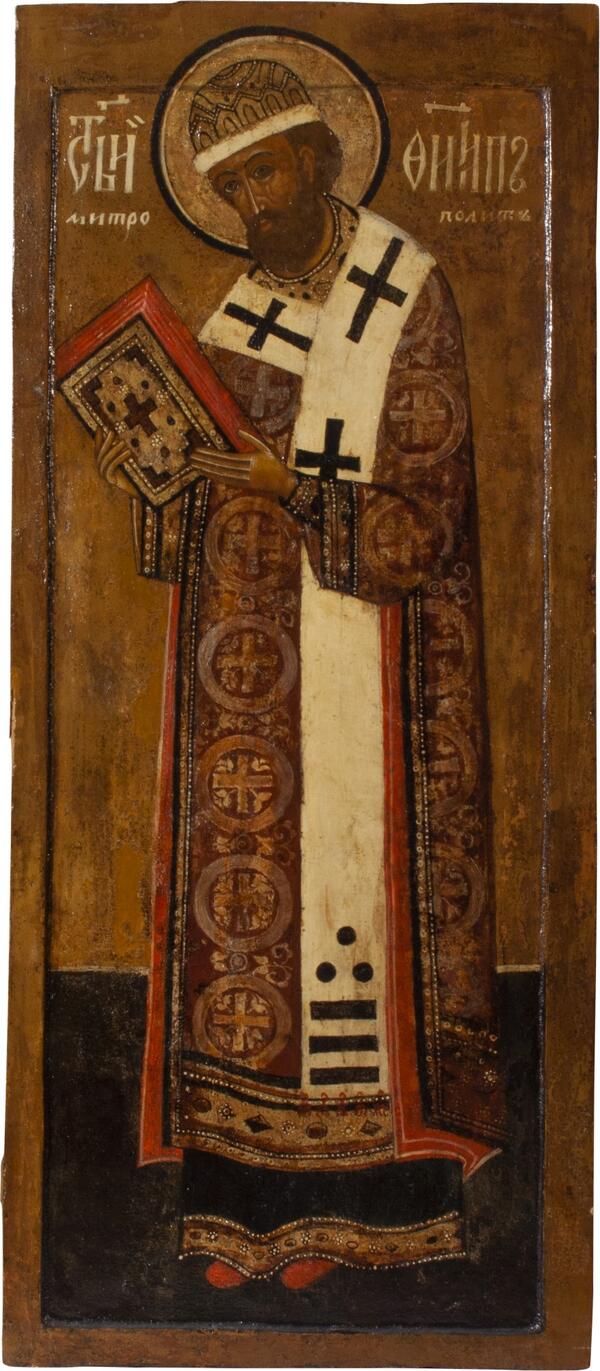
The icon, which depicts St. Philip, comes from an abandoned church in the village of Tuchkovo, located not far from Murom. It was found during the expedition of the Tretyakov Gallery in 1965.
His father prepared the young man for public service, and his mother set an example of sincere faith and deep piety. However, Philip, who was close to the Grand Duke of Moscow, Vasily III, the father of Ivan the Terrible, did not stay at the court for long. Realizing the vanity and sinfulness of life in Moscow, he secretly, without saying goodbye to his relatives, put on a commoner’s outfit and ran away.
For some time he was a shepherd in the area near the Onega River, then he became a monk at the Solovetsky Monastery, and in 1548 he became a hegumen. As a result of Philip’s energetic activity, the monastery became the largest economic and cultural center of Northern Russian lands (Pomorye).
In 1566, Tsar Ivan the Terrible announced that he wanted to see Philip as metropolitan. Philip refused to accept the dignity until the oprichnina was abolished — one of the tsar’s reforms, which included harsh punitive and repressive measures. In the end, the Solovki hegumen submitted to the tsar’s will and became elected a metropolitan by a council of bishops.
At the time of Ivan the Terrible’s repentance in the Kirillo-Belozersky Monastery, the lawlessness of the oprichnina ceased. Soon the tsar, who suspected the boyars of treason, became angry again, and executions and terror restarted.
In an effort to stop the senseless bloodshed, Philip first counseled the tsar in personal conversations, trying to set him back on the right path. Not succeeding in this, Philip publicly condemned and accused the tsar in his speeches, in the church, and refused to bless Ivan and his guardsmen.
Then the tsar set up a commission of inquiry, and, on false testimony, convened a council for the trial of the metropolitan. After reading the verdict and depriving the metropolitan of his rank, Philip was sent to the Bogoyavlensky Monastery, where he was kept in the basement and tortured. On December 23, 1569, during the campaign of Ivan the Terrible to Novgorod, Philip died as a martyr tortured by Malyuta Skuratov.
The icon, which depicts St. Philip, comes from an abandoned church in the village of Tuchkovo, located not far from Murom. It was found during the expedition of the Tretyakov Gallery in 1965.