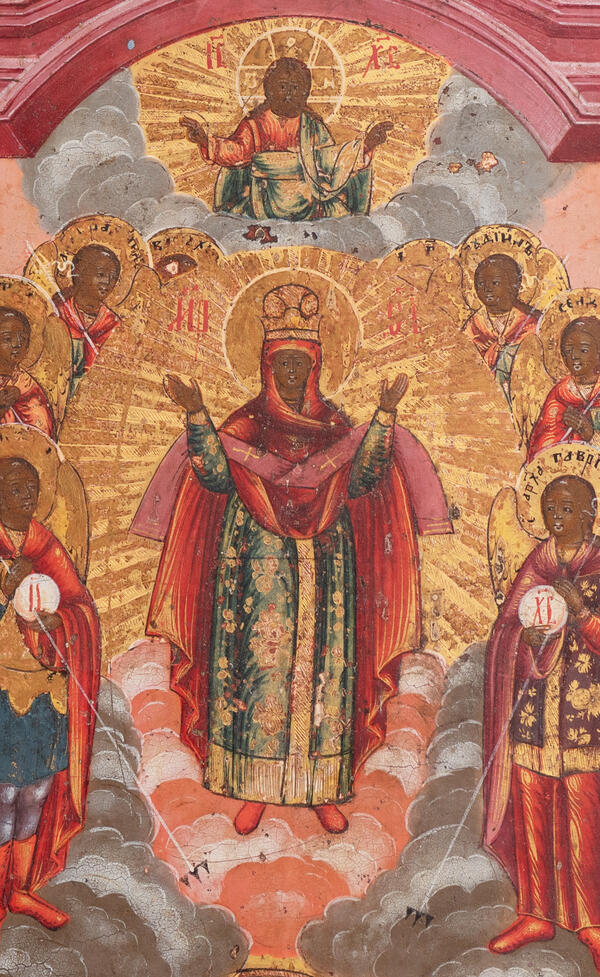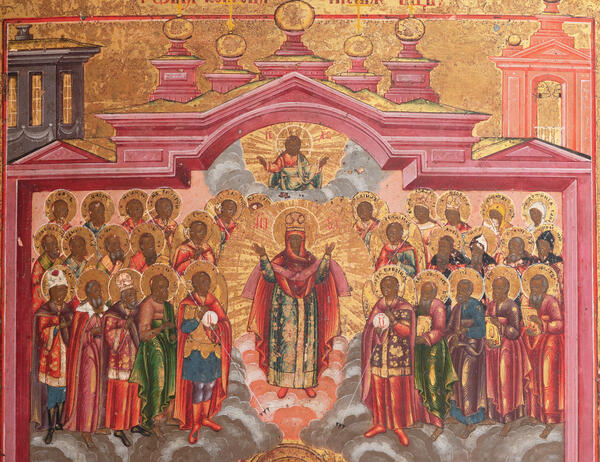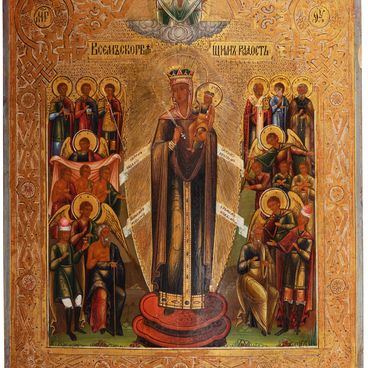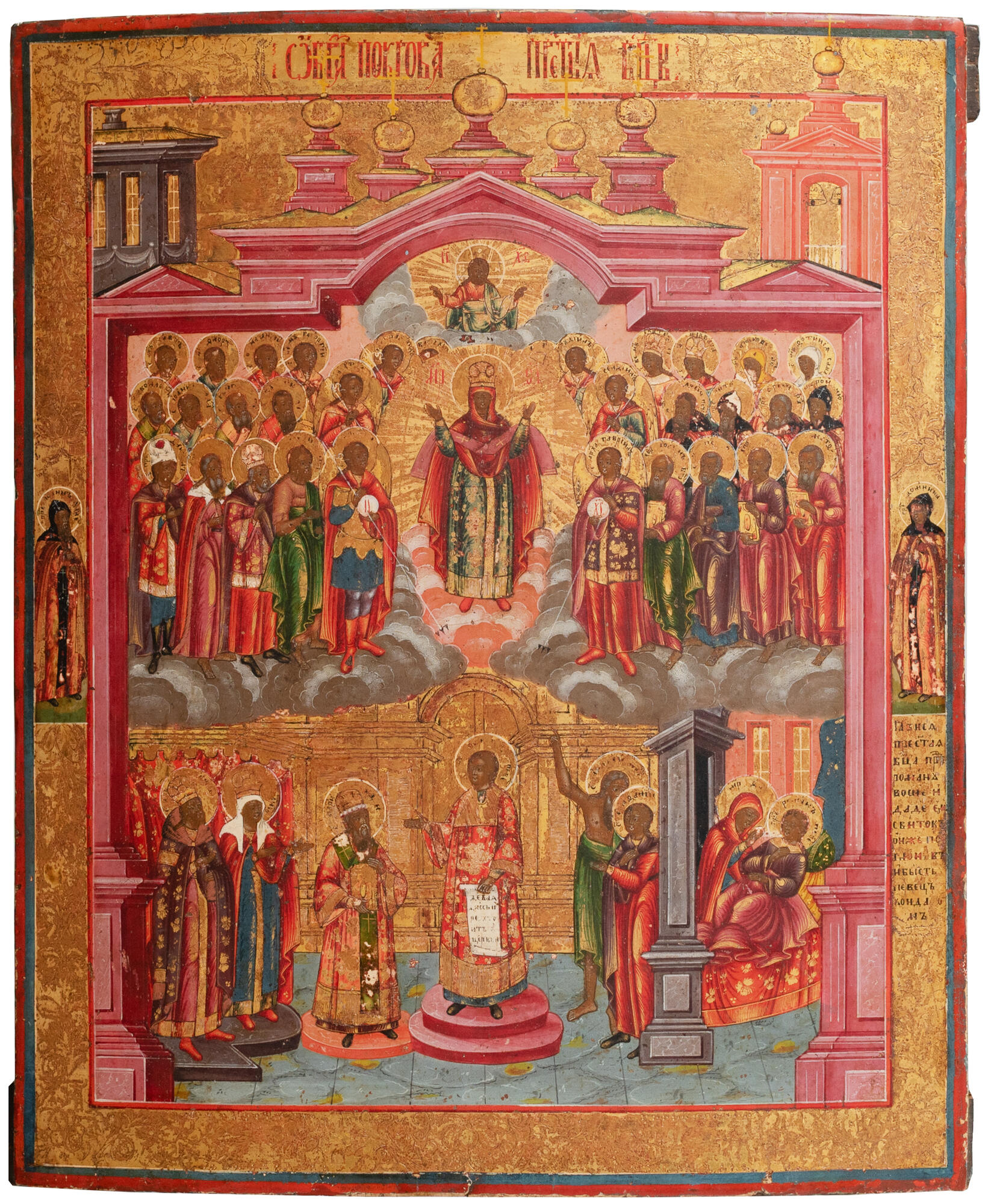
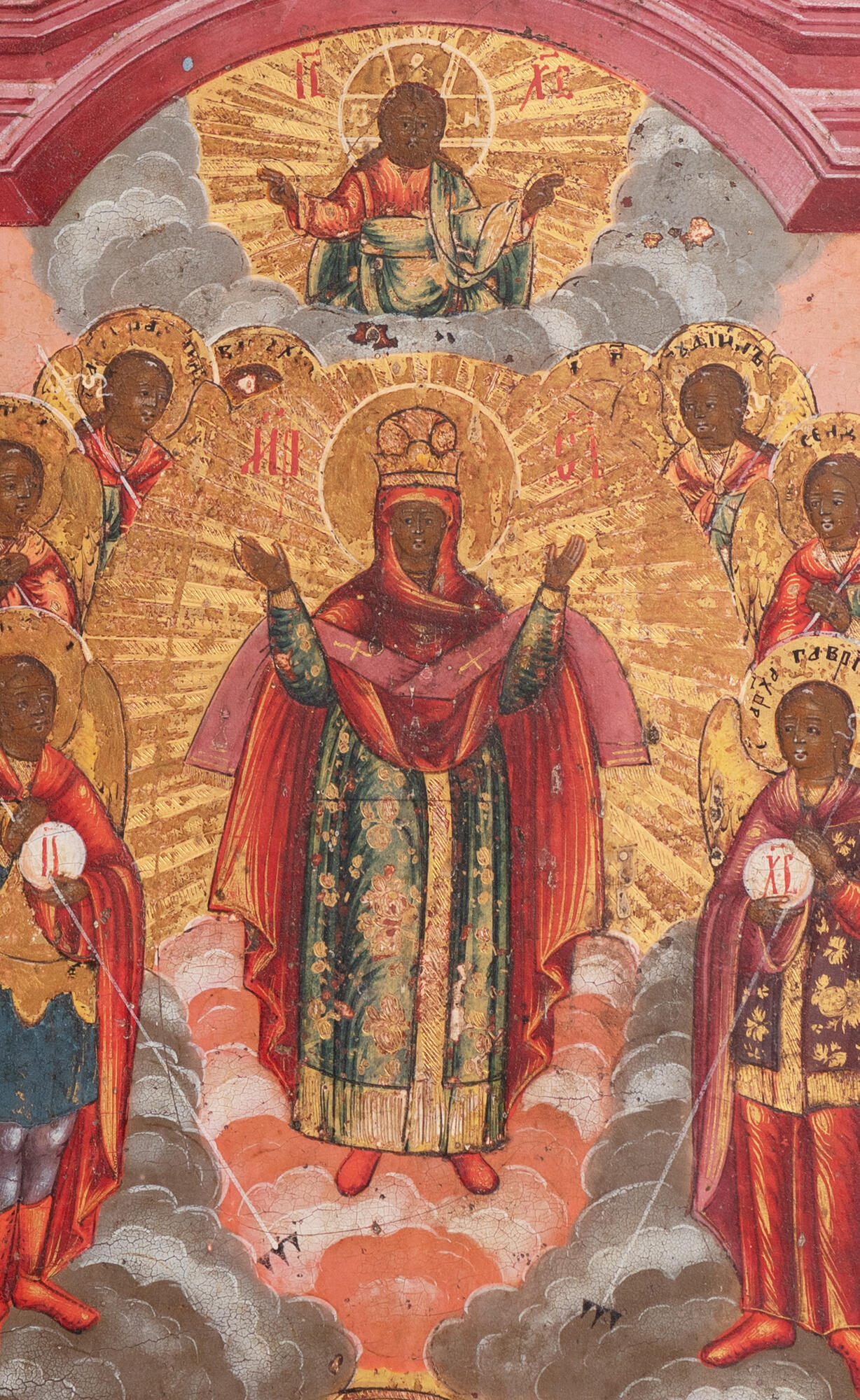


“Intercession of Our Lady” belongs to the type of icons dedicated to the feasts of the Virgin Mary. It depicts a two-part composition. In the upper part, on the background of a church, the Virgin Mary is shown in a golden mandorla in regal robes, with a red omophorion in her spread arms, surrounded by saints.
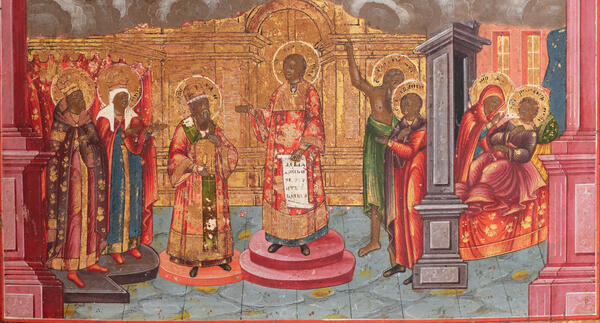
In the lower part, on a red two-stage ambo, St. Romanus the Melodist is depicted with a scroll. To his left is the Byzantine king Leo, the Byzantine queen Zoya, to the right is Andrew, fool-for-Christ, and his friend Epiphanius. In the margins of the icon, on a green earth, are the Venerable John and Dominica. The palette of the icon includes a bright and varied range of colors.
The formation of the iconography of the feast of the Intercession of Our Lady dates back to the 12th century. The oldest surviving images can be traced to the 13th century, when the first churches and monasteries dedicated to this legend emerged in Russia. In ancient times, the iconography of the Intercession of Our Lady had two independent variants — the Novgorod and Suzdal versions. In the first variant, that of Novgorod, the Virgin’s omophorion is held by angels, whereas in the other one, that of Suzdal (sometimes also referred to as the Moscow school), the Virgin Mary extends her omophorion over the faithful. Subsequently, new compositional arrangements were formed, including those combining the experience of the Novgorodians and Suzdalians.