

Saint Elijah was one of the most revered Old Testament prophets in Russia. He lived during the time of King Ahab, who ruled in Judah.
In the belief system of a Russian person, the image of Elijah the Prophet, an angry and furious zealot of God, taken alive to heaven in a fiery chariot, echoed the image of the formidable Perun — the main deity of the Slavs, the lord of thunder and rain. Gradually displacing the pagan god, Elijah became one of the most famous and respected saints among the people. According to the peasants, he gave rain or clear weather, kept the house and crops from fire, and punished the unrighteous with fire.
The iconography of “Elijah the Prophet in the Desert” began to gain popularity in the 16th century. The prophet was depicted “bent” against a background of the sands, and quite often there were scenes from his life depicted along the edges — hagiographic scenes.
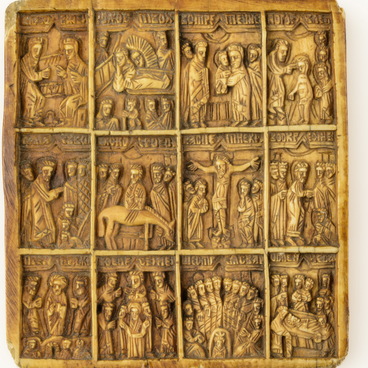
Hagiographic icons featuring the main episodes of the saint’s life also existed in Byzantium, but they were not as widespread there as in the Slavic countries, especially in Rus. In Rus, a hagiographic icon was called “a monument to those who lived before and a book for those who do not understand reading and writing.”
The subjects of hagiographic scenes often relied on apocryphal sources, which gave the artist the opportunity to interpret them more freely. In addition, as art developed in the 14th and 15th centuries, these scenes often reflected the life observations of the icon painter. Thus, elements of real architecture and real life began to be depicted in hagiographic scenes, but at the same time the icon did not turn into a simple genre picture. It kept the distance between the ideal world and the real world.
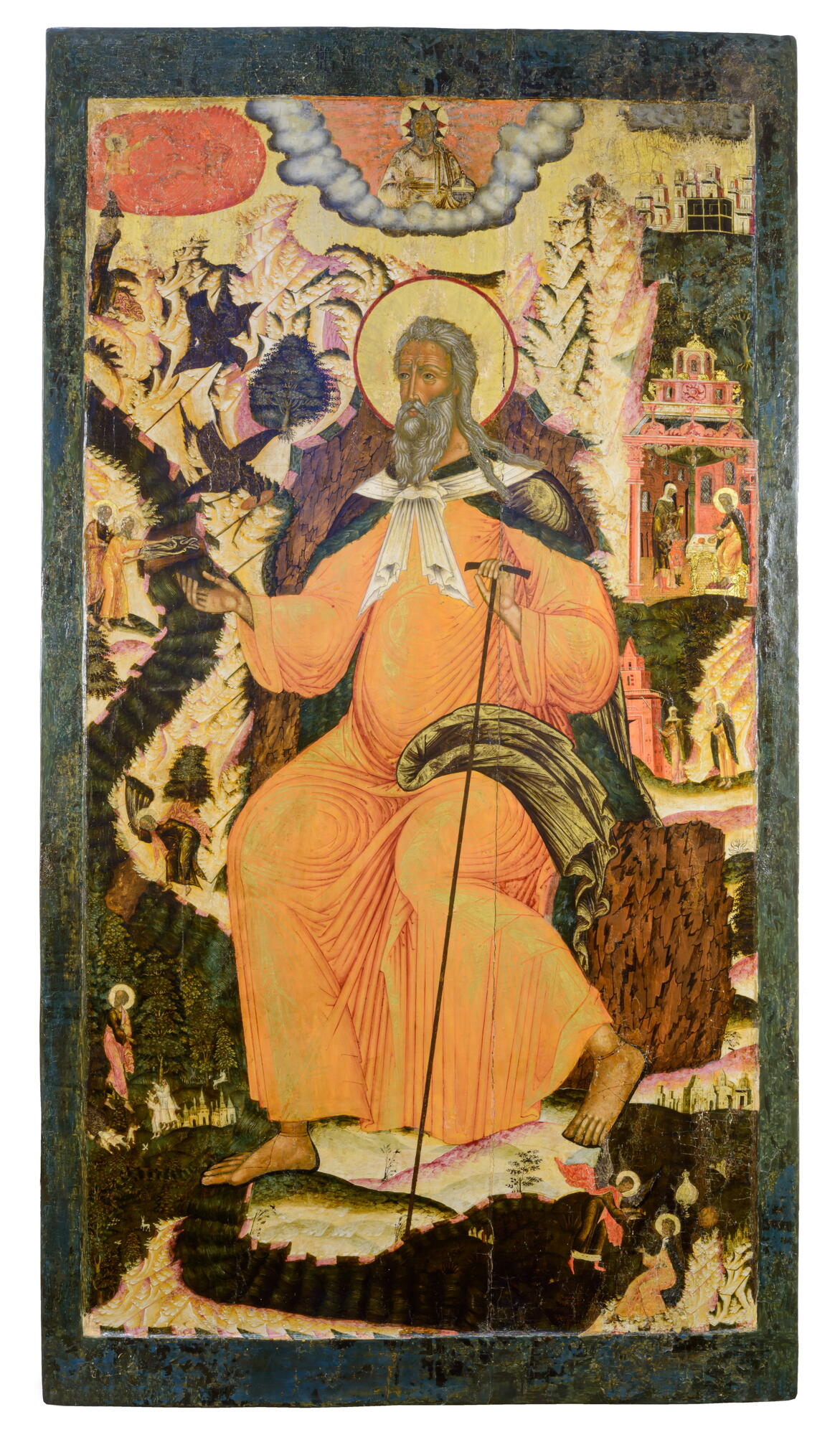
The Yaroslavl icon from the museum’s collection features the saint against a background of a rocky landscape with high hills along the horizon. His massive figure is encircled by a winding river — the source of Cherith, on the banks of which there are images of life scenes. These scenes are given arbitrarily, as was the custom of the Yaroslavl icon painters, who filled the space in accordance with the principles of harmonic balance.
Much attention is paid to events in the life of the prophet Elisha, Elijah’s disciple. The horizon line is raised high, and in the center of a small piece of the sky is a half-length image of the Lord of Sabaoth.
The color and stylistic solution of the icon is quite unique. It is distinguished by whitewashed hills with shrubbery that grows like corals, iridescent transparent raspberry shadows and contrasting areas of a “dense” dark forest.
In the belief system of a Russian person, the image of Elijah the Prophet, an angry and furious zealot of God, taken alive to heaven in a fiery chariot, echoed the image of the formidable Perun — the main deity of the Slavs, the lord of thunder and rain. Gradually displacing the pagan god, Elijah became one of the most famous and respected saints among the people. According to the peasants, he gave rain or clear weather, kept the house and crops from fire, and punished the unrighteous with fire.
The iconography of “Elijah the Prophet in the Desert” began to gain popularity in the 16th century. The prophet was depicted “bent” against a background of the sands, and quite often there were scenes from his life depicted along the edges — hagiographic scenes.
Hagiographic icons featuring the main episodes of the saint’s life also existed in Byzantium, but they were not as widespread there as in the Slavic countries, especially in Rus. In Rus, a hagiographic icon was called “a monument to those who lived before and a book for those who do not understand reading and writing.”
The subjects of hagiographic scenes often relied on apocryphal sources, which gave the artist the opportunity to interpret them more freely. In addition, as art developed in the 14th and 15th centuries, these scenes often reflected the life observations of the icon painter. Thus, elements of real architecture and real life began to be depicted in hagiographic scenes, but at the same time the icon did not turn into a simple genre picture. It kept the distance between the ideal world and the real world.
The Yaroslavl icon from the museum’s collection features the saint against a background of a rocky landscape with high hills along the horizon. His massive figure is encircled by a winding river — the source of Cherith, on the banks of which there are images of life scenes. These scenes are given arbitrarily, as was the custom of the Yaroslavl icon painters, who filled the space in accordance with the principles of harmonic balance.
Much attention is paid to events in the life of the prophet Elisha, Elijah’s disciple. The horizon line is raised high, and in the center of a small piece of the sky is a half-length image of the Lord of Sabaoth.
The color and stylistic solution of the icon is quite unique. It is distinguished by whitewashed hills with shrubbery that grows like corals, iridescent transparent raspberry shadows and contrasting areas of a “dense” dark forest.