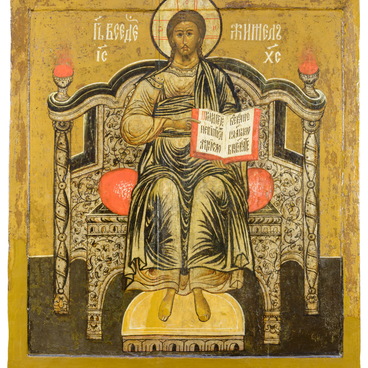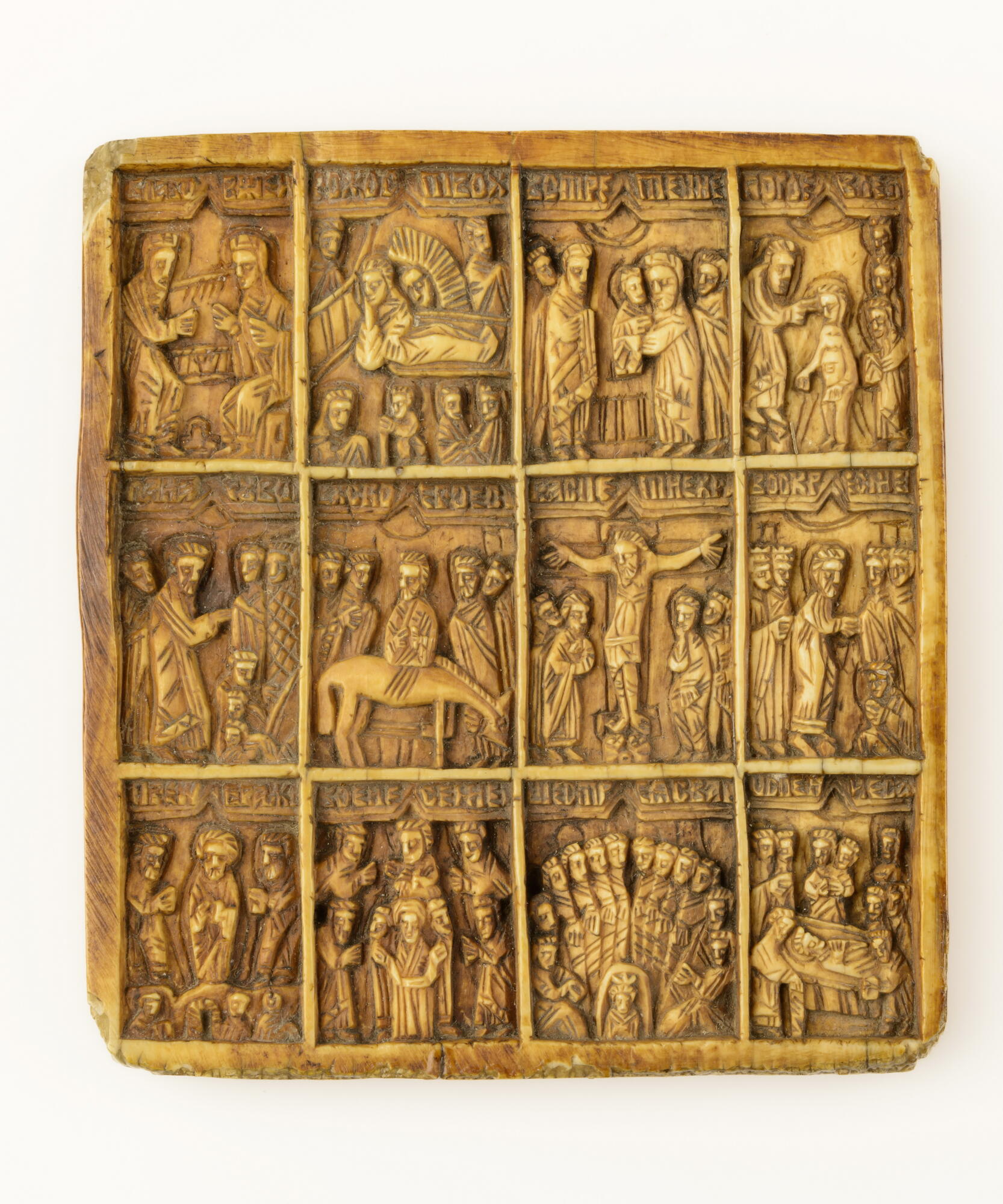


The carved icon “Twelve Great Feasts” was brought in 1925 from the estate of Zubrilovka that belongs to the Penza region nowadays. The inscription on the back says that the icon was brought by the museum staff, the well-known Saratov local historians, the Leontiev brothers Alexander Vladimirovich and Viktor Vladimirovich.
Zubrilovka, one of the famous estates of the Russian provinces, was rebuilt at the end of the 18th century by Prince Sergey Fyodorovich Golitsyn who was a major general, an Aide-de-camp of Empress Catherine II. The spouses Sergey Fyodorovich and Varvara Vasilievna, nee Engelgard (niece of the creator of the Black Sea Fleet Grigory Potemkin) welcomed famous guests at their estate.
The Golitsyns were connoisseurs of the arts: the famous prince had a significant collection of artworks in the palace of the estate, which was almost completely ruined in a fire in 1905. The Radishchev Art Museum houses the few works that were taken out of the estate after the revolution, including the carved ivory icon “Twelve Great Feasts”.
The Twelve Great Feasts are the twelve most important annual church solemn events which are second in their importance only to Easter and connected with the gospel stories and the history of Christianity.
The icon from the museum features the following carved fragments: “Annunciation”, “Nativity of Christ”, “Meeting”, “Baptism of the Lord”, “Resurrection of Lazarus”, “Entrance to Jerusalem”, “Crucifixion”, “Resurrection — Descent into Hell”, “Transfiguration”, “Ascension”, “Descent of the Holy Spirit”, and “Assumption of the Mother of God”.
Icons with feast cycles appeared long ago and were known in Byzantine art in the 11th century. In Russian art, such cycles became widespread in the 15th and 16th centuries, and the carved bone items with Christological themes became popular a little later — in the 16th and 17th centuries.
This work is notable for its professional execution and individual style, which has a tendency to soften the outlines with the help of relief stylized figures. The carving style was influenced by the style of the 15th century and the artist’s creative approach to old traditions allows us to assume that the work was created at beginning of the following century.
Zubrilovka, one of the famous estates of the Russian provinces, was rebuilt at the end of the 18th century by Prince Sergey Fyodorovich Golitsyn who was a major general, an Aide-de-camp of Empress Catherine II. The spouses Sergey Fyodorovich and Varvara Vasilievna, nee Engelgard (niece of the creator of the Black Sea Fleet Grigory Potemkin) welcomed famous guests at their estate.
The Golitsyns were connoisseurs of the arts: the famous prince had a significant collection of artworks in the palace of the estate, which was almost completely ruined in a fire in 1905. The Radishchev Art Museum houses the few works that were taken out of the estate after the revolution, including the carved ivory icon “Twelve Great Feasts”.
The Twelve Great Feasts are the twelve most important annual church solemn events which are second in their importance only to Easter and connected with the gospel stories and the history of Christianity.
The icon from the museum features the following carved fragments: “Annunciation”, “Nativity of Christ”, “Meeting”, “Baptism of the Lord”, “Resurrection of Lazarus”, “Entrance to Jerusalem”, “Crucifixion”, “Resurrection — Descent into Hell”, “Transfiguration”, “Ascension”, “Descent of the Holy Spirit”, and “Assumption of the Mother of God”.
Icons with feast cycles appeared long ago and were known in Byzantine art in the 11th century. In Russian art, such cycles became widespread in the 15th and 16th centuries, and the carved bone items with Christological themes became popular a little later — in the 16th and 17th centuries.
This work is notable for its professional execution and individual style, which has a tendency to soften the outlines with the help of relief stylized figures. The carving style was influenced by the style of the 15th century and the artist’s creative approach to old traditions allows us to assume that the work was created at beginning of the following century.