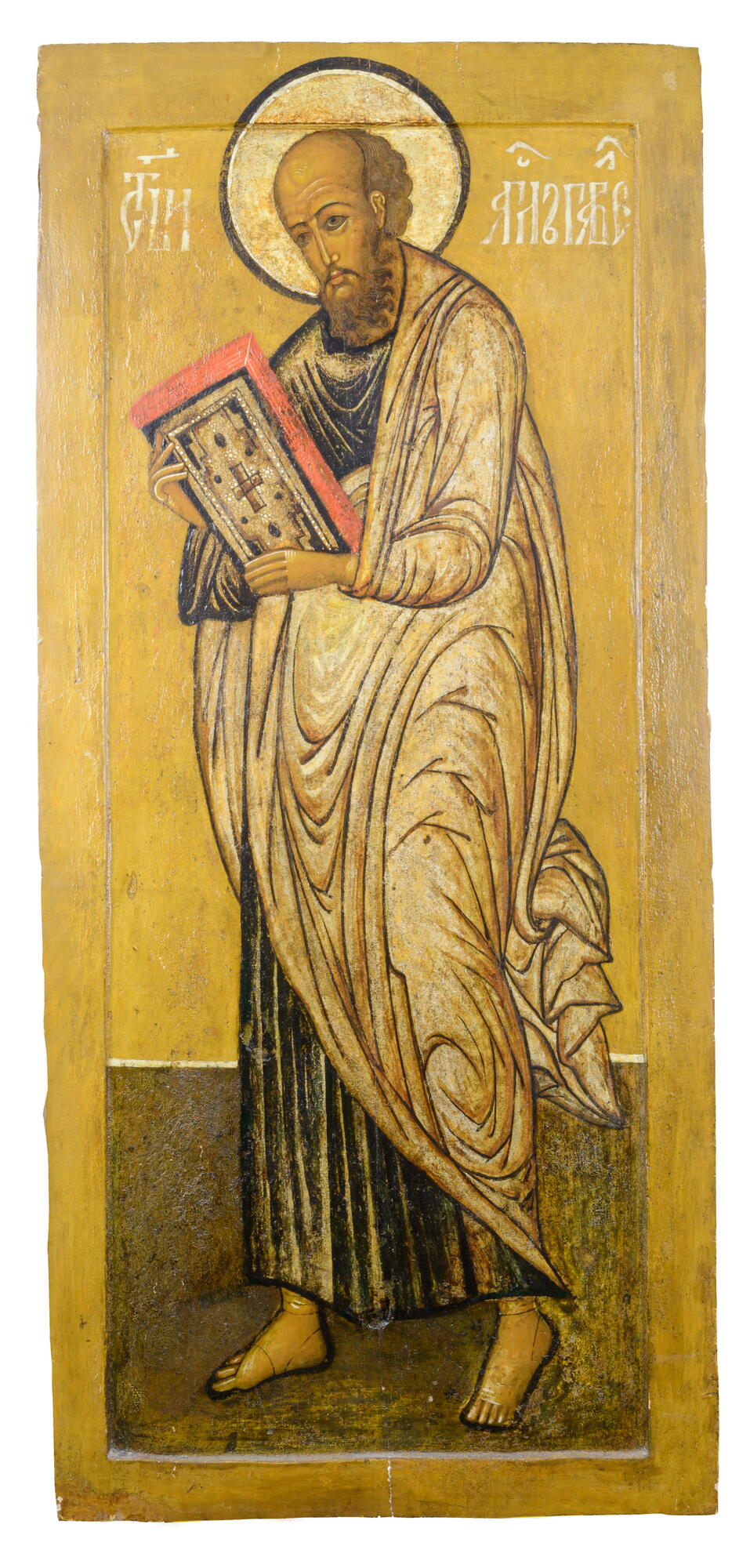


The traditional Russian Orthodox iconostasis consists of five tiers: the Sovereign tier, the Deesis, the Twelve Great Feasts, the Old Testament Prophets and the Patriarchs. The icon featuring the Apostle Paul was part of the Deesis — that is, the main — tier, discovered by the expedition of the State Tretyakov Gallery in 1965 in an abandoned church in the village of Tuchkovo, Vladimir Oblast.
The central image of the Deesis depicts Christ in Glory, flanked by the icons of Theotokos and Saint John the Baptist, as well as the archangels Michael and Gabriel. Traditionally, this tier also includes the images of Peter and Paul.
Unlike the first twelve apostles, Paul did not personally meet Jesus during the latter’s life on earth and did not listen to His sermons. Moreover, Paul was a great defender of the Jewish faith — a Pharisee — and participated in the persecution of Christians.
Saul, who was a Roman citizen by birth, came from Tarsus. He received an excellent education in Jerusalem.
Having heard about the sermons and the miraculous resurrection of a certain Jesus, who called himself the Son of God, Saul went to Damascus to deal with the followers of the new teaching. On the way, he was suddenly blinded by a bright light from the sky. Saul saw Christ who asked reproachfully: “Why are you persecuting Me?” Saul was shocked and believed that Jesus was the Messiah.
In Damascus, Saul was healed of his blindness, converted to Christianity, took the name Paul, and began to preach. The apostle traveled a lot, bringing the new faith to people. He created numerous Christian communities throughout Asia Minor and the Balkan Peninsula.
Saint Paul the Apostle wrote 14 epistles, which formed an important part of the New Testament. Over time, he became very popular.
Paul the Apostle was captured in Jerusalem and brought to Rome, where he was beheaded a few years later, during the reign of Emperor Nero. St. Peter was executed at around the same time.
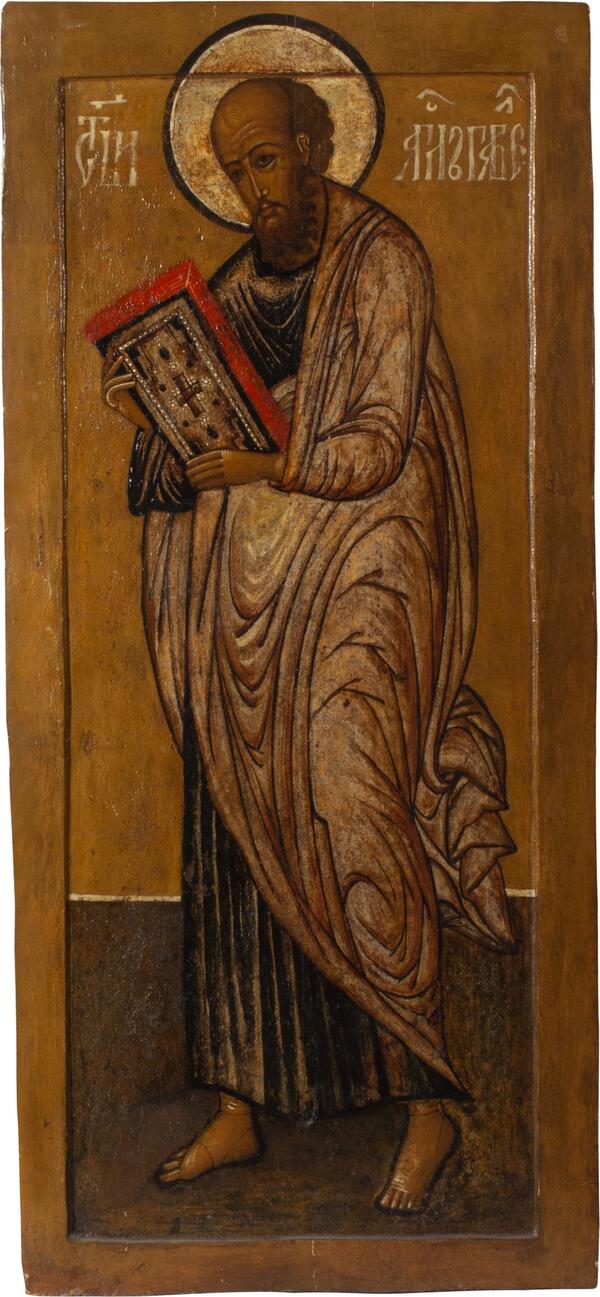
The icon features Paul as a middle-aged man with a high forehead framed by curly hair and a small beard; his figure is painted in three-quarter view. He wears traditional Greek clothing for his time — a chiton (a dark blue shirt or tunic) and a himation (a light mantle or wrap forming numerous folds). According to the icon-painting tradition, Paul is depicted with his usual attribute — the Gospel, which includes his epistles.
The central image of the Deesis depicts Christ in Glory, flanked by the icons of Theotokos and Saint John the Baptist, as well as the archangels Michael and Gabriel. Traditionally, this tier also includes the images of Peter and Paul.
Unlike the first twelve apostles, Paul did not personally meet Jesus during the latter’s life on earth and did not listen to His sermons. Moreover, Paul was a great defender of the Jewish faith — a Pharisee — and participated in the persecution of Christians.
Saul, who was a Roman citizen by birth, came from Tarsus. He received an excellent education in Jerusalem.
Having heard about the sermons and the miraculous resurrection of a certain Jesus, who called himself the Son of God, Saul went to Damascus to deal with the followers of the new teaching. On the way, he was suddenly blinded by a bright light from the sky. Saul saw Christ who asked reproachfully: “Why are you persecuting Me?” Saul was shocked and believed that Jesus was the Messiah.
In Damascus, Saul was healed of his blindness, converted to Christianity, took the name Paul, and began to preach. The apostle traveled a lot, bringing the new faith to people. He created numerous Christian communities throughout Asia Minor and the Balkan Peninsula.
Saint Paul the Apostle wrote 14 epistles, which formed an important part of the New Testament. Over time, he became very popular.
Paul the Apostle was captured in Jerusalem and brought to Rome, where he was beheaded a few years later, during the reign of Emperor Nero. St. Peter was executed at around the same time.
The icon features Paul as a middle-aged man with a high forehead framed by curly hair and a small beard; his figure is painted in three-quarter view. He wears traditional Greek clothing for his time — a chiton (a dark blue shirt or tunic) and a himation (a light mantle or wrap forming numerous folds). According to the icon-painting tradition, Paul is depicted with his usual attribute — the Gospel, which includes his epistles.