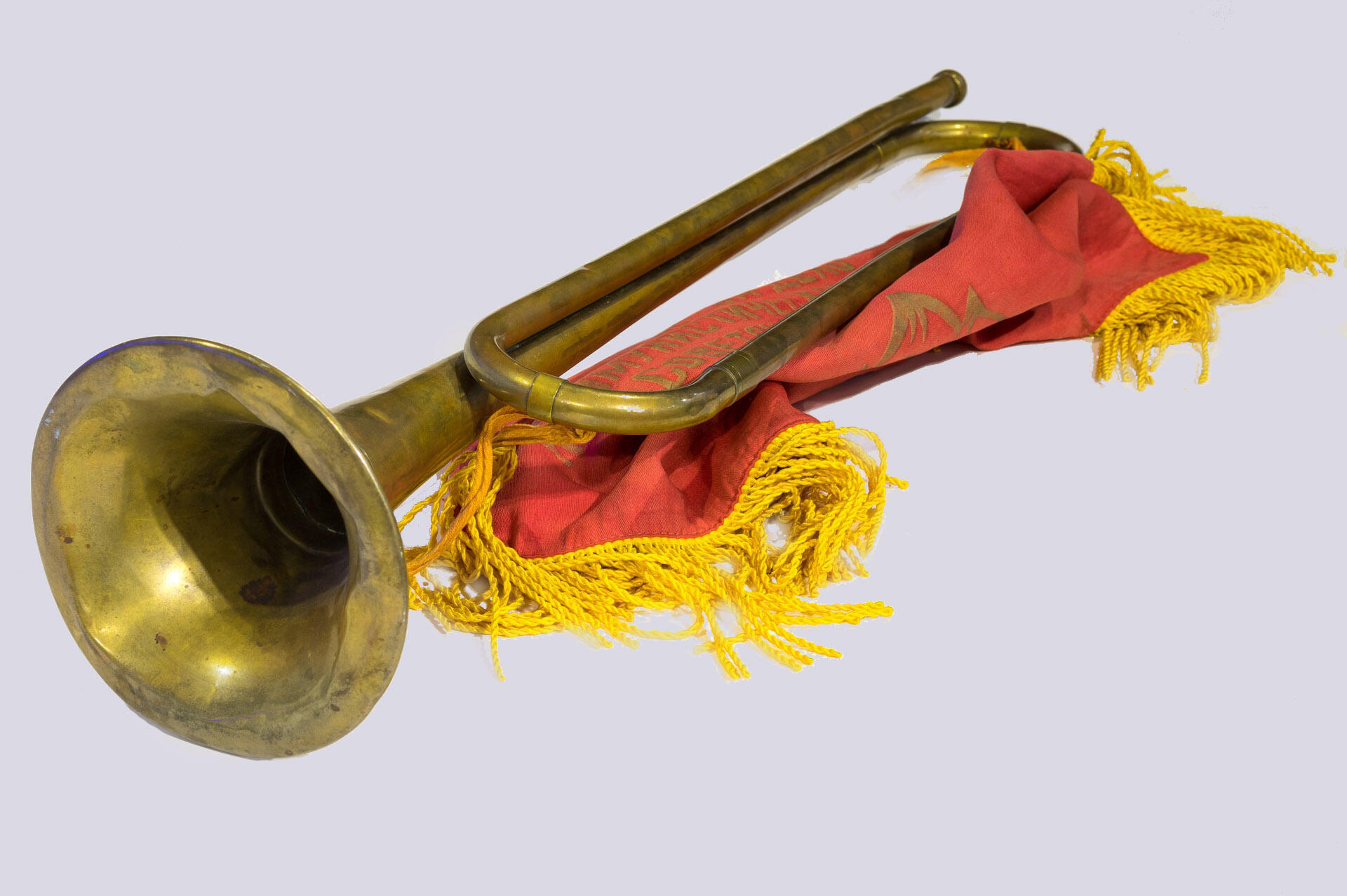


The Pioneer Horn was one of the main attributes of the All-Union Pioneer Organization named after Lenin. The sounds of the pioneer horn are part of the Severodvinsk city history. In 1937, the first floating pioneer camp was organized in the village of Sudostroy, which later became the city of Severodvinsk. It was the ringing signals of the pioneer horn that sounded the ‘ascent’, calling the children to exercise and assembly. When in 1943 the pioneers of the city raised funds for a tank for the Red Army, and Joseph Stalin himself sent a telegram of thanks, the horn blower played ‘Gathering’ for all the people. Pioneer assemblies in schools also began with the call signs of a horn. The detachments also trumpeted the horn, passing through the city — the sound merged with the beat of the pioneer drums and a bravura melody was obtained.
Only one note can be extracted from a horn in one variation. However, the instrument’s small performance capabilities were compensated by the relative ease of playing it. In order to learn how to play the horn, it only took little practice.
As a rule, each pioneer squad, and sometimes a detachment (class), had its own horn blower. It was a very important pioneer position. The horn blower, like the drummer, was elected at a general meeting. On the pioneer assembly, the horn blower’s place was on the right flank, next to the drummer, in the detachment’s column - behind the flag.
The horn blower had to be able to perform drill techniques with a horn and give wind signals: “Listen to everyone”, “Gathering”, “On the banner”, “Marching”, “On the assembly”, “Alarm”. The sound of the horn became a call to the pioneers, to their unity, to defend the Motherland, to serve the good and affirm justice.
Horns and drums were kept in the pioneer rooms, in the “banner walls”, near the squad banner. If the drummers in the pioneer detachments survived until the 1990s, then the number of horn blowers became less and less every generation. Gradually, the image of a boy in a red tie, playing “Listen all”, began to be found mainly on posters. And in the parks of the Soviet period and in the territories of children’s camps, there are sculptures depicting horn blowers.
Only one note can be extracted from a horn in one variation. However, the instrument’s small performance capabilities were compensated by the relative ease of playing it. In order to learn how to play the horn, it only took little practice.
As a rule, each pioneer squad, and sometimes a detachment (class), had its own horn blower. It was a very important pioneer position. The horn blower, like the drummer, was elected at a general meeting. On the pioneer assembly, the horn blower’s place was on the right flank, next to the drummer, in the detachment’s column - behind the flag.
The horn blower had to be able to perform drill techniques with a horn and give wind signals: “Listen to everyone”, “Gathering”, “On the banner”, “Marching”, “On the assembly”, “Alarm”. The sound of the horn became a call to the pioneers, to their unity, to defend the Motherland, to serve the good and affirm justice.
Horns and drums were kept in the pioneer rooms, in the “banner walls”, near the squad banner. If the drummers in the pioneer detachments survived until the 1990s, then the number of horn blowers became less and less every generation. Gradually, the image of a boy in a red tie, playing “Listen all”, began to be found mainly on posters. And in the parks of the Soviet period and in the territories of children’s camps, there are sculptures depicting horn blowers.


