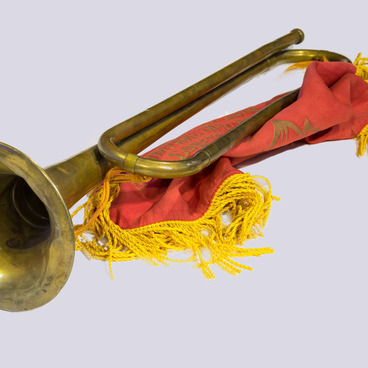
From the first years of the history of the illage of Sudostroy, which later became the city of Severodvinsk, the history of festive demonstrations began. Already in 1937, all residents of the village gathered for a meeting dedicated to the 10th anniversary of the Great October Revolution. The demonstration failed — the village was small and there were no roads. Six months later, in May 1938, the first festive demonstration took place in Sudostroy. Elegant columns walked along the only long street — Arkhangelsky Avenue, which stretched from the territory of the future plant to residential buildings.
When the village became a city, and wooden streets were laid between residential buildings, the demonstrations moved to the main street of the young city — Belomorsky Avenue. During the war years, demonstrations were not held; they were replaced by festive and mourning meetings, which were also held on Belomorsky Avenue. After the war, the rapid construction of new urban areas began, followed by a shift to the west of the city center and an increase in the route of urban demonstrations. The meeting place for the rallies was consistently at the old House of Soviets on Belomorsky Avenue, near the wooden theater at the intersection of Pionerskaya and Sovetskaya streets.
After 1957, when the asphalting and landscaping of Arkticheskaya Street was completed, it was renamed Lenin Avenue, and festive demonstrations went along the main street of the city. The participants were lined up in columns according to the production and workshop principle. Interestingly, the city newspaper never mentioned ‘column number 3’ — after column number 2, they immediately called column number 4. Local residents understood that the column of the main enterprise of the city — plant No. 402 (Sevmash enterprise) was excluded from the festive numbering. Later the ‘Zvezdochka’ enterprise was also excluded.
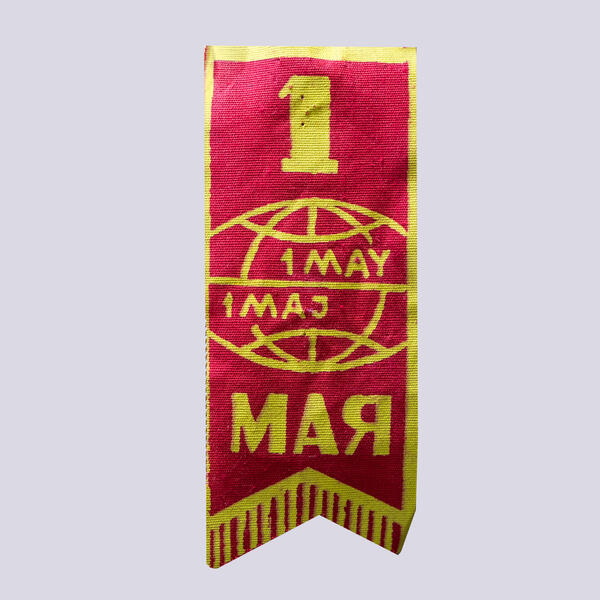
At the head of the festive columns marched ‘symbols of the era.’ At different times, it could have been a satellite, a rocket, and even Lenin’s armored car — it was made according to the exact drawings of the Historical Museum in 1977 for the 60th anniversary of the October Revolution. Residents of the city — participants in the demonstrations — also tried to dress up and thus emphasize the atmosphere of the holiday. In the 1960s, breast chevrons appeared in the form of stylized red flags, carnations and other symbols. This May Day chevron is attached to the side of a smart Chinese coat, fashionable in the early 1960s. Both the chevrons and the coat belonged to the famous Bakhtin family in the city.
When the village became a city, and wooden streets were laid between residential buildings, the demonstrations moved to the main street of the young city — Belomorsky Avenue. During the war years, demonstrations were not held; they were replaced by festive and mourning meetings, which were also held on Belomorsky Avenue. After the war, the rapid construction of new urban areas began, followed by a shift to the west of the city center and an increase in the route of urban demonstrations. The meeting place for the rallies was consistently at the old House of Soviets on Belomorsky Avenue, near the wooden theater at the intersection of Pionerskaya and Sovetskaya streets.
After 1957, when the asphalting and landscaping of Arkticheskaya Street was completed, it was renamed Lenin Avenue, and festive demonstrations went along the main street of the city. The participants were lined up in columns according to the production and workshop principle. Interestingly, the city newspaper never mentioned ‘column number 3’ — after column number 2, they immediately called column number 4. Local residents understood that the column of the main enterprise of the city — plant No. 402 (Sevmash enterprise) was excluded from the festive numbering. Later the ‘Zvezdochka’ enterprise was also excluded.
At the head of the festive columns marched ‘symbols of the era.’ At different times, it could have been a satellite, a rocket, and even Lenin’s armored car — it was made according to the exact drawings of the Historical Museum in 1977 for the 60th anniversary of the October Revolution. Residents of the city — participants in the demonstrations — also tried to dress up and thus emphasize the atmosphere of the holiday. In the 1960s, breast chevrons appeared in the form of stylized red flags, carnations and other symbols. This May Day chevron is attached to the side of a smart Chinese coat, fashionable in the early 1960s. Both the chevrons and the coat belonged to the famous Bakhtin family in the city.