Karbass (the word comes from Finnish ‘karvas’) is a small undecked boat of galley type. For over 500 years she has been used by fishermen and hunters for fish and animal harvesting as well as for cargo transportation in White and Barents seas. The spindle-shaped vessel has pointed fore and aft and is ideally adapted for ice navigation.
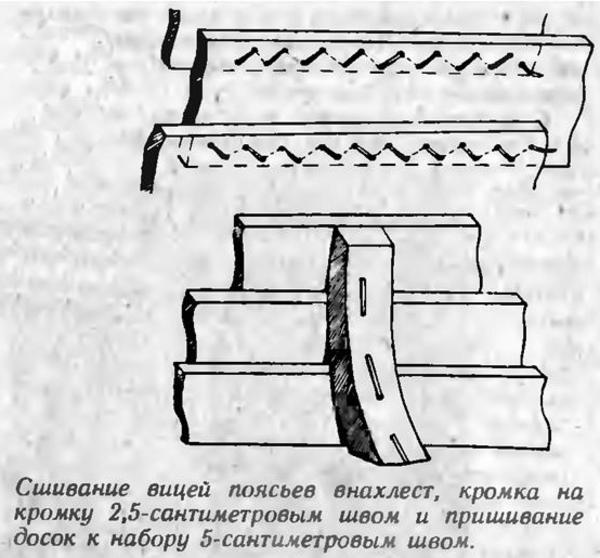
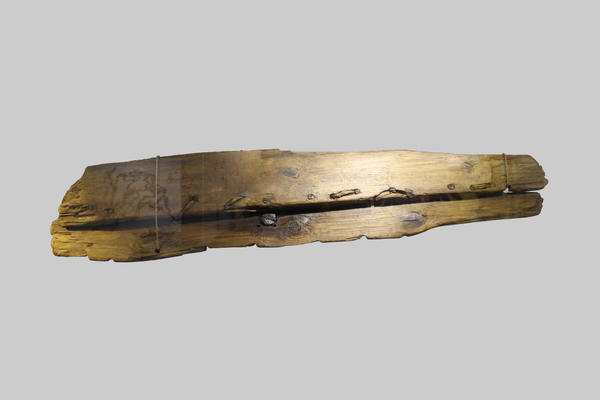
To build (stitch) a karbass, the trunk of a tree at its root was spread with wedges, the tree was felled then and the split was widened. A mortise was usually made in the wood but at times an indent was burnt out. The piece was steamed out then and spread again. After that, transverse ribs (oprugas) were installed inside, mostly made of spruce. The boardsides were increased and the planking reinforced with boards fixed in the overlap manner. The boards were fastened together with sticks, fiber straps or animal tendons. At the end, the whole body was calked and yarned with moss and oakum. Now and then, the design was supplemented with wooden sledges at the bottom so as to get karbass out of water and drag along the ice more easily.
The boat was usually equipped with 2, 4 or 5 pairs of oars, two square sails with dolon (pole) set cornerwise, and she was conned by one steering man. It is a marvel that no additional fixing was used in the process of construction, not a single nail.
To build (stitch) a karbass, the trunk of a tree at its root was spread with wedges, the tree was felled then and the split was widened. A mortise was usually made in the wood but at times an indent was burnt out. The piece was steamed out then and spread again. After that, transverse ribs (oprugas) were installed inside, mostly made of spruce. The boardsides were increased and the planking reinforced with boards fixed in the overlap manner. The boards were fastened together with sticks, fiber straps or animal tendons. At the end, the whole body was calked and yarned with moss and oakum. Now and then, the design was supplemented with wooden sledges at the bottom so as to get karbass out of water and drag along the ice more easily.
The boat was usually equipped with 2, 4 or 5 pairs of oars, two square sails with dolon (pole) set cornerwise, and she was conned by one steering man. It is a marvel that no additional fixing was used in the process of construction, not a single nail.