

Stepan Grigoryevich Pisakhov (1879-1960) was a painter and ethnographer, author of unique fairy tales, who sang the Russian North all his life. His father, owner of a jeweler shop in Arkhangelsk, planned to educate the son for a steady profession, if not a jeweler, then a doctor or teacher at least. In an attempt to drub the idea of becoming a painter out of his son’s head, Pisakhov Sr allowed him neither to study drawing nor even read books.
These clampdowns resulted in the young man escape from home flat broke. He made it up to Petersburg and entered A.l. Stieglitz School of Art as an external student. The old jeweler did not lose his hope to bring his prodigal son back home and gave him a hand-to-mouth allowance only. For three years Stepan went on short rations but was happy as he had an opportunity to get lessons from academician Alexander Novoskoltsev.
In 1905 Pisakhov was expelled from the School for his sympathy with mutinous workers. And this was when his Odyssey started that lasted nearly 25 years. He crisscrossed nearly all Siberia, visited Turkey, Egypt, Holy Land, attended a course at the Paris Académie des Beaux-Arts for some time and finally arrived there at the conclusion that he and modernists have different paths to follow.
At an exhibition of the painter’s works held in Rome in 1910 its guests were stunned by silver glow radiated by his canvasses. In return of accolades the master smiled modestly and replied: ‘It is an effect of the north’. Ilya Repin visited an exhibition of Pisakhov’s paintings in Sank Petersburg and expressed admiration to Stepan Grigoryevich.
In 1914, Pisakhov participated in the marine expedition searching for Georgy Sedov. 14 years later the painter visited Frantz Josef Land aboard icebreaking steamship Georgy Sedov on the scout for the Umberto Nobile expedition. The vessel drifted 812 days ice-bound and Pisakhov enthusiastically painted sketches and wrote traveler’s essays. He was particularly impressed by yellow flowers cutting their way right from under the snow.
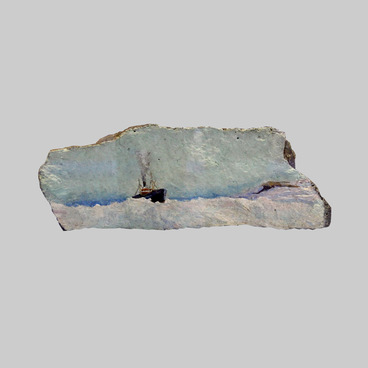
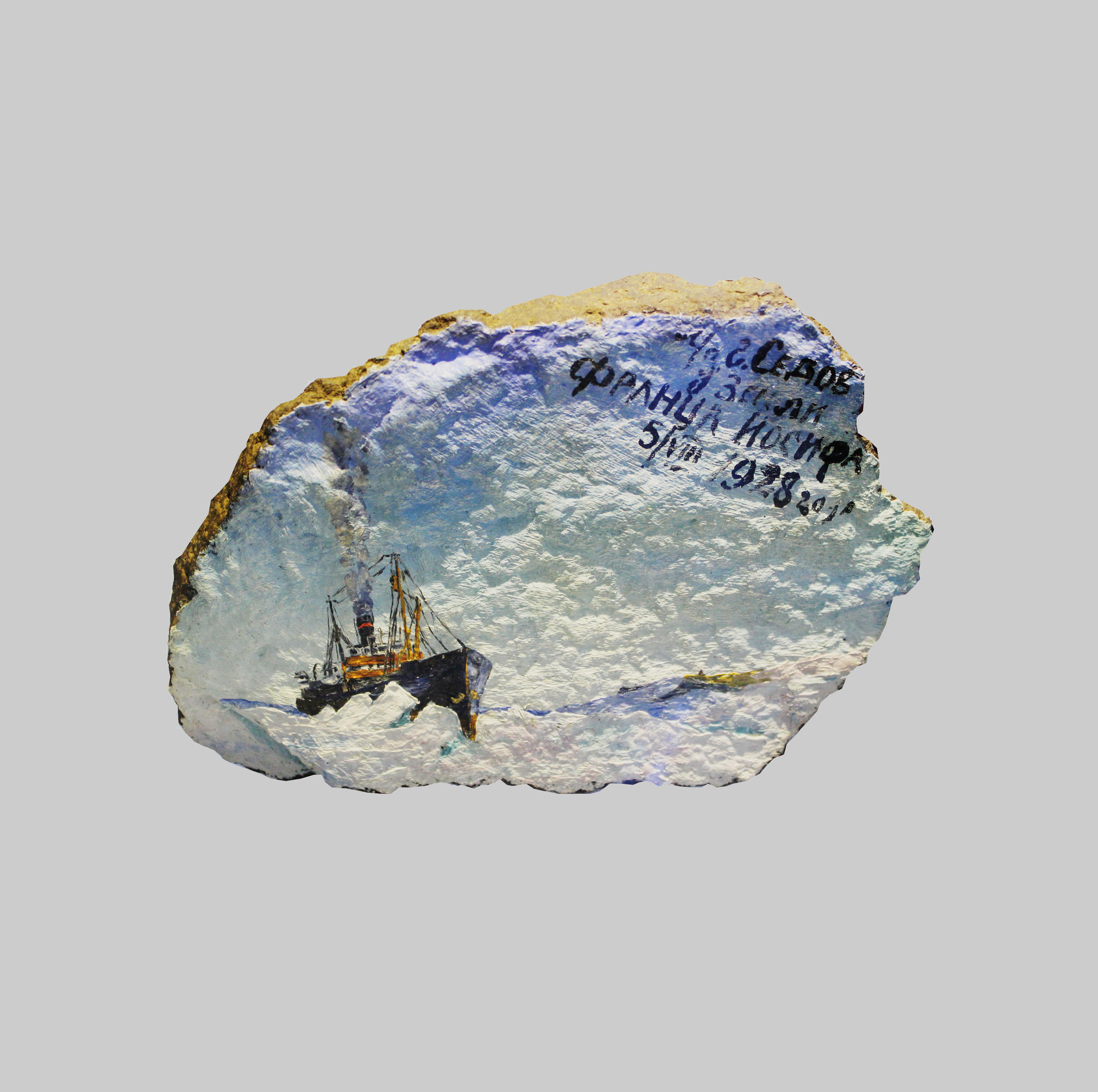
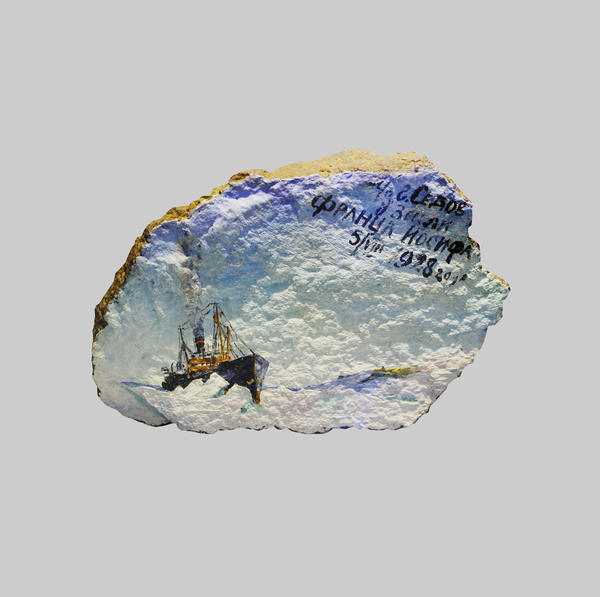
Each of 50 crewmembers was presented with the sketch on a stone Icebreaking Ship G. Sedov off the Coast of Frantz Josef Land. The painting is made in a unique manner in the nature of ‘non finito’ often used by the Renaissance masters. But if Michelangelo sculptured a statue from a marble block, Pisakhov harmoniously amalgamated pictorial art and contoured surface of a stone.
The representation of the steamship makes an impression of stereoscopic picture and stands out distinctively against the glowing silver of background. At that, the viewer sees just a part of the board; ship’s head cutting the ice fortress, and funnel issuing heavy blue-grey smoke; the stern of the ship looks like hidden in the stone. This copy of the sketch was handed over to the museum by the icebreaker radio officer Evgeny Nikolayevich Girshevich. There are two copies of the stone-sketch kept in Northern Museum; several copies are exhibited by other museums of Arkhangelsk Region.
Stepan Grigoryevich Pisakhov lived a long life. He taught children drawing and composed fairy tales based on northern folklore. His literary talent was recognized only at the age over 60. In memory of his contemporaries Stepan Grigoryevich remained kind-hearted rare bird in shabby clothes who could work marvels with his painter’s brush.
These clampdowns resulted in the young man escape from home flat broke. He made it up to Petersburg and entered A.l. Stieglitz School of Art as an external student. The old jeweler did not lose his hope to bring his prodigal son back home and gave him a hand-to-mouth allowance only. For three years Stepan went on short rations but was happy as he had an opportunity to get lessons from academician Alexander Novoskoltsev.
In 1905 Pisakhov was expelled from the School for his sympathy with mutinous workers. And this was when his Odyssey started that lasted nearly 25 years. He crisscrossed nearly all Siberia, visited Turkey, Egypt, Holy Land, attended a course at the Paris Académie des Beaux-Arts for some time and finally arrived there at the conclusion that he and modernists have different paths to follow.
At an exhibition of the painter’s works held in Rome in 1910 its guests were stunned by silver glow radiated by his canvasses. In return of accolades the master smiled modestly and replied: ‘It is an effect of the north’. Ilya Repin visited an exhibition of Pisakhov’s paintings in Sank Petersburg and expressed admiration to Stepan Grigoryevich.
In 1914, Pisakhov participated in the marine expedition searching for Georgy Sedov. 14 years later the painter visited Frantz Josef Land aboard icebreaking steamship Georgy Sedov on the scout for the Umberto Nobile expedition. The vessel drifted 812 days ice-bound and Pisakhov enthusiastically painted sketches and wrote traveler’s essays. He was particularly impressed by yellow flowers cutting their way right from under the snow.
Each of 50 crewmembers was presented with the sketch on a stone Icebreaking Ship G. Sedov off the Coast of Frantz Josef Land. The painting is made in a unique manner in the nature of ‘non finito’ often used by the Renaissance masters. But if Michelangelo sculptured a statue from a marble block, Pisakhov harmoniously amalgamated pictorial art and contoured surface of a stone.
The representation of the steamship makes an impression of stereoscopic picture and stands out distinctively against the glowing silver of background. At that, the viewer sees just a part of the board; ship’s head cutting the ice fortress, and funnel issuing heavy blue-grey smoke; the stern of the ship looks like hidden in the stone. This copy of the sketch was handed over to the museum by the icebreaker radio officer Evgeny Nikolayevich Girshevich. There are two copies of the stone-sketch kept in Northern Museum; several copies are exhibited by other museums of Arkhangelsk Region.
Stepan Grigoryevich Pisakhov lived a long life. He taught children drawing and composed fairy tales based on northern folklore. His literary talent was recognized only at the age over 60. In memory of his contemporaries Stepan Grigoryevich remained kind-hearted rare bird in shabby clothes who could work marvels with his painter’s brush.