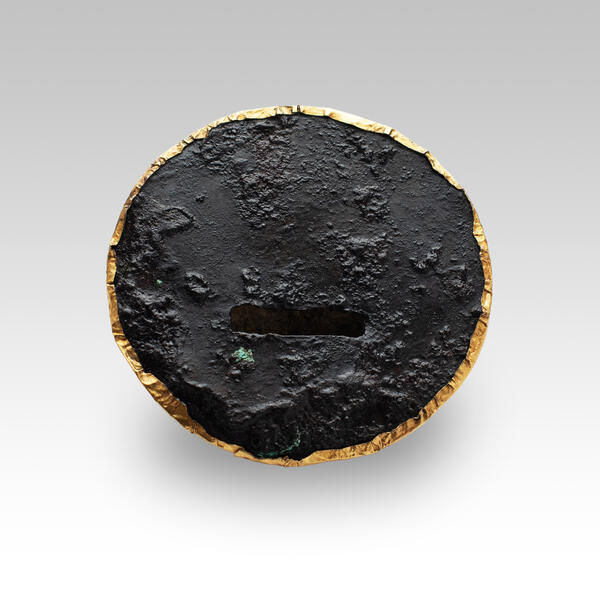
A phalera, or horse brass, is a plaque used for decorating horse harnesses. As an element of horse harness gear, it served as a testament to the traditions of horsemanship and the various forms of ornamentation adopted by nomadic cultures.
In addition to their primary functional role as pieces of equipment for horses, phalerae also carry significant artistic value. They constitute a significant portion of examples of artistic metalworking found in complexes associated with the early and middle Sarmatian periods.
These items were made in the so-called Sarmatian polychrome animal style, likely in workshops of the Bosporan Kingdom.
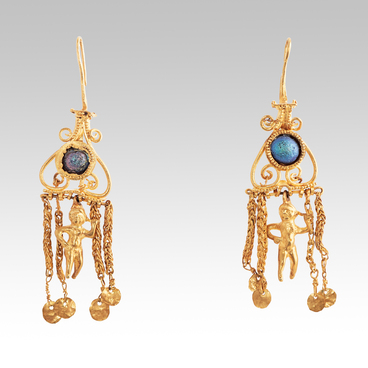
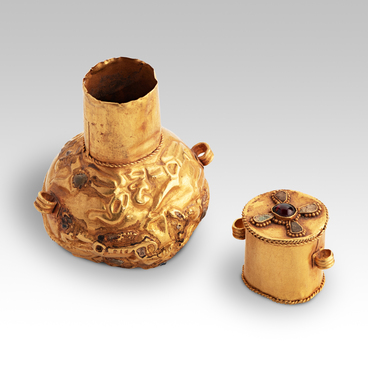
One of the key stylistic features of the polychrome style is the combination of gold, bronze, and multicolored inlays of ornamental stones such as carnelian, almandite, garnet, and turquoise, along with the inclusion of colored glass inserts. In ancient times, glass paste was considered equivalent to the most precious materials, thus, in the presence of such additional decorations, gold gained even greater value.
Artifacts in the Sarmatian polychrome animal style are represented by a diverse range of items, including torcs, bracelets, buckles, belt and sewn-on plates, vials, decorative phalerae from horse harnesses, and other objects.
The phalerae on display at the museum consist of a gold relief plate that is stretched over a bronze disc. The engraved gold plate is curved along its entire circumference. In between the gold plate and the bronze base, there are relief recesses in which mastic — a gypsum-based gasket — was applied.
The artifacts on display were discovered in 1987 in kurgan No. 10 of the Kobyakovsky burial site, which is located on the eastern outskirts of Rostov-on-Don. The burial contained the remains of a wealthy nomadic woman from the Sarmatian aristocracy.
Often, images in the zoomorphic style can be
difficult to interpret and initially appear incomprehensible, as the contours
of individual animals and birds as well as the overall plot of the scene are
difficult to discern. This is due to the specific nature of the decorative
design, which employs various artistic metalworking techniques. Compositions in
this style are always meticulously crafted and carefully thought-out.