Beekeeping was widely practiced in the region inhabited by the Shors. The largest apiaries were in the lower reaches of the Kondoma River and its tributary the Antrop — they could consist of up to 1,000 hives. In the 19th century, the Altai missionary and ethnographer, Archpriest Vasily Ivanovich Verbitsky, noted that mountains “that were covered with shrubs: meadowsweet, acacia, raspberries, lush plants about the size of a person, mainly fireweed, produce a lot of white, aromatic honey.”
The Shors built beehives near their uluses: in lowlands near reservoirs, as well as on the sunny hill and mountain slopes sheltered from prevailing winds. Dry branches and poles wrapped in birch bark were surrounded by pole fences. They were placed at some distance from each other to attract bee swarms.
In addition, the Shors also practiced honey hunting or honey harvesting in the taiga: they gathered honey from wild bee colonies as well as from domestic bees that had left the man-made hives. According to Verbitsky, “up to 20 nests of these wandering bees” could be found in the spring. Such hives were considered perfect for producing offspring.
During winter, the hives were put away into an “omshanik” — a log house with each wall consisting of seven or eight horizontal logs. The structure was “sunk” into the ground and had a sod roof. A few hives were kept directly in the basement or in other clean utility rooms.
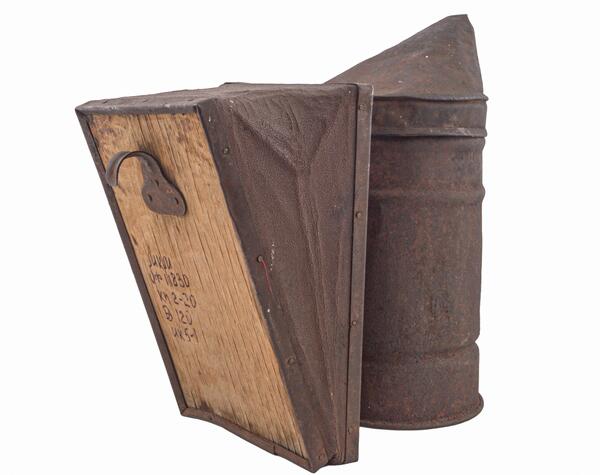
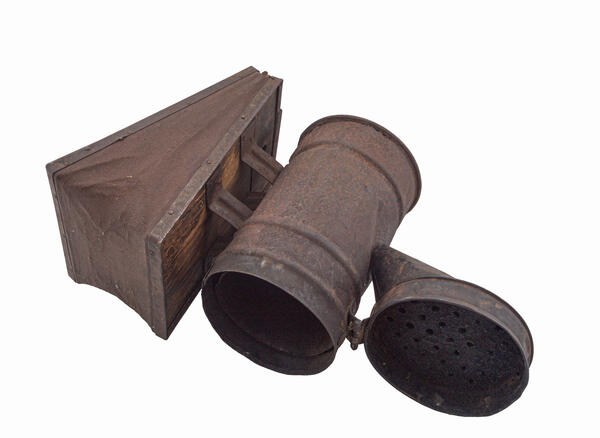
Russian settlers introduced beekeeping in the territories along the Tom River. In the first half of the 20th century, the indigenous people used their methods and devices to keep bees and collect the products of the hives. A bee smoker was an indispensable device known since ancient times. It was used in beekeeping to calm honeybees when inspecting the hive.
During a beekeeper’s inspection, the bees experience anxiety and release an alarm pheromone to alert others and to signal an attack. Two or three big puffs of smoke spread in all directions through the hive, disorient the insects and stimulate them to consume as much honey as possible in case the fire forces them to abandon the hive.
The smoker was commonly designed as a tin cylinder with bellows and a lid that tapered to a small gap at the top. The cylinder was filled with rotten wood: unlike fresh wood, it produced a lot of cool smoke. The bellows ensured that the fuel in the smoker’s burner would continue smoldering.
Having opened the nest box or hive, the beekeeper fumigated the bees and used a knife to cut away a full portion of the honeycombs in the middle. However, the honeycombs next to the walls remained untouched — they stored bee bread (pollen) and included cells with larvae.
Some
Shor families might use a smoldering piece of rotten wood instead of the
smoker.