A small bronze decoration in the Scythian-Siberian style is a plate pendant in the form of an animal. On it, the craftsman depicted the front body parts of two argali, wild mountain sheep. Their bodies face the opposite directions. The decoration is distinguished by the masterful execution of an ancient Tagar caster. The researchers managed to date it to the early stage of the Scythian-Siberian animal style — the Podgornov stage of the Tagar culture of the 7th–6th centuries BCE.
The object was discovered in 2007 during the rescue excavations of the burial ground of the Podgornov stage of the Tagar culture in the village of Beya in the Republic of Khakassia. The work was carried out on the private plot of the Paikov family. The pendant was extracted from the ground by the participants of the Beya archaeological expedition of the Institute of the History of Material Culture of the Russian Academy of Sciences.
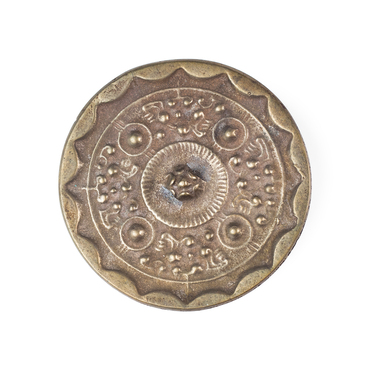
The animal style was a characteristic feature of the Tagar culture from the time of its origin, that is, from the 8th century BCE. It was used until the culture ceased to exist. The animal style of Tagar culture, like other areas of the “Scythian world, ” belonged to applied arts. It can be traced in the decorations of weapons and horse harness, tools (knives and celt axes), toilet items (mirrors and combs), religious and household objects (cauldrons).
In different parts of the “Scythian world” the set of animals depicted was not the same. Judging by the frequency of images, the most revered animals in the early Tagar culture (7th–6th centuries BCE) were the bird of prey (vulture or eagle), wild boar and goat, and much less popular were the images of mountain sheep. From the 5th century BCE, the decor featured a deer, a fantastic bird of prey and a wolf.