In the 19th century, a china cabinet was an essential furniture piece designed to hold dinnerware and silverware. Sometimes it was also used to store drinks and food. Traditionally this piece of furniture consisted of a capacious cupboard in the lower part and a less deep display in the upper part.
The cabinets at the bottom usually contained shelves and had wooden doors with locks. Above them, there were drawers for silverware.
The sideboard on top also had shelves, where the most beautiful porcelain was usually displayed. The same principle was applied to designing the oak china cabinet from the museum’s collection. This solid piece of furniture was part of a Russian-style set.
The china cabinet from the museum’s collection is built according to the traditions of 19th-century furniture. At first glance, it impresses with its sturdiness and a certain massiveness. The china cabinet is decorated with a variety of carved and chiseled details.
In the 19th century, the classical architectural orders — pilasters, cornices, and corbels — were widely used in furniture decoration. They can also be found in this china cabinet.
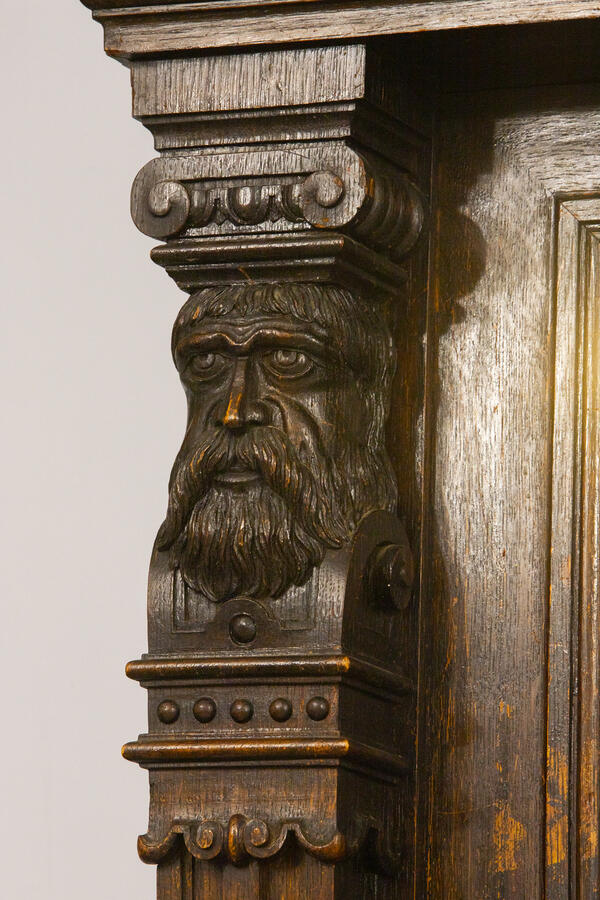
The projecting cornices divide the china cabinet horizontally. The vertical structure is defined by the decorative pilasters. The craftsmen also carved capitals in the form of volutes — spiral, scroll-like ornaments found in the capital of columns.
The very top of the china cabinet and the wooden doors feature a very common “shell” motif, which dates back to the art of antiquity. Of particular interest are the unusual carved mascarons on the side pilasters. This ornament imitates the severe countenance of a Russian peasant with a bowl haircut and a broad and thick beard.
The decorative plates under the pilasters resemble the metal details of old Russian furniture with round nail heads. Such details, as well as gilded monograms on the glass doors, suggest that this china cabinet formed part of a customized and rather expensive oak furniture set.
The cabinets at the bottom usually contained shelves and had wooden doors with locks. Above them, there were drawers for silverware.
The sideboard on top also had shelves, where the most beautiful porcelain was usually displayed. The same principle was applied to designing the oak china cabinet from the museum’s collection. This solid piece of furniture was part of a Russian-style set.
The china cabinet from the museum’s collection is built according to the traditions of 19th-century furniture. At first glance, it impresses with its sturdiness and a certain massiveness. The china cabinet is decorated with a variety of carved and chiseled details.
In the 19th century, the classical architectural orders — pilasters, cornices, and corbels — were widely used in furniture decoration. They can also be found in this china cabinet.
The projecting cornices divide the china cabinet horizontally. The vertical structure is defined by the decorative pilasters. The craftsmen also carved capitals in the form of volutes — spiral, scroll-like ornaments found in the capital of columns.
The very top of the china cabinet and the wooden doors feature a very common “shell” motif, which dates back to the art of antiquity. Of particular interest are the unusual carved mascarons on the side pilasters. This ornament imitates the severe countenance of a Russian peasant with a bowl haircut and a broad and thick beard.
The decorative plates under the pilasters resemble the metal details of old Russian furniture with round nail heads. Such details, as well as gilded monograms on the glass doors, suggest that this china cabinet formed part of a customized and rather expensive oak furniture set.