In the second half of the 19th — early 20th centuries, the Shors used wooden, birch bark, clay, and metal kitchen utensils for storing food and cooking in the oven and in the hearth. The latter included all kinds of frying pans and kettles, pokers and grips that could be purchased or made.
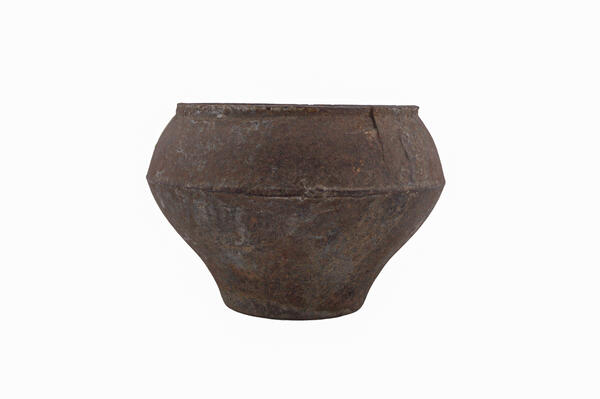
To cook food over a fire, the ingredients placed in a cast iron casserole dish, which was placed in the oven or on a metal tripod over the fire. A grip was used to move it.
Cast iron is a durable material that resists corrosion and overheating, although it can crack due to a sudden temperature change or accidental mechanical damage. Cast iron cookware heats up quickly and evenly and retains heat for a long time, so food simmers in it, retaining its beneficial properties, and does not become burned.
Cast iron casserole dishes were used to stew potatoes, rutabaga, beets, carrots, cabbage (since the beginning of the 20th century they were grown near the house), simmered blood sausage, steamed viburnum, currant, and meadowsweet leaves. Round “kalash” bread was baked on another cast iron product — a frying pan.
In the first half of the 20th century, cast iron braziers came into use in Shor households near cities and large settlements. Local blacksmiths made parts of grips, tripods, frying pans and other metalware commissioned by the locals.
In his monograph “Gornaya Shoria. Historical and Ethnographic Essays”, Valery Makarovich Kimeyev and Alexander Ivanovich Kopytov also describe other cast iron products popular with the Shor people. Those include, in addition to the items already mentioned, “goose casserole dishes… and washstands. Until now, the Shors use flat koorgush cauldrons and deep cauldrons, frying pans, kapkysh grips, kosege pokers, teapots, and handicraft samovars.” “Roche” vessels were also mentioned — they look like jugs with a high neck and “components of a moonshine still.”
As trade in Siberian cities developed, the products of the Abazinsky, Guryevsk and Tomsk metallurgical plants began to appear at fairs.
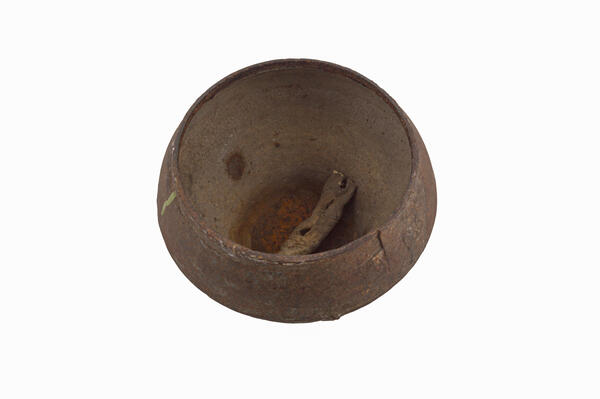
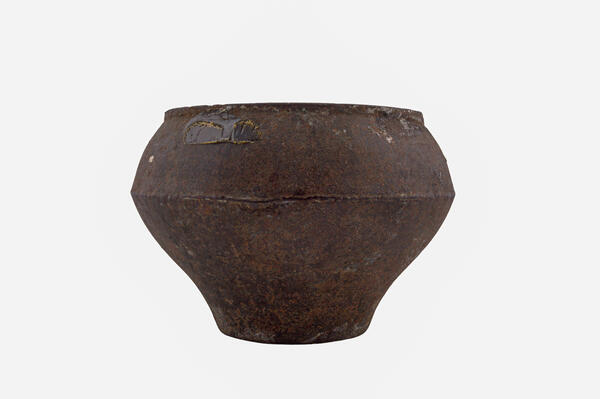
The exhibited cast iron casserole dish was brought
to the museum from an expedition to the Shor village of Uchas, Orton
territorial administration.