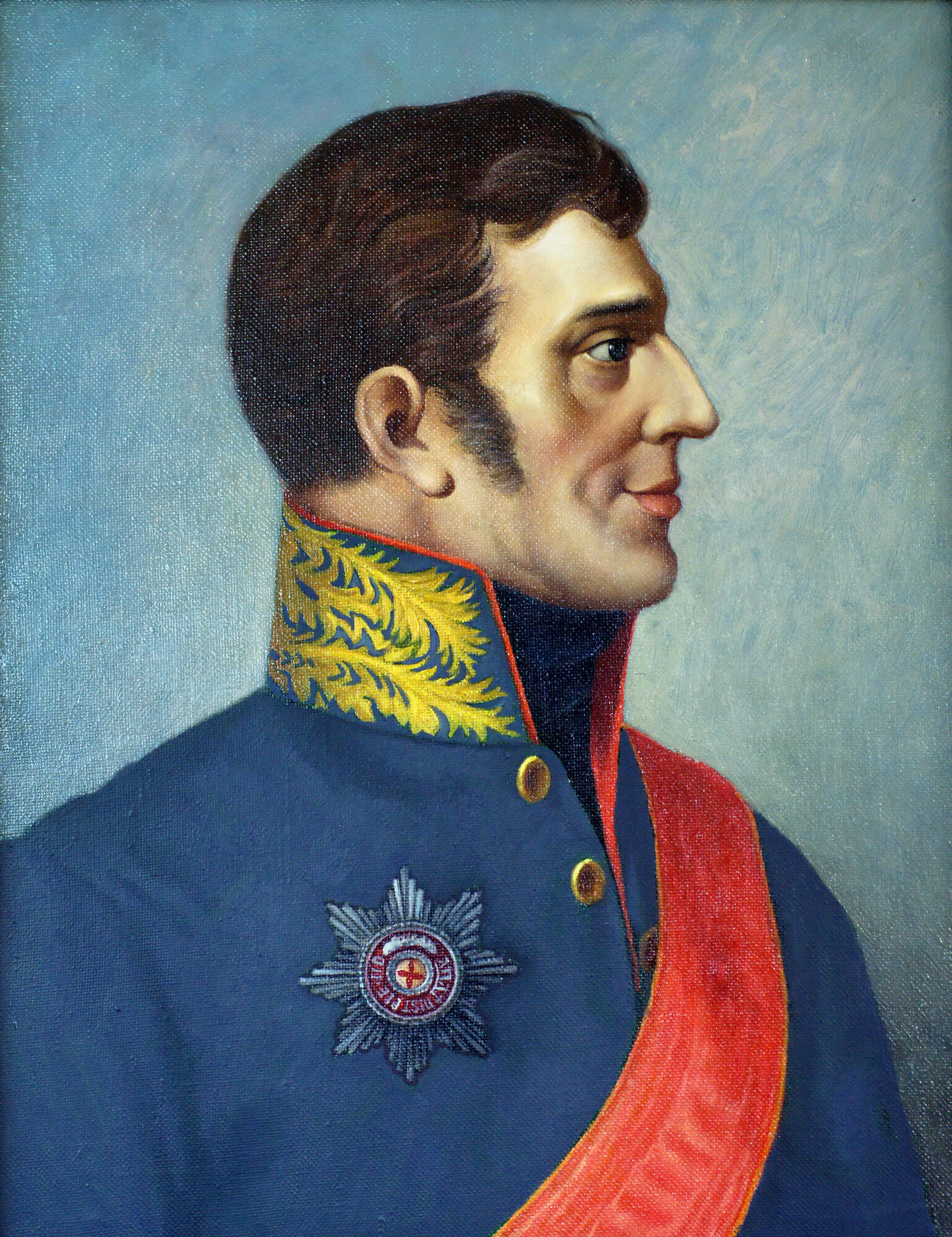


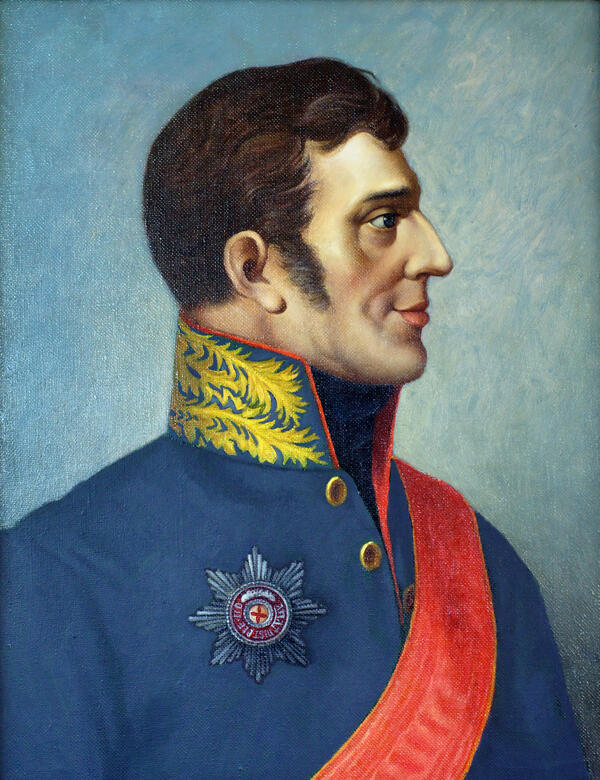
The portrait depicts Andrey Deryabin. The painting was created by an unknown artist of the first quarter of the 19th century. Saint Petersburg Mining University (the former Mining Cadet Corps) houses the portrait. Aleksandr Yegorovich Lozhkin, the people’s artist of Udmurtia, the laureate of the State Prize of the Udmurt Republic, created the exposed copy of the portrait for the museum in 1997.
Andrey Deryabin was born into a priest family in the village of Deryabinsky, Verkhotursky District, Siberian Governorate, on October 2, 1770. He was destined to become a priest. However, he went to St. Petersburg and enrolled in a mining school. He graduated as one of the best students. In 1790, he was sent to Nerchinsky plants. In 1791–1792, Deryabin embarked on a business trip to inspect “Blagodatskie and other mines in the region.”
In 1794, the talented engineer was recommended further training with the best companies in Western Europe. In 1796, he was sent to the UK. This business trip catapulted Deryabin’s career. In the fall of 1800, Deryabin became the head of the Cabinet Expedition and the Office Separating Gold from Silver. In 1801, Andrey Deryabin headed Goroblagodatskie, Permsky, Bogoslovsky, and Kamsky plants.
By the order of the College of War, he was tasked with finding a place for a new arms factory. As a venue for the new plant, he chose Izhevsk ironworks. In 1807, the construction of the arms factory began under his supervision. At the same time, he managed Votkinsk ironworks. In 1807, Deryabin opened the first factory school in Votkinsk and another one at the Izhevsk arms factory in 1808.
Andrey Deryabin also initiated the introduction of ‘uniform identification kaftans’ distinguishing proficient gunsmiths. In 1810, he was put in charge of the Mining and Salt Affairs Department and the Mining Cadet Corps simultaneously.
Andrey Deryabin was awarded the 1st class Order of St. Anna. In 1816, he resigned citing an illness. Following the resignation, he lived in Gomel and managed the estates of Count Nikolay Rumyantsev. Deryabin died in 1820. He was buried at Svyato-Vvedensky Tolgsky Convent near Yaroslavl. In 1907, a monument to Andrey Deryabin was built on the dam of the Izhevsky pond. The passage through the crest of the Izhevsky pond dam was named after Andrey Deryabin. In 2002, a portion of the ashes of the arms factory’s founder was buried near the Aleksander Nevsky Cathedral in Izhevsk.
Andrey Deryabin was born into a priest family in the village of Deryabinsky, Verkhotursky District, Siberian Governorate, on October 2, 1770. He was destined to become a priest. However, he went to St. Petersburg and enrolled in a mining school. He graduated as one of the best students. In 1790, he was sent to Nerchinsky plants. In 1791–1792, Deryabin embarked on a business trip to inspect “Blagodatskie and other mines in the region.”
In 1794, the talented engineer was recommended further training with the best companies in Western Europe. In 1796, he was sent to the UK. This business trip catapulted Deryabin’s career. In the fall of 1800, Deryabin became the head of the Cabinet Expedition and the Office Separating Gold from Silver. In 1801, Andrey Deryabin headed Goroblagodatskie, Permsky, Bogoslovsky, and Kamsky plants.
By the order of the College of War, he was tasked with finding a place for a new arms factory. As a venue for the new plant, he chose Izhevsk ironworks. In 1807, the construction of the arms factory began under his supervision. At the same time, he managed Votkinsk ironworks. In 1807, Deryabin opened the first factory school in Votkinsk and another one at the Izhevsk arms factory in 1808.
Andrey Deryabin also initiated the introduction of ‘uniform identification kaftans’ distinguishing proficient gunsmiths. In 1810, he was put in charge of the Mining and Salt Affairs Department and the Mining Cadet Corps simultaneously.
Andrey Deryabin was awarded the 1st class Order of St. Anna. In 1816, he resigned citing an illness. Following the resignation, he lived in Gomel and managed the estates of Count Nikolay Rumyantsev. Deryabin died in 1820. He was buried at Svyato-Vvedensky Tolgsky Convent near Yaroslavl. In 1907, a monument to Andrey Deryabin was built on the dam of the Izhevsky pond. The passage through the crest of the Izhevsky pond dam was named after Andrey Deryabin. In 2002, a portion of the ashes of the arms factory’s founder was buried near the Aleksander Nevsky Cathedral in Izhevsk.