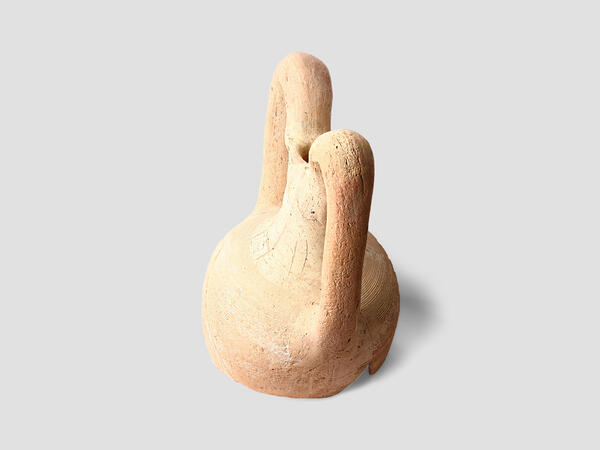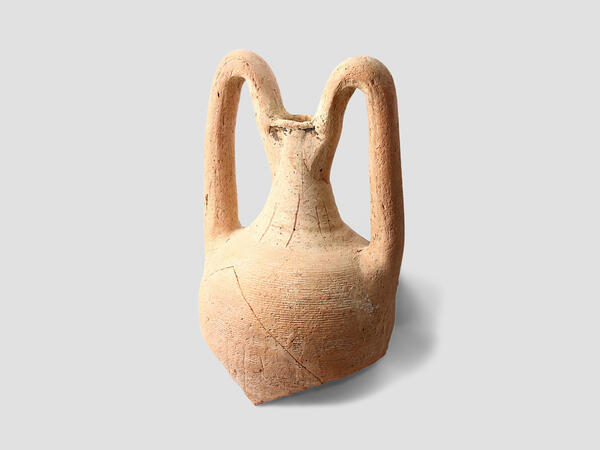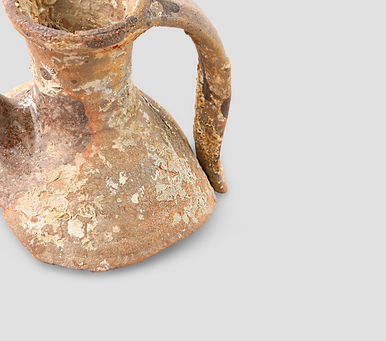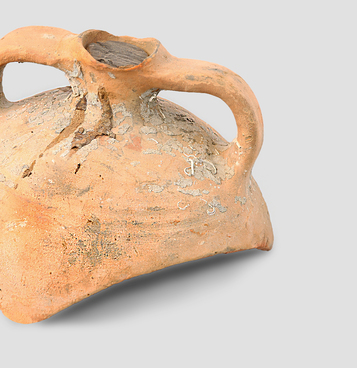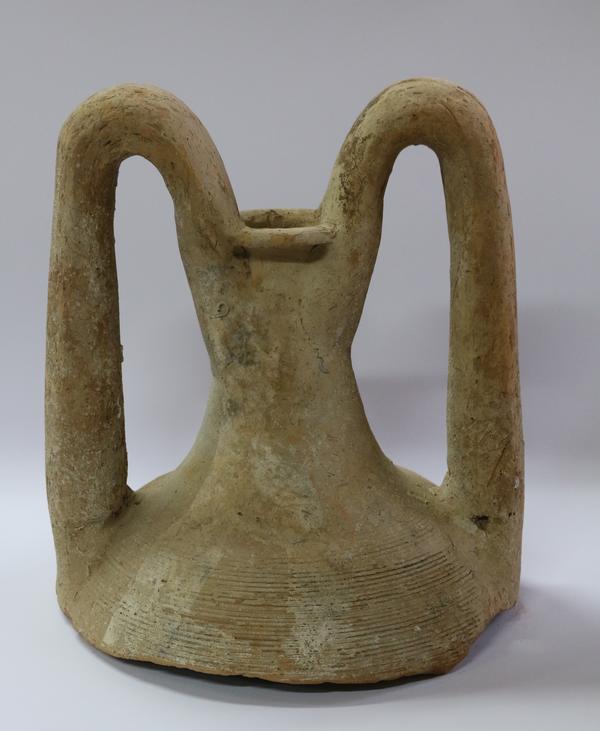
Amphorae were vessels with a volume ranging between 5 and 50 liters, used to store and transport various products. Most likely, the displayed amphora was used to transport wine.
In the ancient world, wine was part of the daily diet of noble townspeople, villagers and slaves and differed in quality and cost respectively. In “The Experience of Historical Reconstruction of Greek Wine”, Anastasia Stepanchenko points out three main stages in the evolution of winemaking: grape-stomping, stationary hand presses and mechanical presses.
To describe the process of winemaking in antiquity, the researcher also refers to the writings of Marcus Porcius Cato. At the fermentation stage, aromatic herbs (iris, dill) were added to the must; then “liquid resins or turpentine oil were added… creating a glaze on the surface” to protect the wine against souring. The mass was also mixed with essences of caraway, roses, cinnamon and other spices. It was also recommended to put a resin-saturated shingle with burnt melilot or gladiolus in the dolium (a vessel used to ferment wine) and close it until the wine was poured to make it fragrant.
A new round of the development of winemaking is connected with the Roman Empire. The Romans came up with a number of innovative technologies in the cultivation of vines and their processing. In particular, they mastered “treating the product with heat in special cellars to artificially accelerate its aging.”
During the Roman conquests, viticulture spread throughout the Mediterranean region and other European regions; the fall of the empire led to the gradual decline of the trade. During the late Middle Ages and modern times, winemaking was intended for domestic use and practiced mainly on monastic and small peasant farms.
Archaeological finds testify to the former glory of Greek wines produced on the islands of Thasus, Rhodes and Kos: wine amphorae are found all over the Mediterranean region, on the territory of the Northern Black Sea states and in the region of Pontus. This amphora was recovered from the bottom of the sea in the bay of Novy Svet in 2002.