The port city of Sugdeia (the ancient name of Sudak) is arranged in a semicircle on the southern slopes of Krepostnaya Mountain and the Polvani-Oba fossil coral reef. The only way to the port passed through a narrow gorge. The terrain conditions of that place were in favor of erecting a defense line of fortress walls and towers.
Excavations and underwater research carried out in 1975–1976 helped to establish that the water area of the port included Tikhaya Bay with a small harbor between Cape Dimitraki and Polvani-Oba. On the busy shore of the port, there were residential houses, craft workshops, merchant shops, warehouses and taverns; streets and alleys rose along the slopes like staircases.
Since then, the shore with what was left of the buildings went underwater for three or four meters, and the bay disappeared. Today, the territory of the ancient port can be seen from the viewing platform of the Uglovaya Tower (the north-western wall of the fortress).
The fortification of Sugdeia was created to protect the coastal sea routes from the Byzantines, who strove to claim the northern shores of the Black Sea. Stone moles were made for this purpose; the narrow passage to the harbor was blocked with an iron chain.
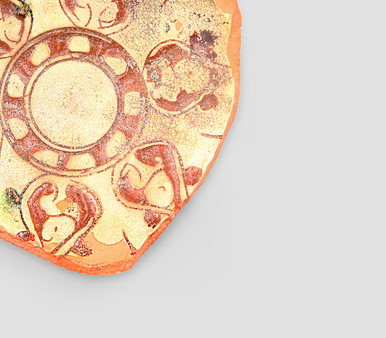
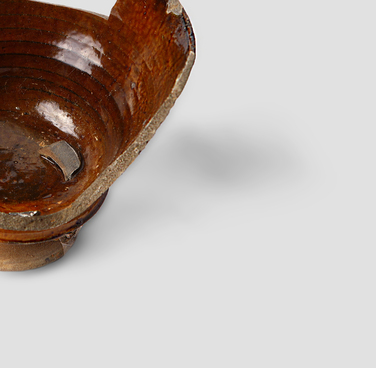
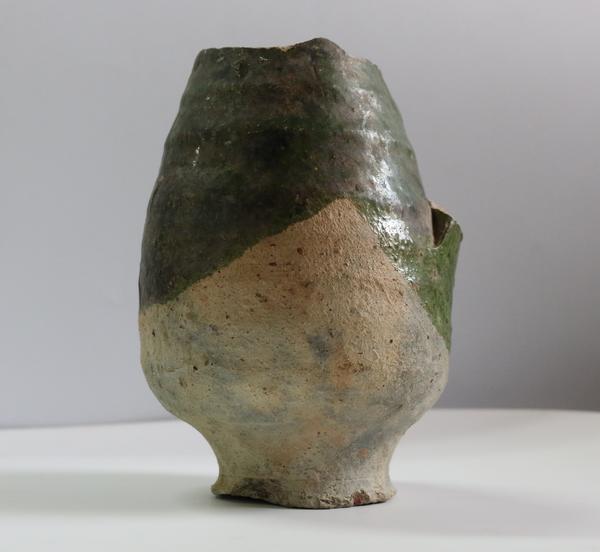
The fragment of the jug on display is one of the finds recovered from the seabed in this area.
Underwater archaeology has its own special procedure for artifact recovery. The usual shovel is not used for excavations underwater, as it disturbs the sediment. Therefore, digging is replaced by removing silt from the surface of the objects.
With rather solid objects such as ship hulls, a strong water jet is used to remove silt, while more fragile finds require pneumatic and hydraulic ejectors. Archeologists remove the silt mass and at the same time clean the object itself with a trowel, in some cases with a brush.
After the artifacts are raised to the surface, they are gradually freed from minerals (primarily sea salt) and water and then covered with a special composition to protect them from exposure to air and light.