Medieval Greek pottery was characterized by a variety of forms and hence required various approaches and production techniques.
Vessels of relatively simple shapes were usually molded from a single piece of raw material. In other cases, the potter made separate parts, then joined them and treated the joining surfaces with a wet clay coating. The curves between the body and the neck or foot masked the “seams”.
Large vessels like pithoi also consisted of several parts: they were assembled, but the smooth surface did little to hide the “seams”. Therefore, the assembled product was left at a cool temperature for a few hours so that it did not dry too quickly, then its surface was coated with raw clay and thoroughly smoothed out.
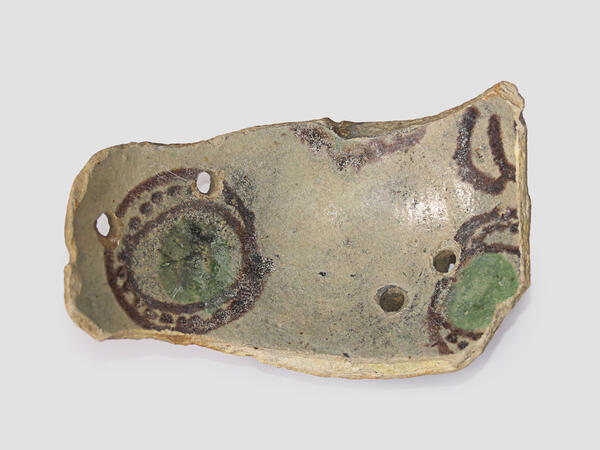
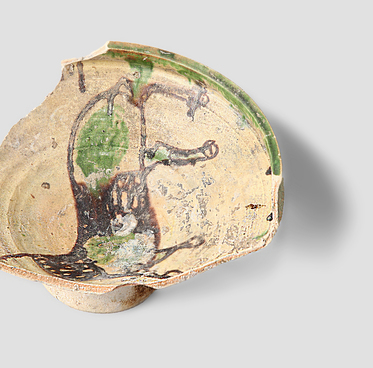
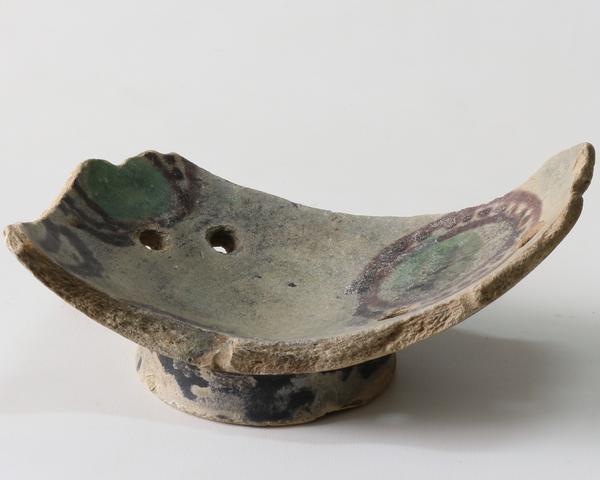
Ceramics were quite fragile, and they were repaired even in areas far from pottery centers. To repair a ceramic vessel, holes were drilled in the places of chips and cracks, and the parts were connected with metal (copper, bronze or, more often, lead) rivets or thin leather straps. Sometimes a lost fragment was replaced by a similarly sized one taken from another vessel. Some items show traces of vegetable or animal glue.
Dishes, plates and bowls restored in this way were no longer suitable for holding liquids but could be used as a vase for fruit or vegetables.
Nowadays, ancient ceramics are restored by specialists, and this is a quite painstaking process that requires professional skills.
First of all, the restorer must study the porosity of the clay from which the vessel is made and choose a suitable glue: