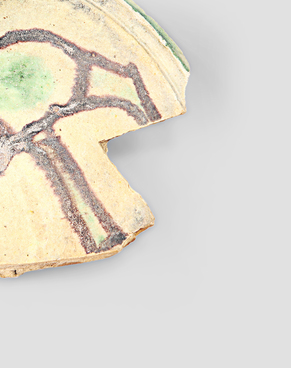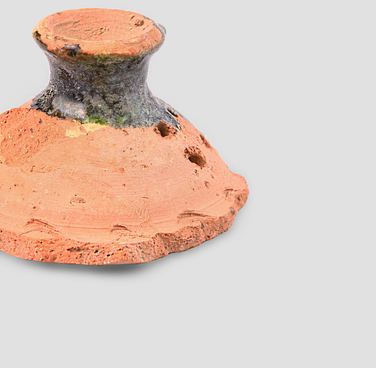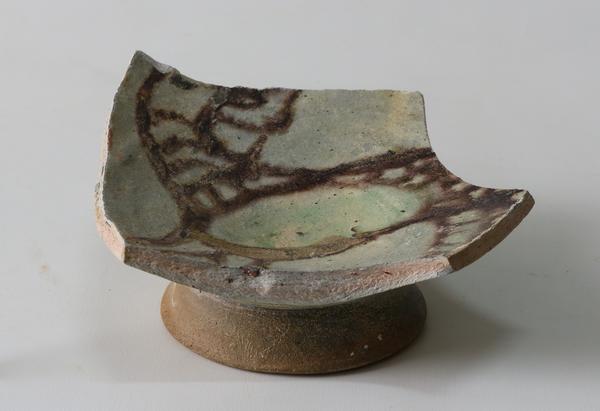
The exhibit was raised from the site of a 13th-century shipwreck in Novy Svet Bay. The bowl either was part of goods transported by the ship or belonged to someone from the passengers or the crew.
Some evidence, including that based on archaeological research, points to the fact that the whitewater was imported from Constantinople to Crimea. But there are other versions.
Doctor of Historical Sciences and Professor Valentin Nikolayevich Danilenko points out that, in the 13th–14th centuries, local redware and presumably imported whiteware on the territory of Chersonesus were almost equal in numbers. And this means that “it remains unclear why redware… did not supersede whiteware <though> many of its characteristics surpass <the latter>”: redware is more durable, decorative and cheap (excluding the cost of transportation).
Prof. Danilenko points out that the found redware shows signs of repair more often, yet the whiteware, if it was indeed imported and therefore expensive and difficult to obtain, “ should have been mended much more often” in hopes of preserving the precious item.
Assuming that the rare white clay could have been imported, the auth o concludes that it could be used by the local potters, and therefore the “imports” were largely products made in Crimea.
However, with the shipwreck in Novy Svet Bay, the sheer number of finds points to them being a trade shipment. The collection from this site is considered one of, if not the largest known museum collection of Byzantine art pottery of this type.
Within the collection, researchers note the diversity of pattern variations, styles in decoration and technological features.
The inside of the vessel features a partially preserved image of an animal. Such paintings were widespread, and many of them are demonstrated in Vera Nikolayevna Zalesskaya’s catalog “Monuments of Byzantine Applied Art. Byzantine Ceramics of the 9th–15th Centuries”. Apart from wolves, peacocks and other real-life animals and birds, fantastic creatures also appear in the images.