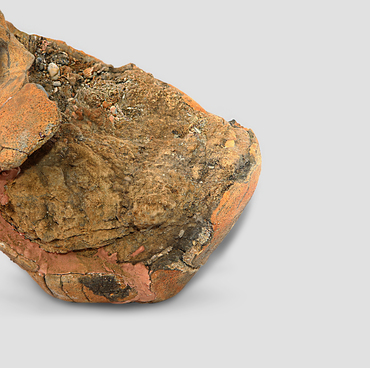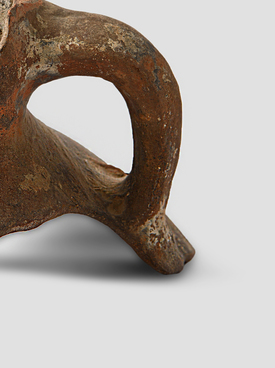


Ceramic objects found at shipwreck sites and port facilities could have been either the cargo carried by a sunken ship or part of the equipment. If the latter, the vessels were used to store the ship’s provisions, and after use they were often thrown into the sea.
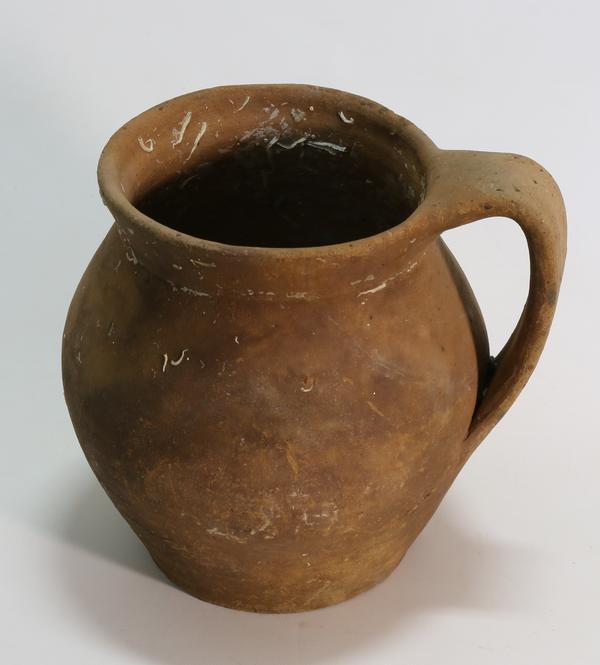
The displayed cooking pot with a single handle belongs to that category of ship dishware. It was used for storing food and cooking during coastal voyages.
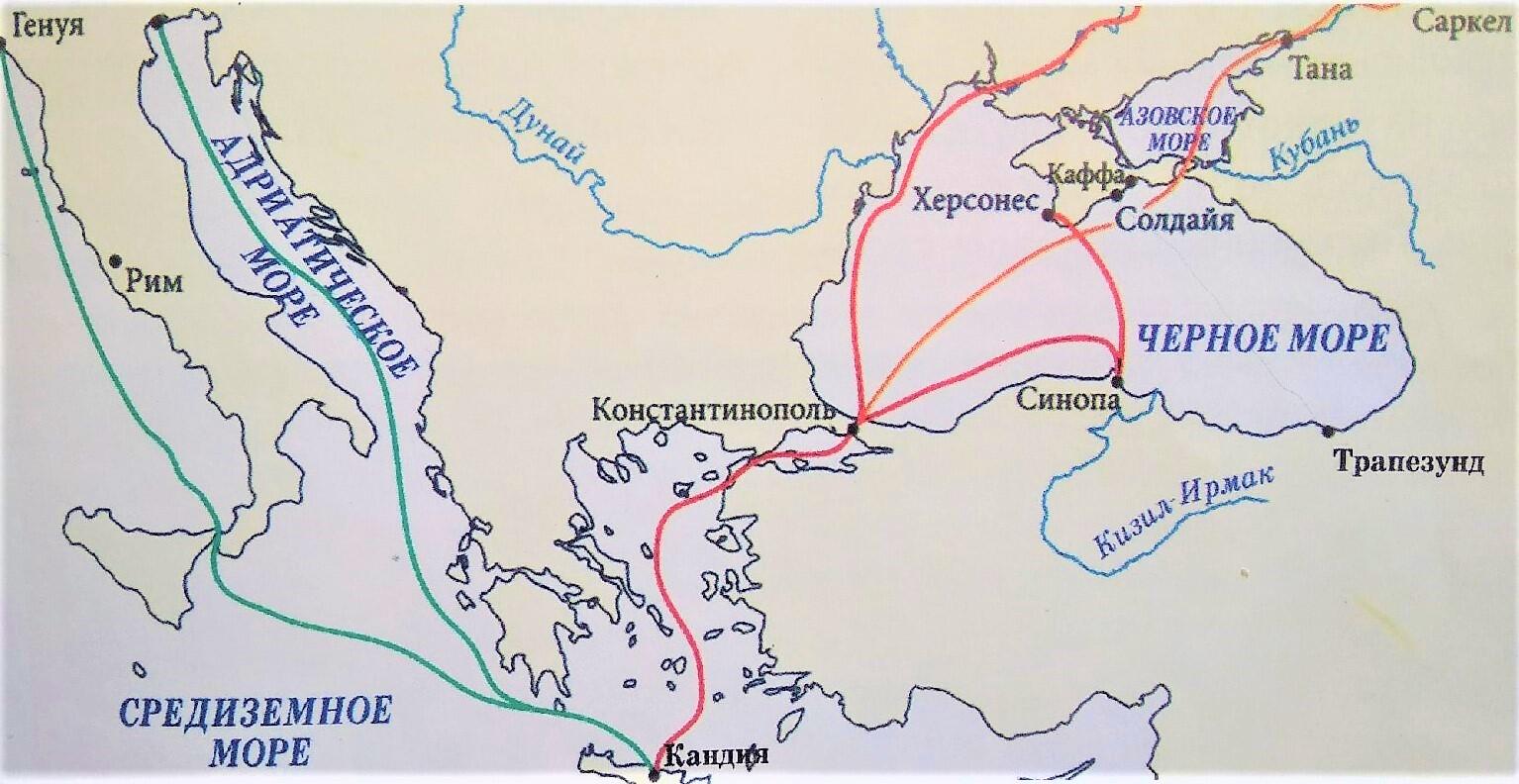
From old times, sailors knew two shortest routes between the Black Sea and the Mediterranean Sea: from Sinop to Balaklava (Chembalo) and from Trebizond to Soldaya. The discovered piles of amphorae can provide a visual illustration of these trade routes: their location points, separated by some distance, form a single distinct line between the two seas.
In the 13th century, there was an active colonization of Taurica by Italian merchants. The first known written document is dated 1206 (two years after the fall of Constantinople) and is a trade contract, where Soldaya is designated as a destination point. However, the Italian monopoly led to a fierce confrontation between the colonizers — the largest maritime republics of Venice, Pisa and Genoa. The conflict was especially heated between the latter two.
In the 1270s, an open feud between Genoese and Pisan merchants unfolded on the Apennine Peninsula, with Pisan galleys attempting to intercept their rivals’ ships. According to written sources, on August 14, 1277, a sea battle took place near Soldaya, which resulted in the galley with Pisan “pirates” being burned and sunk by the Genoese.
Amphorae and ceramics from the Mediterranean region, as well as glazed plates and Italian glassware were found on the sunken ship, which is currently being studied, in Zelyonaya Bay near the Novy Svet settlement. It was also established that there had been a strong fire on board. All these discoveries point to the fact that underwater archaeologists are dealing with the Pisan galley mentioned in the documents.
This assumption can be confirmed or denied once the research is fully completed.