In 1548, at the insistence of the brethren and with the blessing of Archbishop Theodosius of Novgorod, Philip (born as Feodor) Kolychev became head of the Solovetsky Monastery; he was later canonized.
Coming from a noble boyar family, Feodor from an early age gravitated towards monastic feats. Abandoning his life at the court of Ivan the Terrible, he secretly went to the Solovetsky Islands, where a year and a half later he took vows under the name of Philip. The monk performed challenging duties, lived in seclusion, gained the respect of the brethren and nine years later became hegumen.
The monastery flourished under Philip. Its benefactors were many influential people, including Tsar Ivan the Terrible, who favored the abbot at that time; in particular, the monks received the right to sell salt, which they made themselves, without paying taxes. In a short time, the monastery became the largest cultural and industrial center of Pomorye. The Solovetsky Islands have always been indicated on maps by Western European cartographers.
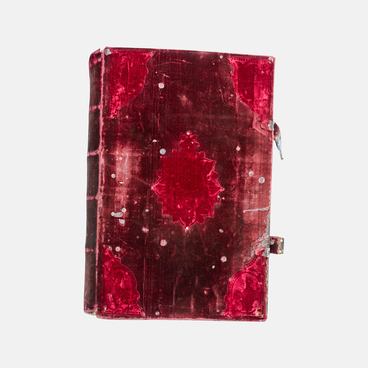
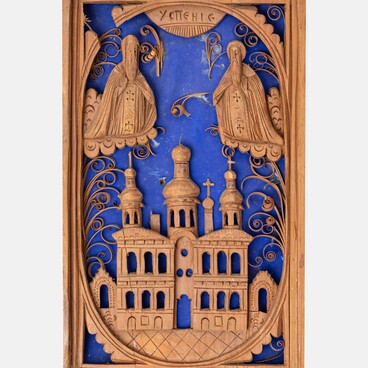
During that period, new churches of the Transfiguration of the Lord (which housed the relics of Saints Sabbatius and Zosimas) and the Dormition of the Virgin were erected at the monastery. The image of the Mother of God Hodegetria (Our Lady of the Way), brought by the Venerable Monk Sabbatius, the stone cross standing in front of the saint’s monastic cell, as well as the Psalter and the vestments of Saint Zosimas were also acquired at that time.
The founders of the Solovetsky Monastery Zosimas and Sabbatius are known as wonder workers and defenders of navigators and healers. Their veneration was approved by the Church in 1547; Herman Solovetsky, an associate of both saints, was canonized a little later.
The first edition of the hagiography of Sabbatius and Zosimas was compiled in the late 15th century; however, it was not preserved. The second one was recorded from the words of Elder Herman by Zosimas’s disciple Dositheus, but it also disappeared. Dositheus, according to Herman’s and his own memoirs, compiled the third life. In the edition of the monk Spiridon-Savva of the Ferapontov Monastery, it was preserved in one copy. The next edition belonged to Maximus the Greek; over time stories about miracles and a panegyric were added to his edition.
There are several icons that depict Saints
Sabbatius and Zosimas of Solovki. The presented image depicts the entire
monastery, shown from a bird’s-eye view, at the feet of the founders. The
elements of linear perspective painting allowed the icon painter to create a
fairly detailed map of the monastery not only with its churches, but also with
household buildings, fish barns, a karbas (boat) approaching the shore, and
even birds in the yard. As a reference, the master used an icon that is now kept
in the collection of the Vologda Museum.