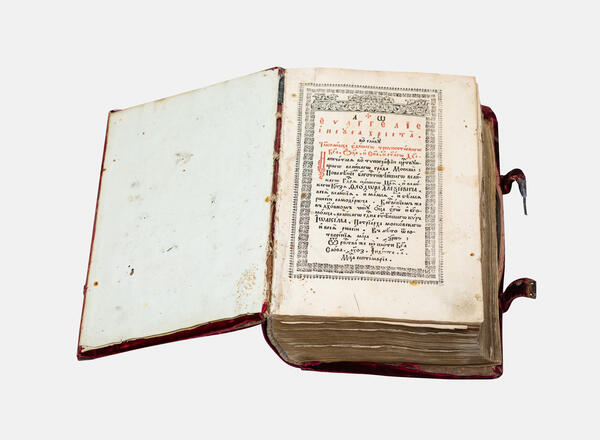
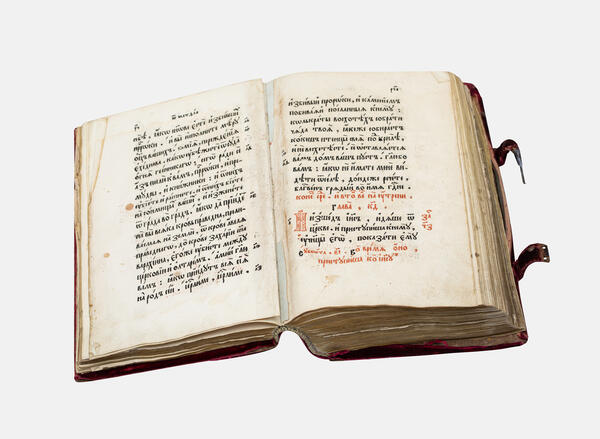
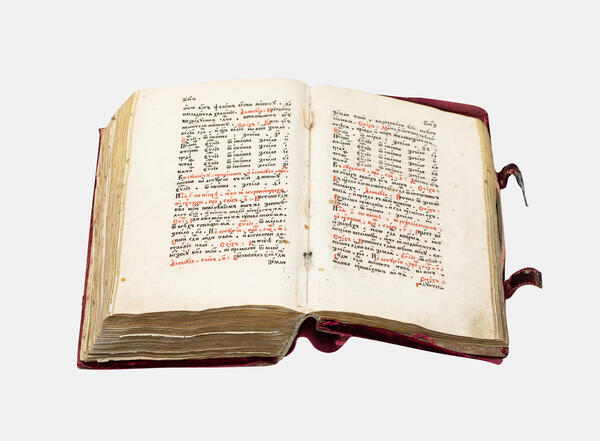
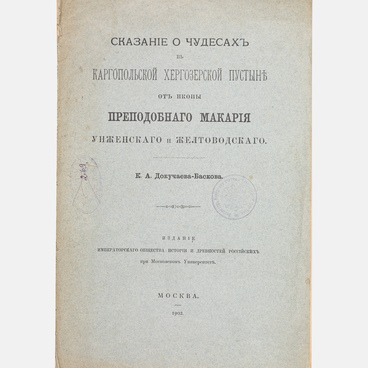
The museum’s collection includes books that once belonged to the Kipriyanov family. They were rich merchants and sailors who donated large sums, lands and icons to churches and monasteries. The most valuable artifact in the Kipriyanov collection is the Gospel of 1677, printed in Moscow and given as a gift to the Transfiguration Monastery. According to the inscription on the page, the person who donated the Gospel in May 1679 was the “posad man (burgher) Semyon Euplov Kipriyanov”.
Eupl is a baptismal name in memory of the martyr Archdeacon Euplius; it literally means “the good sailing, good navigator”. In everyday life, the father of the said Semyon Kipriyanov was called the Second (traditionally, such names-numerals were given to children according to their birth).
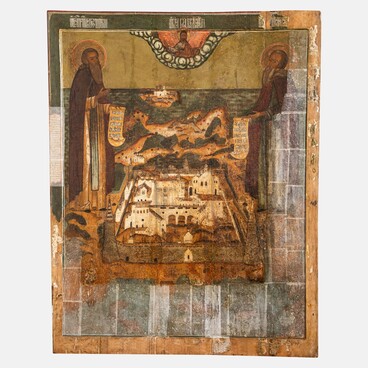
Eupl the Second Kuzma’s son, the most famous representative of the family, was an elected delegate at the Moscow Zemsky Sobor when the Council Code of 1649 was adopted. In 1653, he took vows under the name of Yefrem in the Solovetsky Monastery, becoming one of the church elders and contributors to the founding of the Solovetsky Church in Moscow.
As Alexander Nikolaevich Staritsyn testifies (“Debates on Faith in Kargopol”), Eupl-Yefrem played an important role in turning Kargopol “into a kind of refuge for Old Believers.” In the debate in the Solovetsky Monastery between Archimandrite Bartholomew (Varfolomey) and Gerasim Firsov, he took the side of the latter, for which he was deprived of all privileges and exiled from Solovki to the Oshevensky Monastery.
With the assistance of his sons Andrey, Semyon and Yefim, Elder Yefrem helped many monks who fell into disgrace under Archimandrite Bartholomew to move to Kargopol, including (presumably) his confessor Paphnutius, Herman, Iosif Sukhoi, deacon Ignatius, Nikon, Tryphon, and Timothy. They stood at the origins of the Kargopol Old Believer community.
After the death of Yefrem (Transfiguration Monastery, 1647) his sons continued to support the monastery. Their family enjoyed great authority in Kargopol and only gradually faded away by the end of the 18th century.
The presented Gospel is decorated with engravings
with images of the Evangelists Luke, Mark, Matthew and John. The image of John
was made under the guidance of the icon painter of the Armory Fyodor Zubov.
Zubov studied icon painting in Veliky Ustyug. He was commissioned multiple
times to create holy images for the Archangel Cathedral of the Moscow Kremlin.