

The village of Embaevo and the village of Turaeva or Big Manchel and Small Manchel (Oly Mantsyl and Kitsy Mantsyl in Tatar) are the areas where the descendants of immigrants from the Bukhara Khanate have concentrated. The Uzbek and Tajik word “manchel” is translated as a stop, a halt. The village was founded by Bukharans, with whom the local population had long traded. Bukhara merchants brought silk, woolen and paper fabrics, leather goods, dried fruits, spices and cattle to Siberia. High-quality fabrics, soft leather, leather products, household utensils, jewelry made of precious stones, skins of sables, beavers, otters and other furs were exported from that area. In 1912, 872 Bukharans and only 65 Tatars lived in the present village of Turaeva. The multi-volume book “Russia” published in 1907 mentioned these settlements as “large centers of trade in leather and fat goods. Rich buildings predominate in the villages, but there is no shortage of squalid shacks.”
The development of the Bukhara gold embroidery turned out to be directly connected with Russia. This technique of hand embroidery with metal gilded (gold) and silver threads developed as the Russian-Bukhara trade relations expanded: it was from Russia that the main supply of gold threads and gimps came. “Spun gold and silver” purchased by Bukhara merchants was mentioned in Russian customs documents as early as the beginning of the 19th century.
Gold embroidery adorned the clothes of the Emir of Bukhara and the nobility. The most common were gold-embroidered robes, which the ruler gave to his followers as a present (and he himself willingly received such gifts). Such embroidery was performed on expensive dense fabrics: taffeta, satin, brocade, velvet, as well as on suede and leather. Embroideries with gold or silver threads were decorated with pearls and gems, and the sewing ornament was almost entirely floral, rarely geometric. In Bukhara, the art of gold embroidery used to be an exclusively men’s business. Not only robes, but also skullcaps, shoes, details of men’s and women’s costumes were embroidered with gold thread.
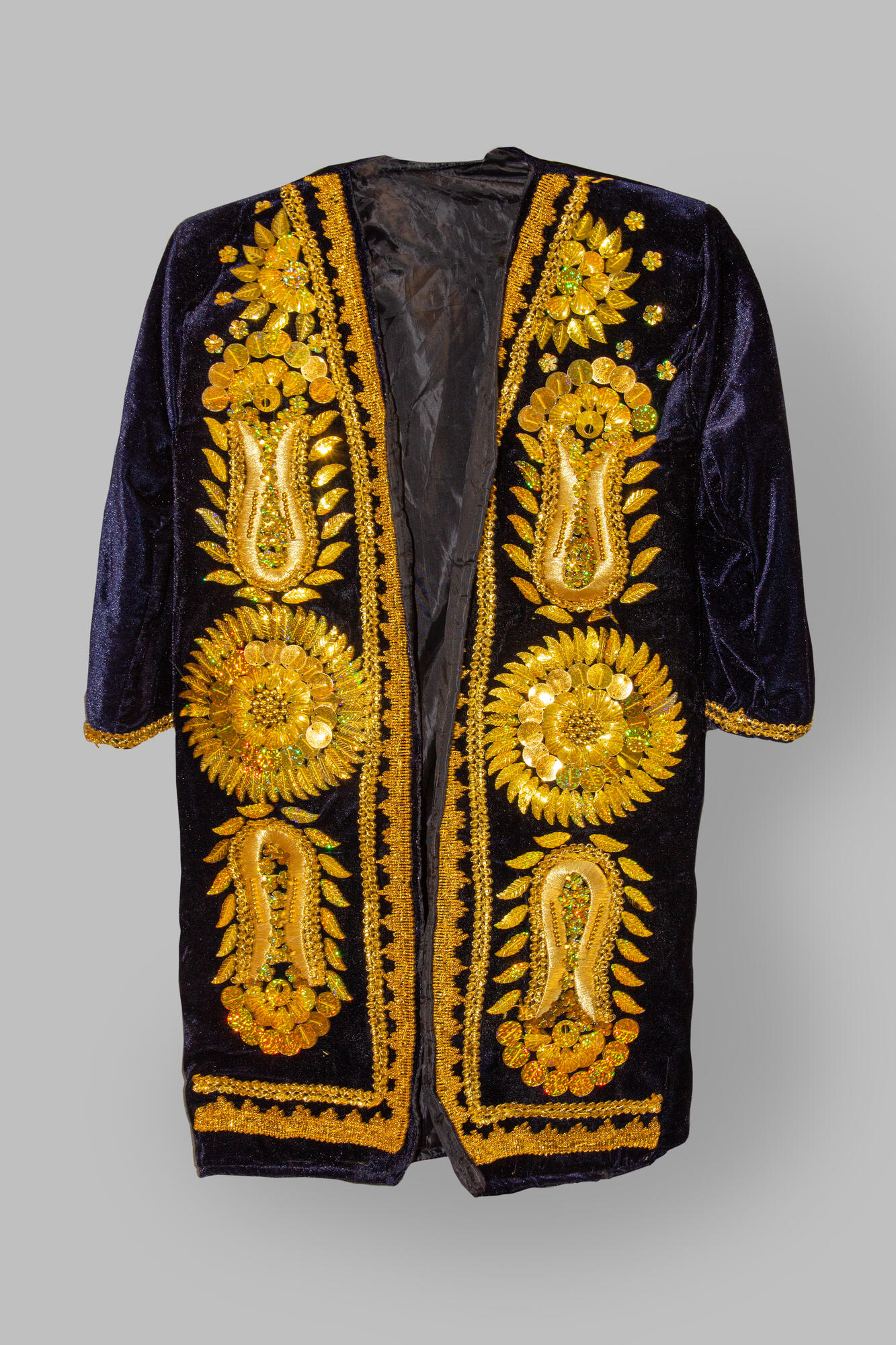
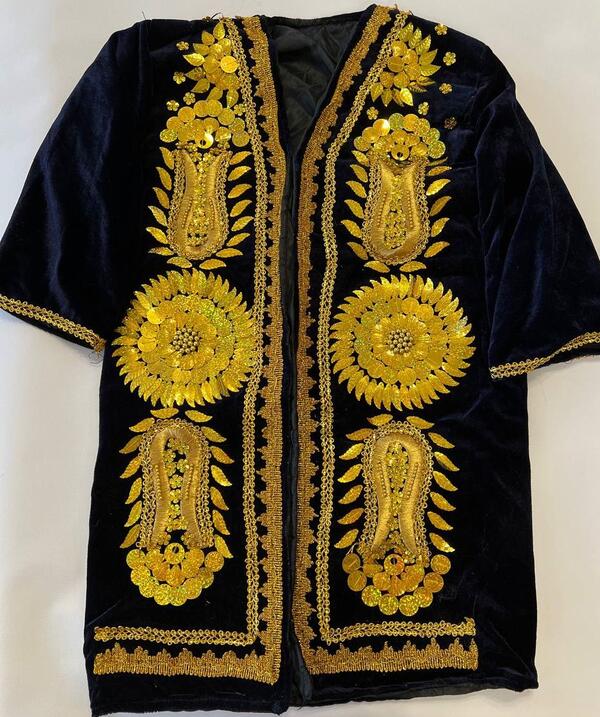
The museum exhibit, embroidered in the technique of gold embroidery, is a coat from a men’s wedding suit.
The development of the Bukhara gold embroidery turned out to be directly connected with Russia. This technique of hand embroidery with metal gilded (gold) and silver threads developed as the Russian-Bukhara trade relations expanded: it was from Russia that the main supply of gold threads and gimps came. “Spun gold and silver” purchased by Bukhara merchants was mentioned in Russian customs documents as early as the beginning of the 19th century.
Gold embroidery adorned the clothes of the Emir of Bukhara and the nobility. The most common were gold-embroidered robes, which the ruler gave to his followers as a present (and he himself willingly received such gifts). Such embroidery was performed on expensive dense fabrics: taffeta, satin, brocade, velvet, as well as on suede and leather. Embroideries with gold or silver threads were decorated with pearls and gems, and the sewing ornament was almost entirely floral, rarely geometric. In Bukhara, the art of gold embroidery used to be an exclusively men’s business. Not only robes, but also skullcaps, shoes, details of men’s and women’s costumes were embroidered with gold thread.
The museum exhibit, embroidered in the technique of gold embroidery, is a coat from a men’s wedding suit.