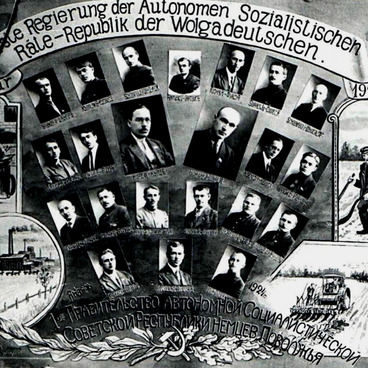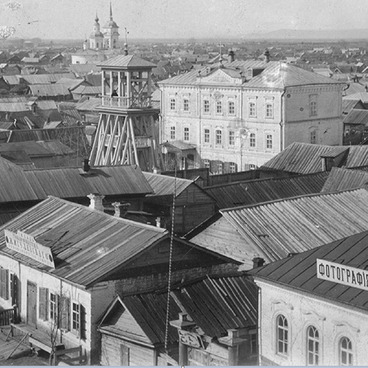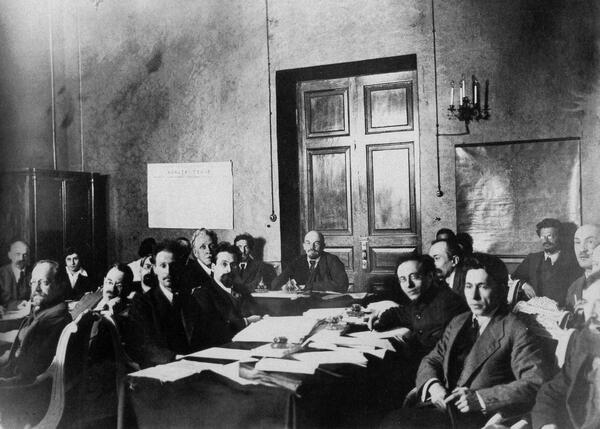
On the path to the development, the Volga region colonists managed to preserve their traditions and language, but still, they did not have their own cultural or national center. The First World War had a negative impact on the German population, so, after the revolution, the Germans began the movement for local self-government. The Volga Commissariat on German Affairs played an important part in that process. On October 19, 1918 V. I. Lenin signed the decree “On German Volga colonies”. It is a legal act of the Soviet government to establish the first national territorial autonomous entity in the RSFSR — an Autonomous Oblast (region) of Volga Germans, adopted by the Council of People”s Commissars of the RSFSR. The Volga Commissariat resigned and transferred full powers to EXCOM (the Executive Committee) of the Labor Commune of Volga Germans (a Trudovaya Kommuna of Volga Germans). The town of Pokrovsk (from 1931 — Engels, named after the German socialist philosopher) became the center of the Nemsrespublika (the Volga German Republic). From 1922 to 1941, the town of Pokrovsk, the capital of the Volga Germans, as well as its district”s villages was a part of the Volga Germans Oblast. By August 1, 1922, all the government offices of the Oblast (region) moved to the new capital, Pokrovsk (since October 1931 — the town of Engels). In 1924, after the reorganization, Pokrovsk became a part of the Volga German Autonomous Soviet Socialist Republic (ASSR NP). All the information is in the documents of the State Historical Archive of the Volga Germans (Gosudarstvennyy istoricheskiy arkhiv nemtsev Povolzhya).


The Council of People's Commissars of the RSFSR
Creation period
1918
Dimensions
21x30 cm
Technique
фотография
Collection
Exhibition
6
Open in app#2
read morehide
00:00
00:00
1x
The Council of People's Commissars of the RSFSR
Creation period
1918
Dimensions
21x30 cm
Technique
фотография
Collection
Exhibition
6
 Point your smartphone camera to open in the app
Open in app
Share