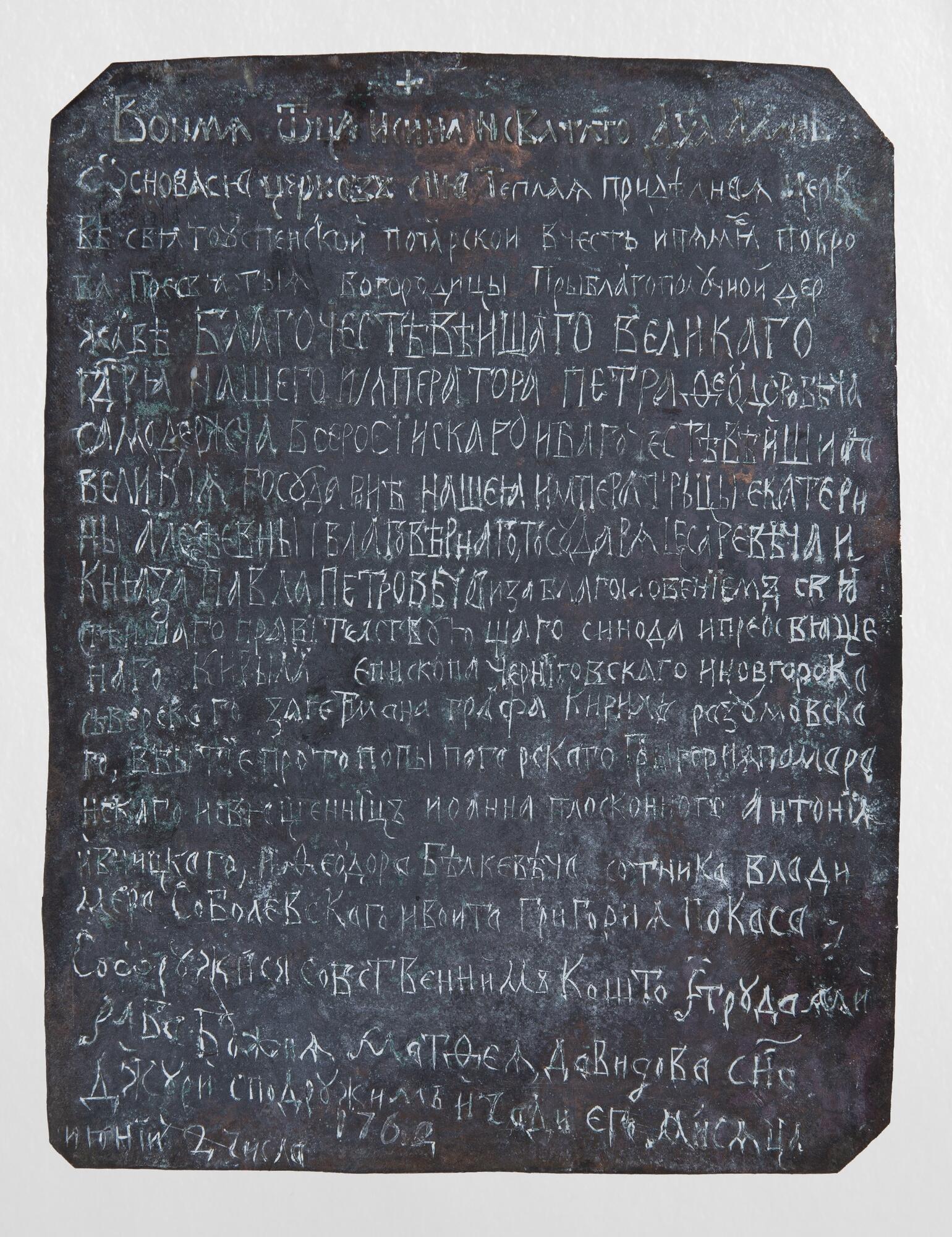


Foundation plaques or boards are metal plates that were placed at the base of an important structure at the beginning of construction. Such a plaque usually contained information about the date of installment, the builders and benefactors.
There was no tradition in Russia of placing plaques in the foundations of buildings. This custom was adopted from shipbuilding in the 18th century. For example, in Kronstadt, foundation plaques were inserted into a keel, the lower part of the bottom of a ship.
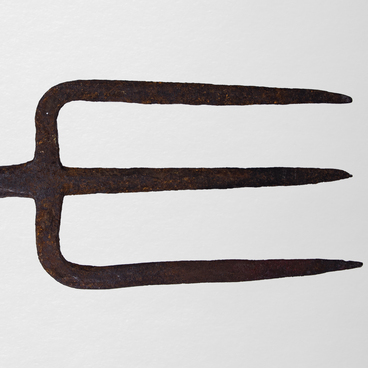
Until the 18th century, Russians threw coins and horseshoes into the foundations of buildings for good luck. Old axes were placed in wooden log houses.
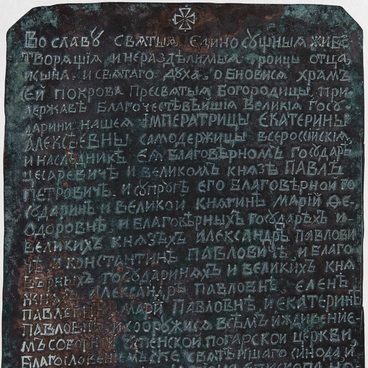
The plaque, housed by the Radogoshch Museum, was found in the 1990s on the site of the Assumption Cathedral, which was destroyed in the mid-20th century. Its base was made of copper in 1762. The commemorative text was inscribed on the plaque,
There was no tradition in Russia of placing plaques in the foundations of buildings. This custom was adopted from shipbuilding in the 18th century. For example, in Kronstadt, foundation plaques were inserted into a keel, the lower part of the bottom of a ship.
Until the 18th century, Russians threw coins and horseshoes into the foundations of buildings for good luck. Old axes were placed in wooden log houses.
The plaque, housed by the Radogoshch Museum, was found in the 1990s on the site of the Assumption Cathedral, which was destroyed in the mid-20th century. Its base was made of copper in 1762. The commemorative text was inscribed on the plaque,