The need for a device that would accurately determine the weight appeared with the development of trade. Primitive scales, resembling a yoke with bowls, were used in Ancient Egypt. In Russia, people did not use them for a long time, relying on the usual units of measurement. Meat, for example, was sold in “scapulas” or “half-carcasses”, special units called “kadi”, “eigths” and “quarters” were used for grain. Wagons were used to count hay, and poultry and bread were counted by the piece.
The tradition of weighing goods, using scales and weights came to Russia from Scandinavia and the East. In the 10th century, merchants began to use balance scales called “skalvy” (sometimes they were simply called “skaly”) for expensive goods like exotic spices or silver that was to be used in the production of jewelry. They were similar in size to apothecary scales and were not suitable for heavy loads.
In his travel notes of 1582, Trifon Korobeinikov wrote about the “skalvy”: “the measure of righteousness was created by Solomon…”
Wholesale merchants increasingly used equal-arm scales, on which a wide variety of goods could be weighed. However, no one could guarantee the buyers that the scales “did not lie.” Such guarantees appeared when special stamps began to be put on scales and weights, confirming their accuracy. In trade affairs, only “eagled” scales were allowed, that is, the state-owned scales that were branded with the state emblem.
The country’s economy developed, and in the 17th and 18th centuries it was decided to establish common standards of measurement and weights. Bringing all the measurements and weights that were used in everyday life and trade to a single value turned out to be a difficult task. By the tsar’s decree, the scales of the St. Petersburg customs were taken as a reference. They were placed in the Senate and used to verify all other scales. In 1736, the Senate ordered to organize a commission of weights and measures. Emperor Paul I signed a decree on the “Establishment throughout the Russian Empire of the correct scales, drinking and bread measurements.”
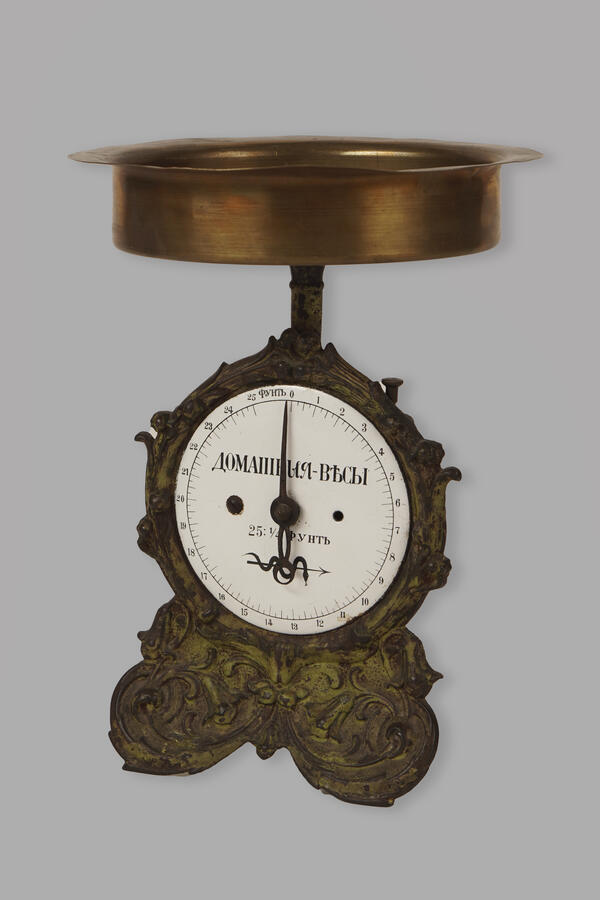
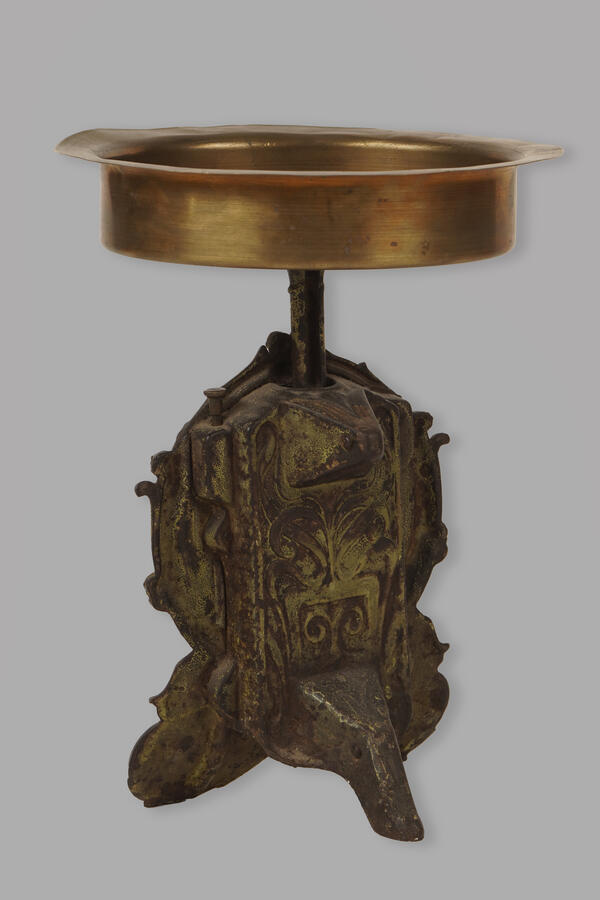
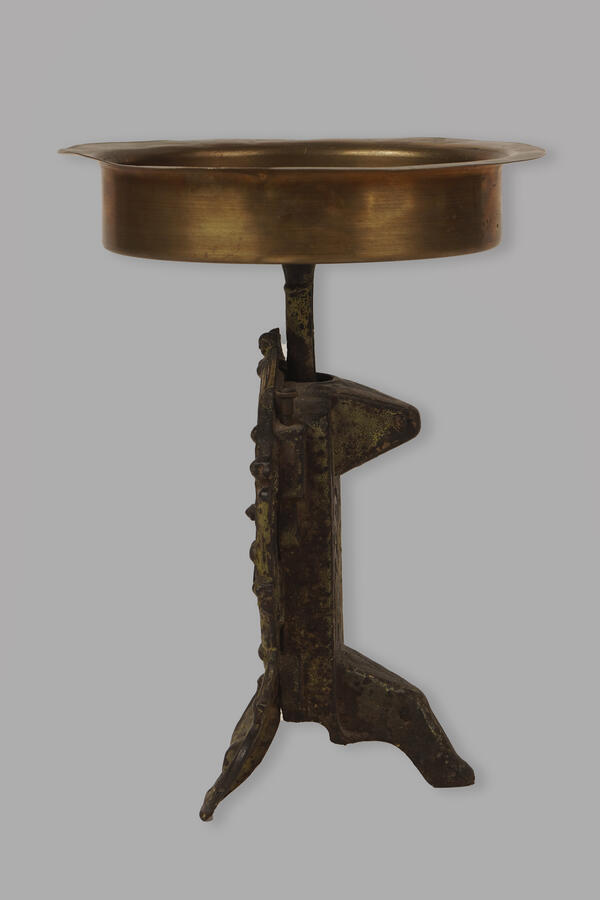
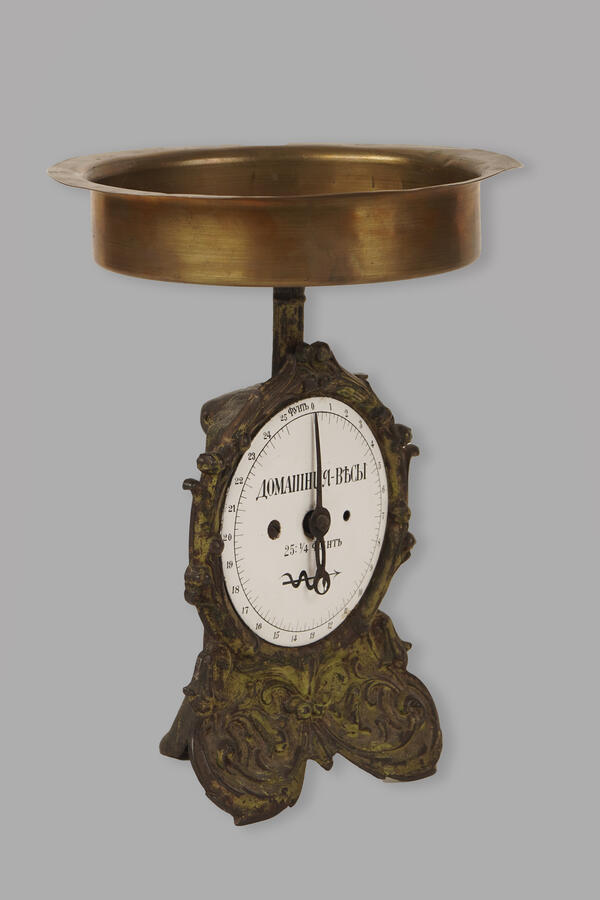
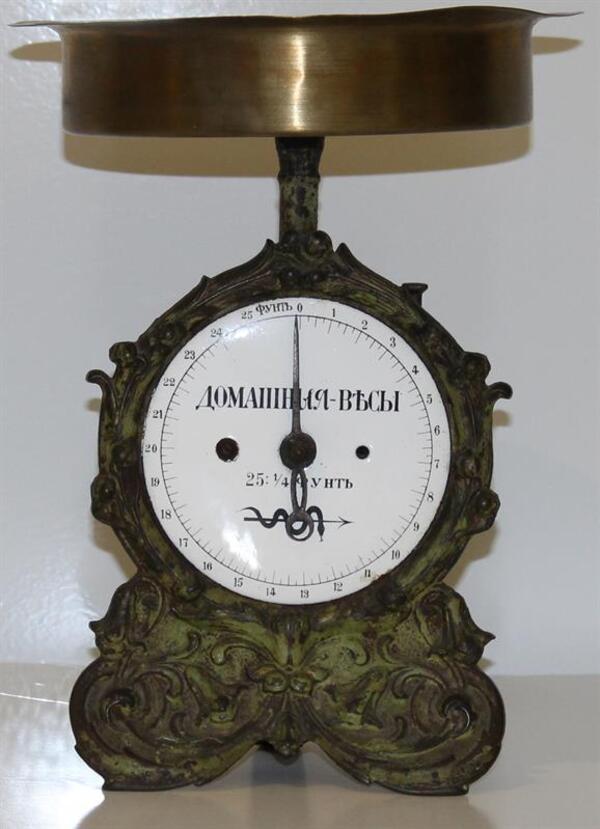
Scales were used in everyday life as well. The kitchen scale on display was used for measuring ingredients while cooking and was capable of accommodating up to 25 pounds.
The pound (409.50 g) was adopted during the reign of Tsar Alexei Mikhailovich and replaced the large hryvnia. This measure has been familiar to Europeans since the time of Ancient Rome and has remained unchanged throughout the years of its existence. Pounds were usually used to measure food products: bread, butter, sweets, and sugar. In a shop, it was allowed to trade in goods weighing at least 1/8 of a pound — an “osmushka”, as it was called by the people. When the metric system was introduced, the pound (like the pood, zolotnik, berkovets, etc.) was abolished.
The tradition of weighing goods, using scales and weights came to Russia from Scandinavia and the East. In the 10th century, merchants began to use balance scales called “skalvy” (sometimes they were simply called “skaly”) for expensive goods like exotic spices or silver that was to be used in the production of jewelry. They were similar in size to apothecary scales and were not suitable for heavy loads.
In his travel notes of 1582, Trifon Korobeinikov wrote about the “skalvy”: “the measure of righteousness was created by Solomon…”
Wholesale merchants increasingly used equal-arm scales, on which a wide variety of goods could be weighed. However, no one could guarantee the buyers that the scales “did not lie.” Such guarantees appeared when special stamps began to be put on scales and weights, confirming their accuracy. In trade affairs, only “eagled” scales were allowed, that is, the state-owned scales that were branded with the state emblem.
The country’s economy developed, and in the 17th and 18th centuries it was decided to establish common standards of measurement and weights. Bringing all the measurements and weights that were used in everyday life and trade to a single value turned out to be a difficult task. By the tsar’s decree, the scales of the St. Petersburg customs were taken as a reference. They were placed in the Senate and used to verify all other scales. In 1736, the Senate ordered to organize a commission of weights and measures. Emperor Paul I signed a decree on the “Establishment throughout the Russian Empire of the correct scales, drinking and bread measurements.”
Scales were used in everyday life as well. The kitchen scale on display was used for measuring ingredients while cooking and was capable of accommodating up to 25 pounds.
The pound (409.50 g) was adopted during the reign of Tsar Alexei Mikhailovich and replaced the large hryvnia. This measure has been familiar to Europeans since the time of Ancient Rome and has remained unchanged throughout the years of its existence. Pounds were usually used to measure food products: bread, butter, sweets, and sugar. In a shop, it was allowed to trade in goods weighing at least 1/8 of a pound — an “osmushka”, as it was called by the people. When the metric system was introduced, the pound (like the pood, zolotnik, berkovets, etc.) was abolished.