Waffles are one of the most ancient and widespread desserts. In different cultures, they have been prepared for centuries according to unique recipes. However, it is still unclear where and when the first waffles appeared.
Historians believe that Eucharist wafers were the prototype of waffles. These were round pieces of breads made of flour and water with the images of Christian symbols. They have been known since the 9th century. In the Catholic and some Protestant churches, they were intended for the rite of the Eucharist and did not belong to delicacies. Nuns often baked communion wafers. However, over time, this recipe began to be used in secular cuisine: honey and spices were to be added to the dough, and the religious image was replaced with floral patterns.
At first, waffles were made from the dough that had been left over and were considered a treat for the poor. However, the recipe of these unusual cakes became more complicated, and already in the 14th century it was considered a treat for the nobility. Disclosure of the recipe was severely punished. The classic “waffle pattern” with a mesh was invented in the 15th century in Holland. But the word “waffle” itself probably comes from the German word “Waben” translated as “honeycomb”.
Wafers, which were thin and dry, were usually rolled up or sealed with a thick filling. But the Belgian confectioners began to add yeast to the dough, and the waffles acquired a new look: they became thick and similar to pancakes. These waffles were to be served hot.
In the 19th century, the popularity of waffles became so great that factory production was launched in the Czech Republic. The development of baking equipment and the spread of beet (cane) sugar contributed to the business.
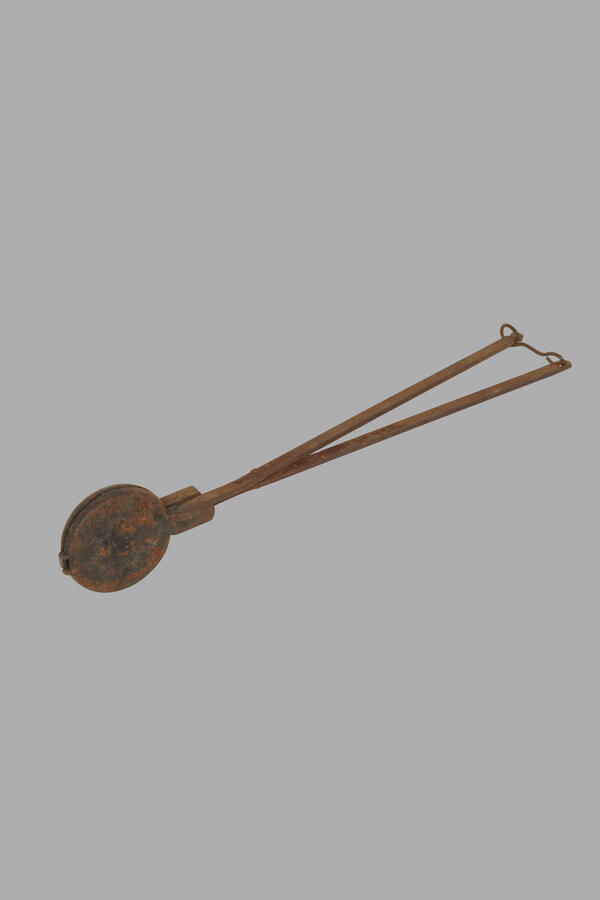
In America, the official birthday of the waffle iron is celebrated on August 24. On this day in 1869, the American inventor Cornelius Swarthout patented his “waffle pan”. It was a double-leaf metal structure with a long handle. The halves of the “frying pan” were filled with liquid dough and tightly fastened together. The waffle iron was heated over the coals and turned over from time to time so that the heat would spread evenly.
In Russia, the first waffles began to be baked in settlements, where visitors from Europe used to stay. By the late 18th century, when professional cooks were invited from abroad, the waffle business had flourished. The popular book “A Gift to Young Housewives” by Elena Molokhovets describes various types of waffle irons and gives detailed recipes of waffles, waffle rolls and even waffle cakes.
The International Waffle Day is celebrated on March 25.
Historians believe that Eucharist wafers were the prototype of waffles. These were round pieces of breads made of flour and water with the images of Christian symbols. They have been known since the 9th century. In the Catholic and some Protestant churches, they were intended for the rite of the Eucharist and did not belong to delicacies. Nuns often baked communion wafers. However, over time, this recipe began to be used in secular cuisine: honey and spices were to be added to the dough, and the religious image was replaced with floral patterns.
At first, waffles were made from the dough that had been left over and were considered a treat for the poor. However, the recipe of these unusual cakes became more complicated, and already in the 14th century it was considered a treat for the nobility. Disclosure of the recipe was severely punished. The classic “waffle pattern” with a mesh was invented in the 15th century in Holland. But the word “waffle” itself probably comes from the German word “Waben” translated as “honeycomb”.
Wafers, which were thin and dry, were usually rolled up or sealed with a thick filling. But the Belgian confectioners began to add yeast to the dough, and the waffles acquired a new look: they became thick and similar to pancakes. These waffles were to be served hot.
In the 19th century, the popularity of waffles became so great that factory production was launched in the Czech Republic. The development of baking equipment and the spread of beet (cane) sugar contributed to the business.
In America, the official birthday of the waffle iron is celebrated on August 24. On this day in 1869, the American inventor Cornelius Swarthout patented his “waffle pan”. It was a double-leaf metal structure with a long handle. The halves of the “frying pan” were filled with liquid dough and tightly fastened together. The waffle iron was heated over the coals and turned over from time to time so that the heat would spread evenly.
In Russia, the first waffles began to be baked in settlements, where visitors from Europe used to stay. By the late 18th century, when professional cooks were invited from abroad, the waffle business had flourished. The popular book “A Gift to Young Housewives” by Elena Molokhovets describes various types of waffle irons and gives detailed recipes of waffles, waffle rolls and even waffle cakes.
The International Waffle Day is celebrated on March 25.