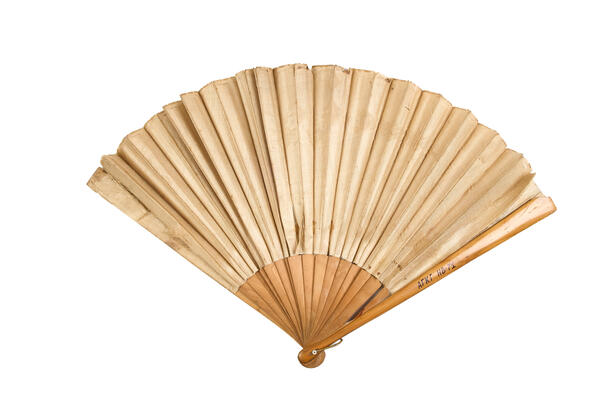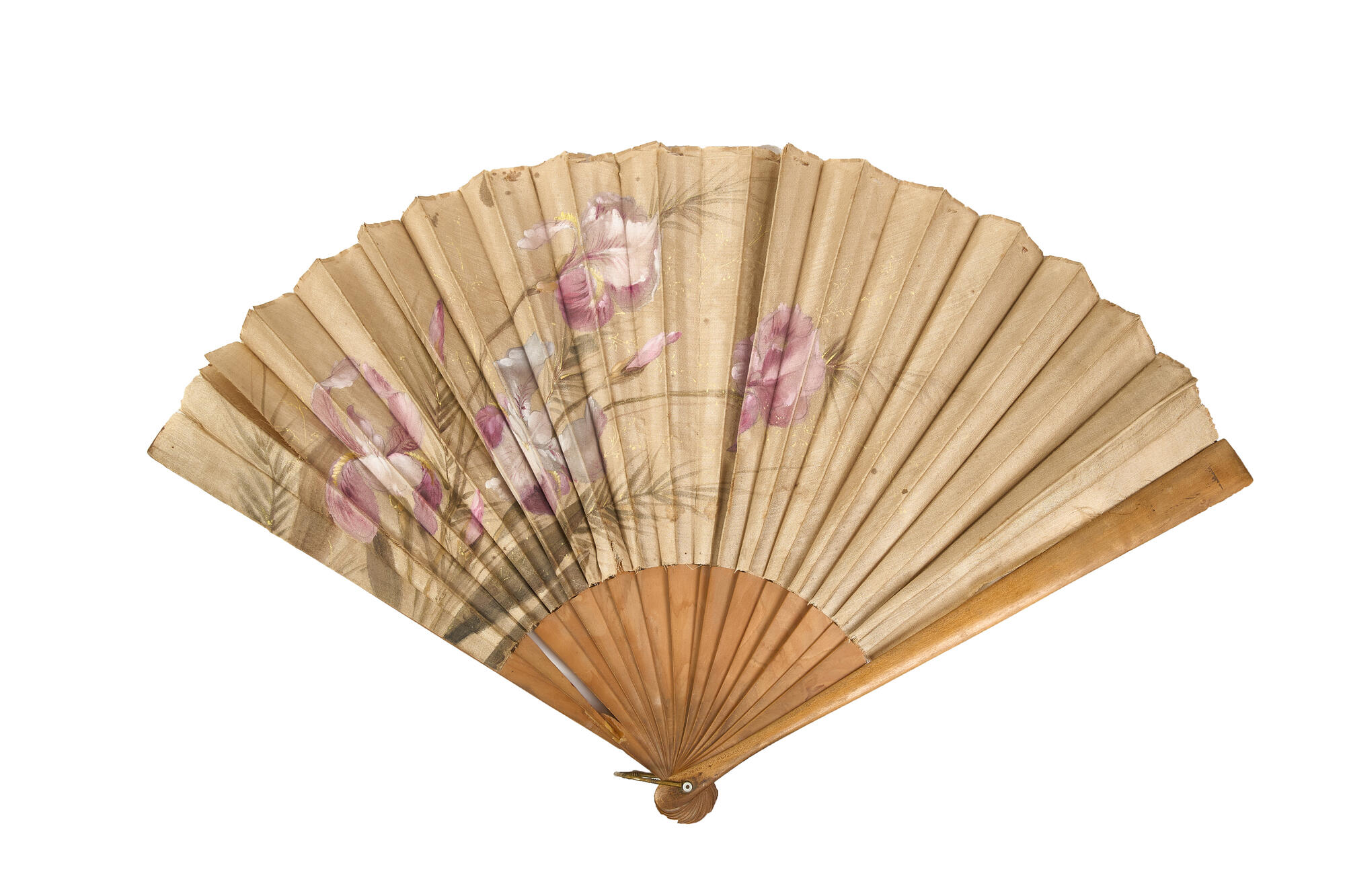


Modern day researchers claim that the fan appeared in one of southern countries, where people often deal with heat and are more often bothered by insects. The first fans were intended for rulers and nobles and were distinguished by their large size. They were made of expensive wood, bronze, peacock feathers and other materials that emphasized the high status of their owner. In ancient countries fans were also used by slaves to waff their masters. In Ancient Rome there were small fans, tabellae, which were popular among aristocrats.
In Russia, this accessory, which was basically a small fan with a special handle, began to be supplied in the 16th century from Persia and Turkey. In the next century, folding fans began to be imported from Europe, which for a long time were considered exclusive products. They were carefully kept and passed on by inheritance. In those times, a fan was considered a bedroom attribute: heated ovens, the heat from candles and lack of ventilation contributed to the popularity of this household item in noble circles.
In the 18th century, the fan became an indispensable accessory of refined clothing, no lady could appear without it in noble society. First of all, it is associated with Peter the Great and his dress reforms. According to researchers, it was then that the fan became part of the outfit.
Soon, the production of fans was established in Russia, and as time passed, they were no longer a luxury item, but an everyday item.
This attribute could be used not only for its intended purpose. For example, in the East there were special battle fans. They were used as cold weapons, to deflect blows of knives and darts, they could be used for fencing, as well as to send signals during battles.
In the second half of the 18th century the fan
language appeared, when this fashion accessory was also used as a means of
transmitting messages. “The first records of the fan language were found in the
journal ‘Satirical Herald’ in 1790. With the help of an elegant fan, ladies
demonstrated the beauty of the hand or the gracefulness of the gesture, as well
as played a social game. When making fans the symbolism of color and the image
on the leaf were taken into account. The color was matched to the dress, and
could also contain information about the owner’s social and marital status,
age, and mood,” writes Marina Vladimirovna Korotkova, Doctor of Historical
Sciences.