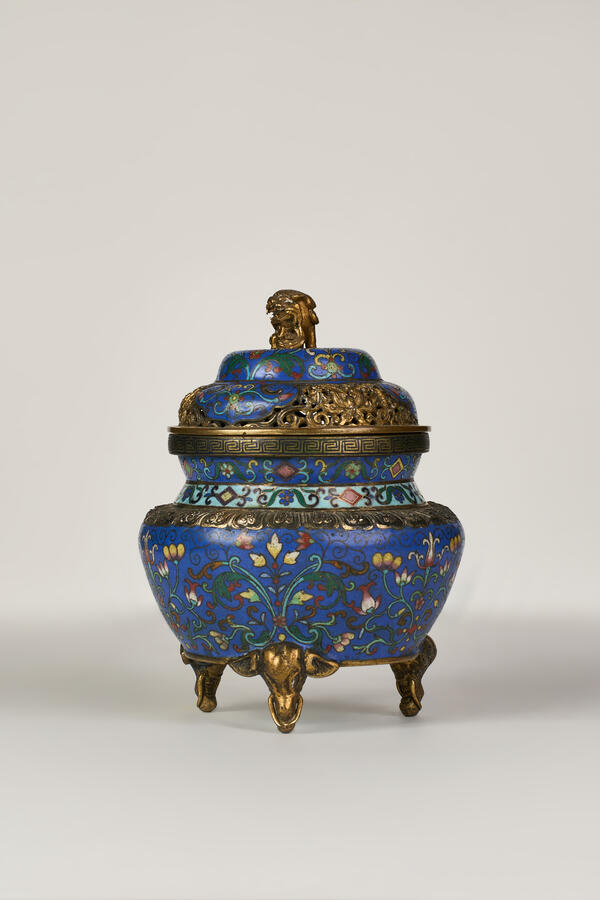
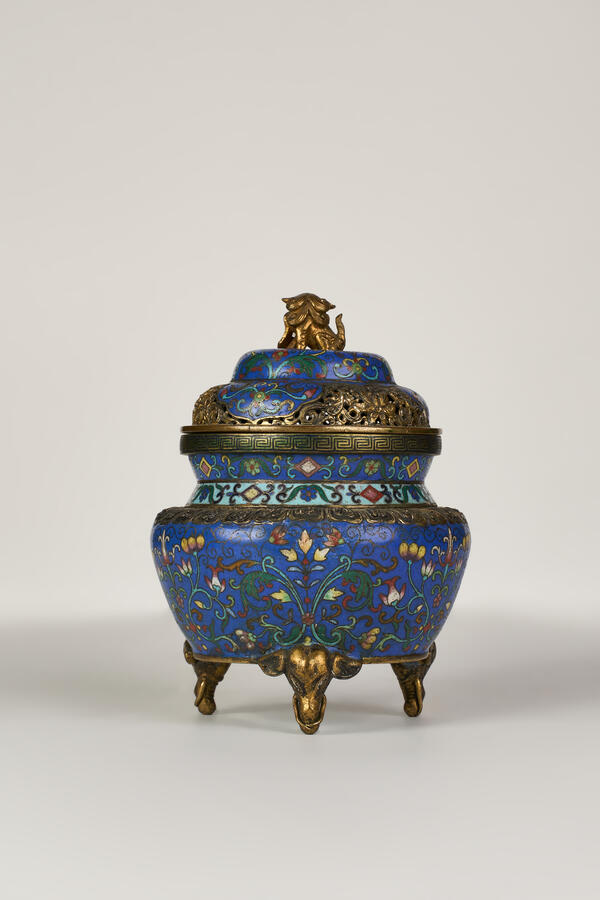
The Collection of Foreign Art of the Astrakhan Art Gallery includes an unusual small vase with a lid topped with a metal figurine of the lion dog foo. This vase is an incense burner.
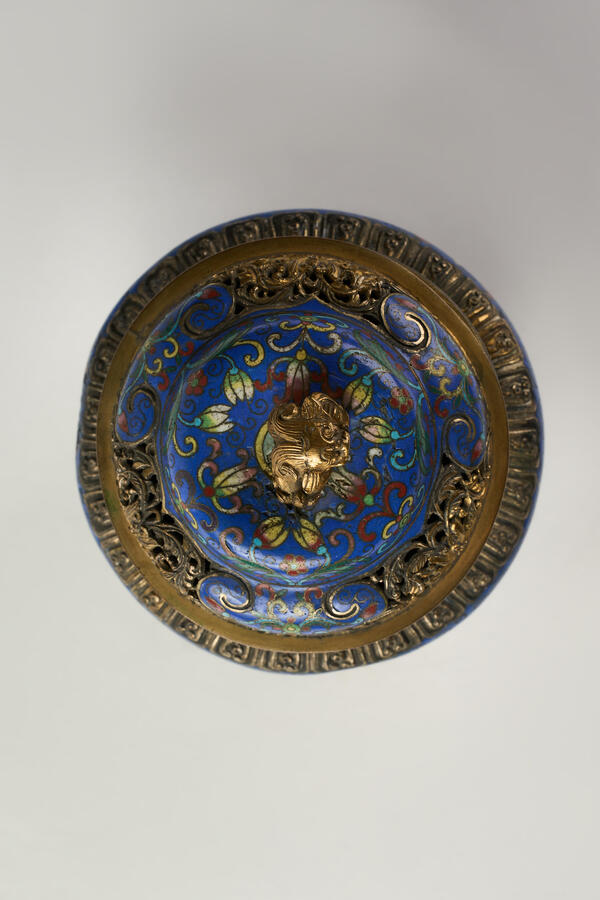
A pattern of white, green, red and yellow flowers runs on the blue background of the incense burner. There is a relief copper belt on the shoulder. Three openwork inserts are attached on the lid. The vase also has three legs in the form of elephant heads. Judging by the presence of the carved openwork inserts on the lid, this decorative item was probably used for tea ceremonies.
A necessary element of the traditional Chinese tea ceremony is the xianglu censer. It is a container for burning incense made of natural materials. Designed to liberate the souls and bodies of the participants of the ceremony, censers fill the tea room with unique aromas.
In China, early incense vessels were made of metal or ceramic materials. The walls were decorated with engraved images of mythical creatures and deities. Over time, new spices and incense began to be imported into China, and incense burners became very popular, including for everyday use. At the same time, new materials began to be used for the manufacture of vessels, including gold, silver, and porcelain.
Since the second half of the 17th century, there has been a significant development in the technology of making vessels. News shapes and materials have appeared as well. Craftsmen actively use a wide range of glaze colors, apply gilding, and add openwork carved elements.
From ancient times to the present day in China, the purpose of incense burners has been constantly expanding. Today they are used not only for sacred rituals in temples, but also for hygienic, therapeutic and household purposes.