Porcelain and ceramics are important achievements of ancient China.
Since the Ming Dynasty (the 14th century), Jingdezhen has been rightfully considered the center of porcelain production in China. The advantageous geographical location of the city played an important role in its formation as the capital of ceramic craftsmanship: coniferous trees growing in the mountains served as fuel for firing pottery, and the Changjiang River facilitated easy navigation and transportation of finished products to large cities.
Other centers of ceramic production in China include Yixing in Jiangsu Province and Shiwan (the Shiwanzhen Subdistrict) in Guangdong Province. The famous purple-brown Yixing clay tea cups are distinguished by classic refined shapes and high quality of the material. Shiwan wares are meticulously reproduced figurines of people, animals and birds decorated with colored glaze.
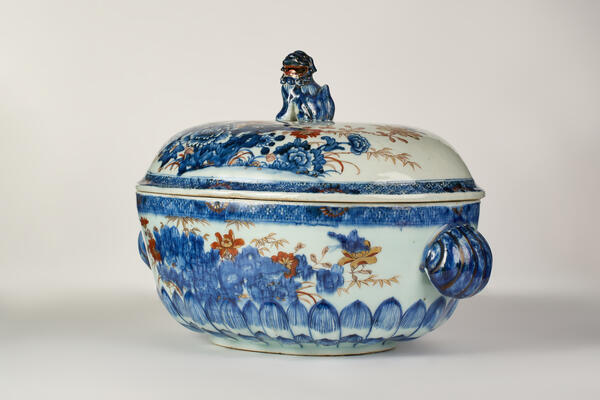
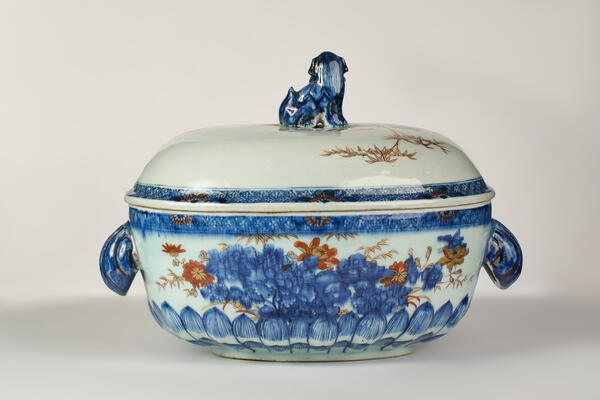
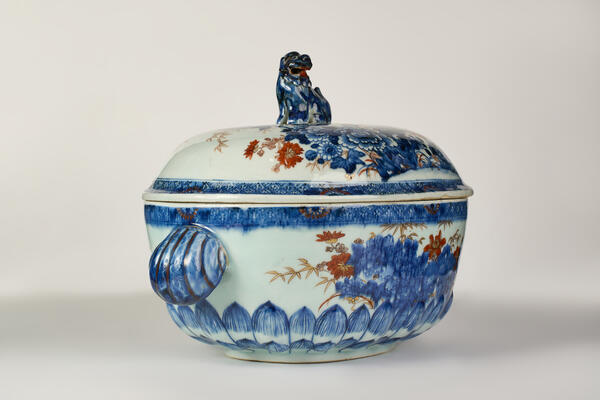
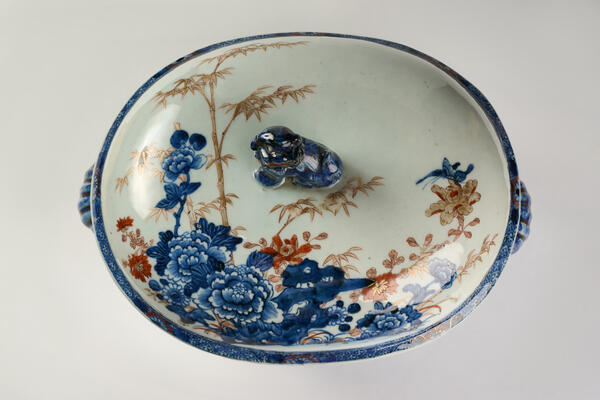
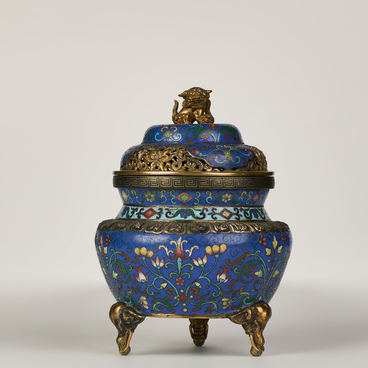
The porcelain soup tureen presented in the Hall of Asian and Eastern Art in the Astrakhan Art Gallery is an example of intricately decorated household utensils made of Chinese porcelain. Each image depicted on it carries a certain hidden meaning.
The “flowers of the four seasons” is a rather typical motif for Chinese porcelain: plums symbolize winter, peonies — spring, lotus — summer, and chrysanthemums — autumn. Flowers have always been associated with beautiful women as well.
Another popular motif is bamboo. Its slender culms and delicate leaves symbolize vitality, directness and fortitude, as its culms bend under the onslaught of wind gusts, but then they always straighten up.
The lid of the soup tureen features a three-dimensional representation of the foo dog. Foo dogs, or Buddha’s Heavenly Lions, are considered protective amulets in Feng Shui. There are many various images of these dogs. Most often they are depicted in pairs, with the figurine on the right representing the masculine principle and the one on the left representing the feminine. The former has a ball as its attribute, while the latter has a cub. However, in some images, foo dogs do not have these attributes and there can be no clear distinction between the masculine and feminine principles. The differences in artistic interpretations of the image are primarily due to its complex context, which is influenced by Chinese mythology, philosophy and religion.