Many centuries ago, there were various devices for smoothing clothes. In Russia, this was done with a valyok (rubel) and a roller (rolling pin). Depending on the region, this item was called differently: “rubel”, “valyok”, “rebrak”, “pralnik” or “raskatka”.
To smooth out the creases one needed to wind dried or wet laundry onto a round planed stick and roll it over the countertop, using a board with grooves (rubel) to tap, press and straighten the laundry until all the creases were gone.
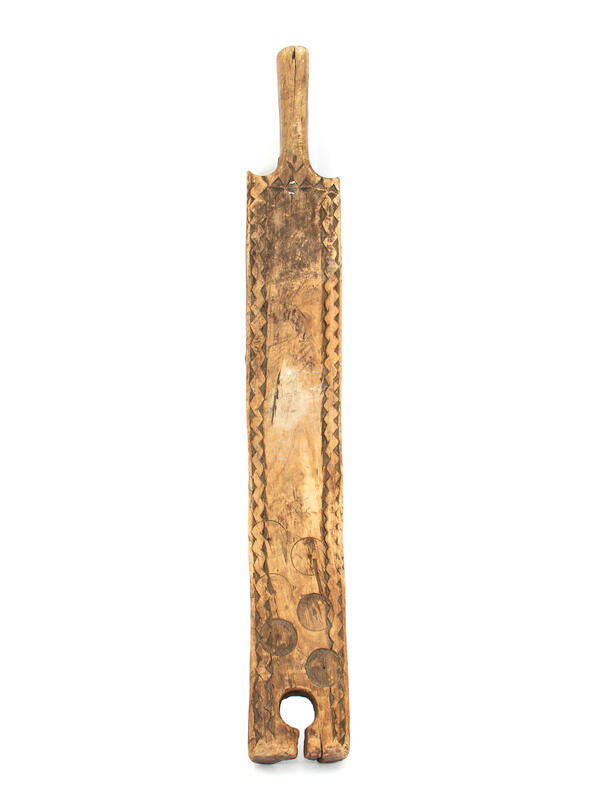
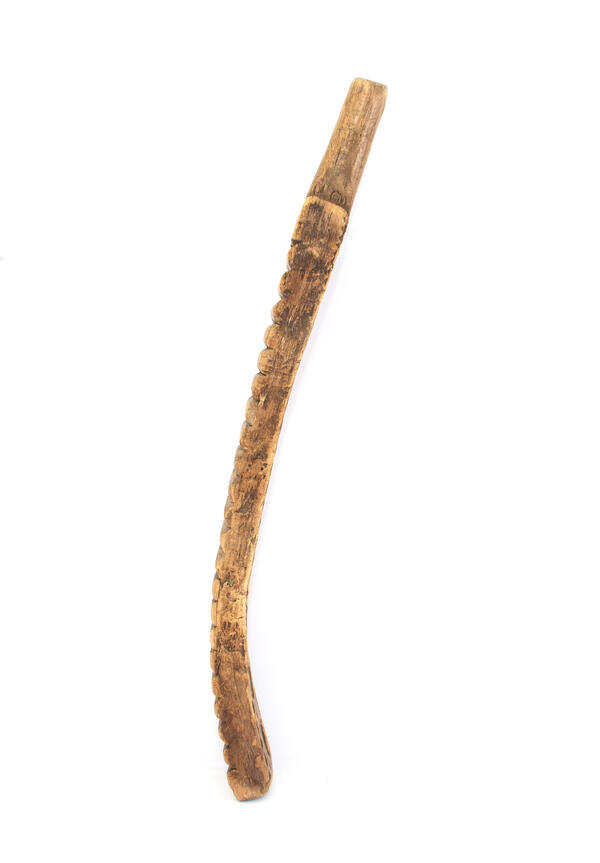
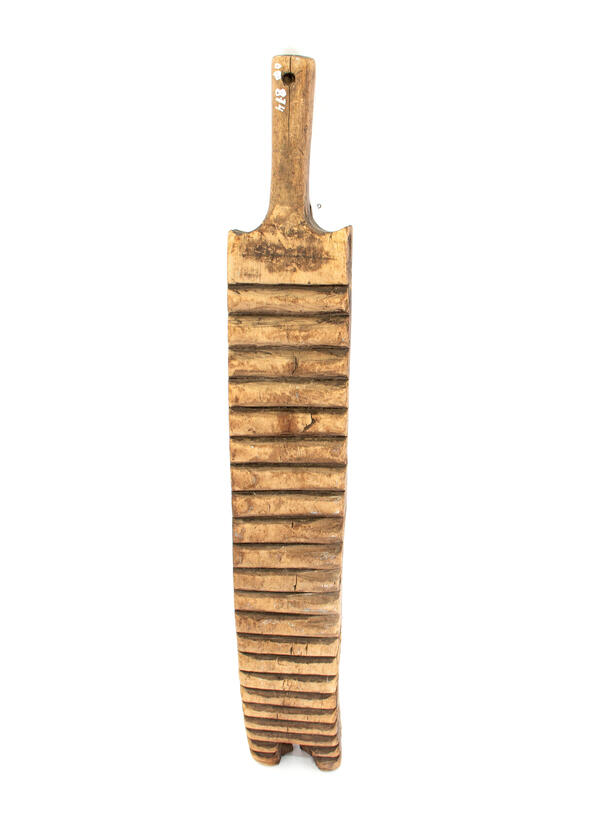
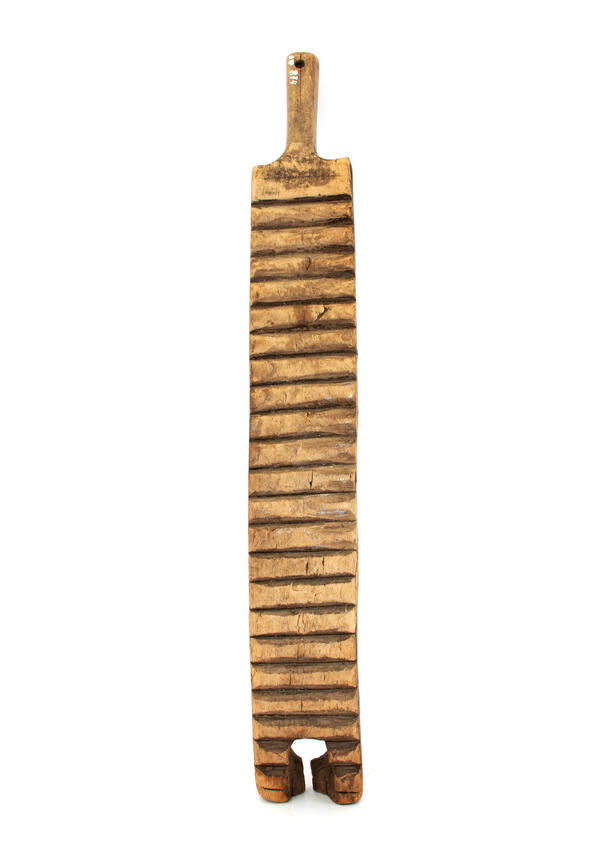
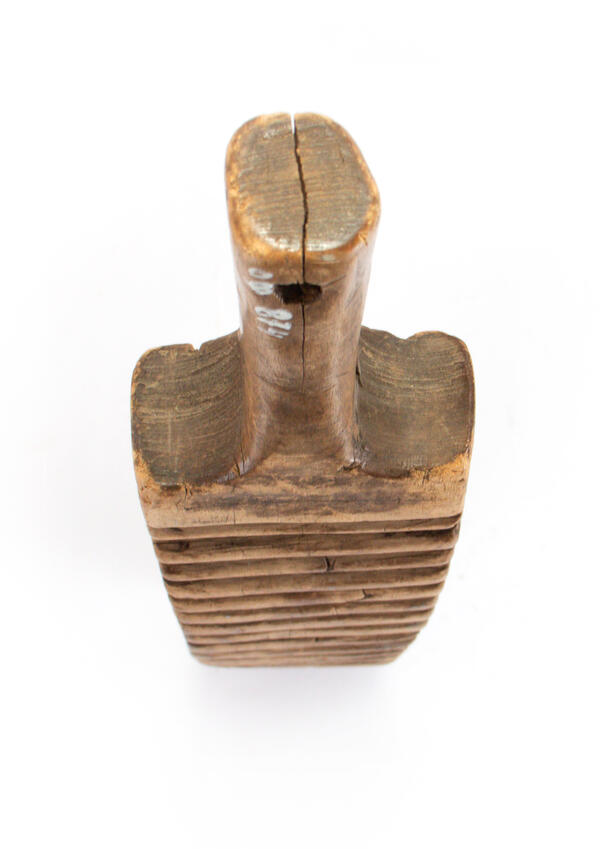
A rubel is a thick rectangular board with a rounded handle carved on one or both ends. The board is usually curved near the end opposite to the handle with parallel semicircular grooves carved along its working surface. The surface of the board is smooth and polished.
Rubels were made of hardwood: rowan, oak, maple, and birch. Usually the handle of the roller was carved at one end of the board, but there were also ones featuring a U-shaped handle on the top surface. In different regions, rubels could vary in shape (having a large curve or straight) or decorative features.
Rubels were household items and exquisite gifts for young girls of marriageable age. By evaluating the girl’s ability to use this object, one could tell if she would make a good housewife. In everyday life, women used a roller for smoothing out clothes, winding laundry on it and rolling it out, after which even poorly washed laundry became clean again, as if all the “juices” were squeezed out of it. Hence the proverb — “if not by washing, then by rolling”.
Even now, some ironing machines apply this principle: laundry is wound on a large roller and then ironed with special smaller ones. Manual ironing in the old days was a long and tedious process that required straightening and stretching a thick, unyielding canvas with a rolling pin.
According to research, people began using rubels with rolling pins for smoothing clothes about 700 years ago and continued doing so until the early 20th century.