The indigenous peoples of Western Siberia (these include the Khanty, Mansi, Nenets, Selkups and others) have long had dugout boats for moving along the rivers of taiga. Such a boat was called an “oblas”, or “oblasok”. Presumably, the first dugout boats were made by burning the inside of a log or hollowing it out with tools made of stone or bone.
Traditionally, the right tree for the future boat was harvested in May — cedar, poplar-sedge or aspen — in the uplands where it was not as humid. A tree with a curved trunk, which would serve as a good bottom of the boat, was most desired.
The boat was made to accommodate a certain number of people. To get the length of the future vessel, this number was multiplied by two arm spans per rower. During work, the workpiece needed to be protected from drying out in the sun, so it was kept in the shade, and, when left unattended, it was covered with birch bark, moss, or a canvas cloak.
The craftsman would start off by making a gap along the future boat with an ax. After that, the thickness of the sides was determined. To do this, holes were drilled evenly on the outside with a bow drill and wooden pegs were driven into these holes. The thickness of the pegs was adjusted according to the width of the index finger of the intended rower, and the even length was achieved with the help of special templates.
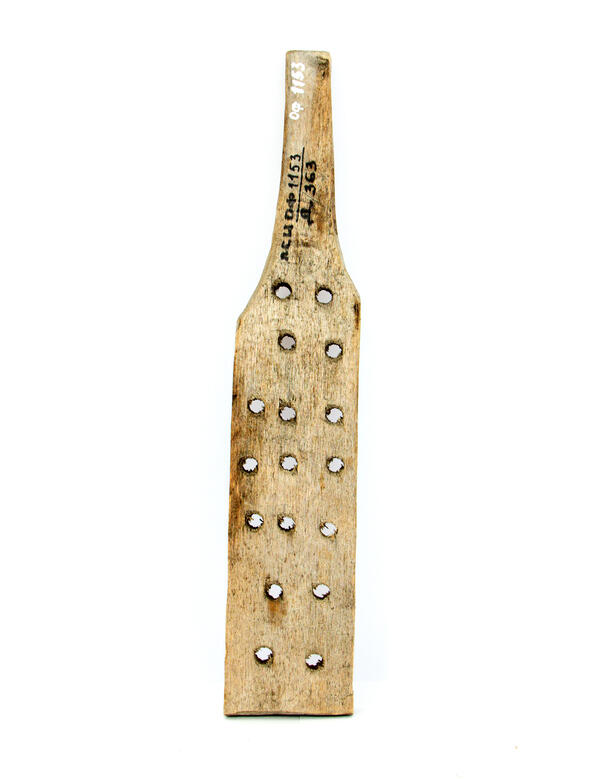
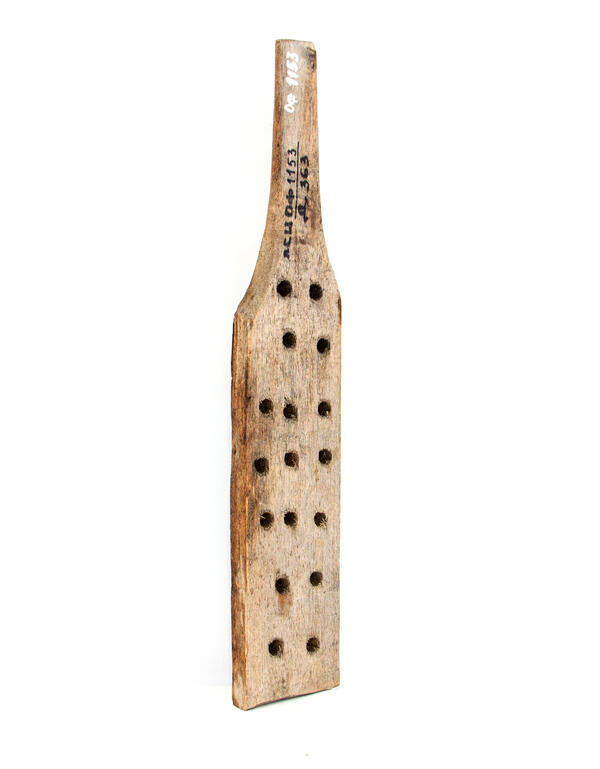
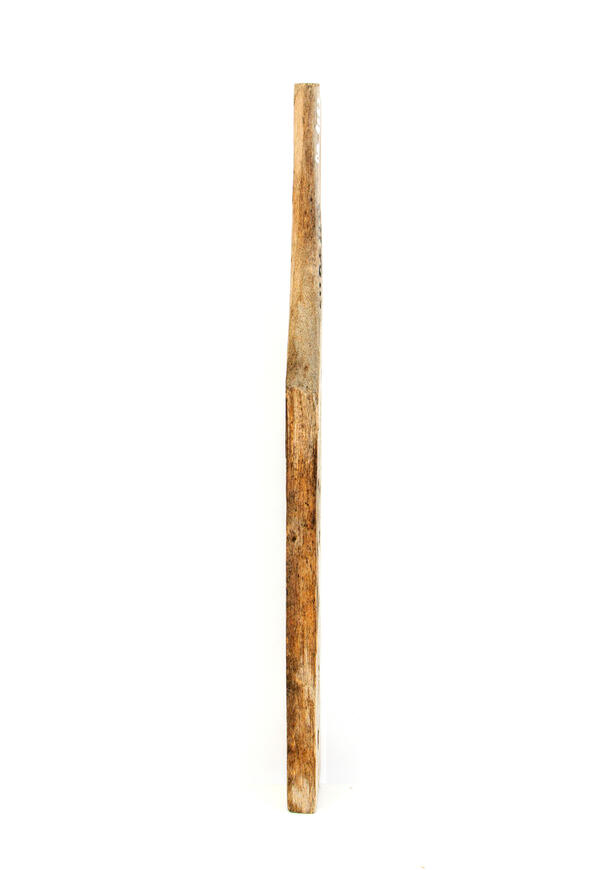
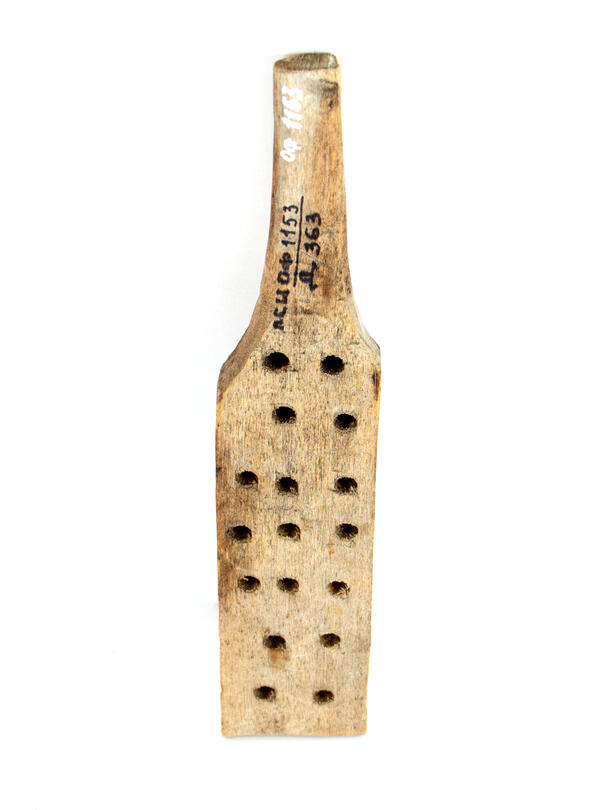
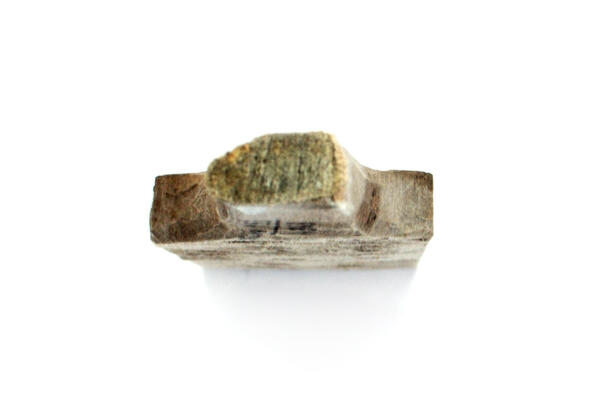
The template is a planed rectangular board with a handle. The number of holes made in the template was equal to the number of the number of holes in the workpiece. Pegs were then driven into these holes and cut at an even height. Then the template was rubbed with soot, the pegs were knocked out and driven into the workpiece, with the end covered in soot pointing down.
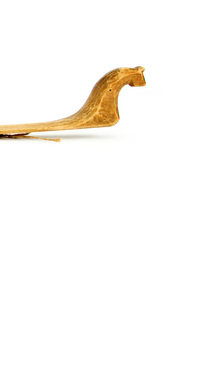
Next, the inner part of the log was hollowed out with two adzes — one straight and one curved (for the sides) — until the painted tips of the pegs appeared. At the end, the boat was steamed: boiling water was poured inside, and the boat was suspended over a weak flame. This gave the wood the necessary flexibility for inserting spacers to pull at the sides. The finished boat is rubbed with a mixture of soot with pine or fir resin.
Such a dugout is steered with a single paddle and glides through the water with ease and in silence.