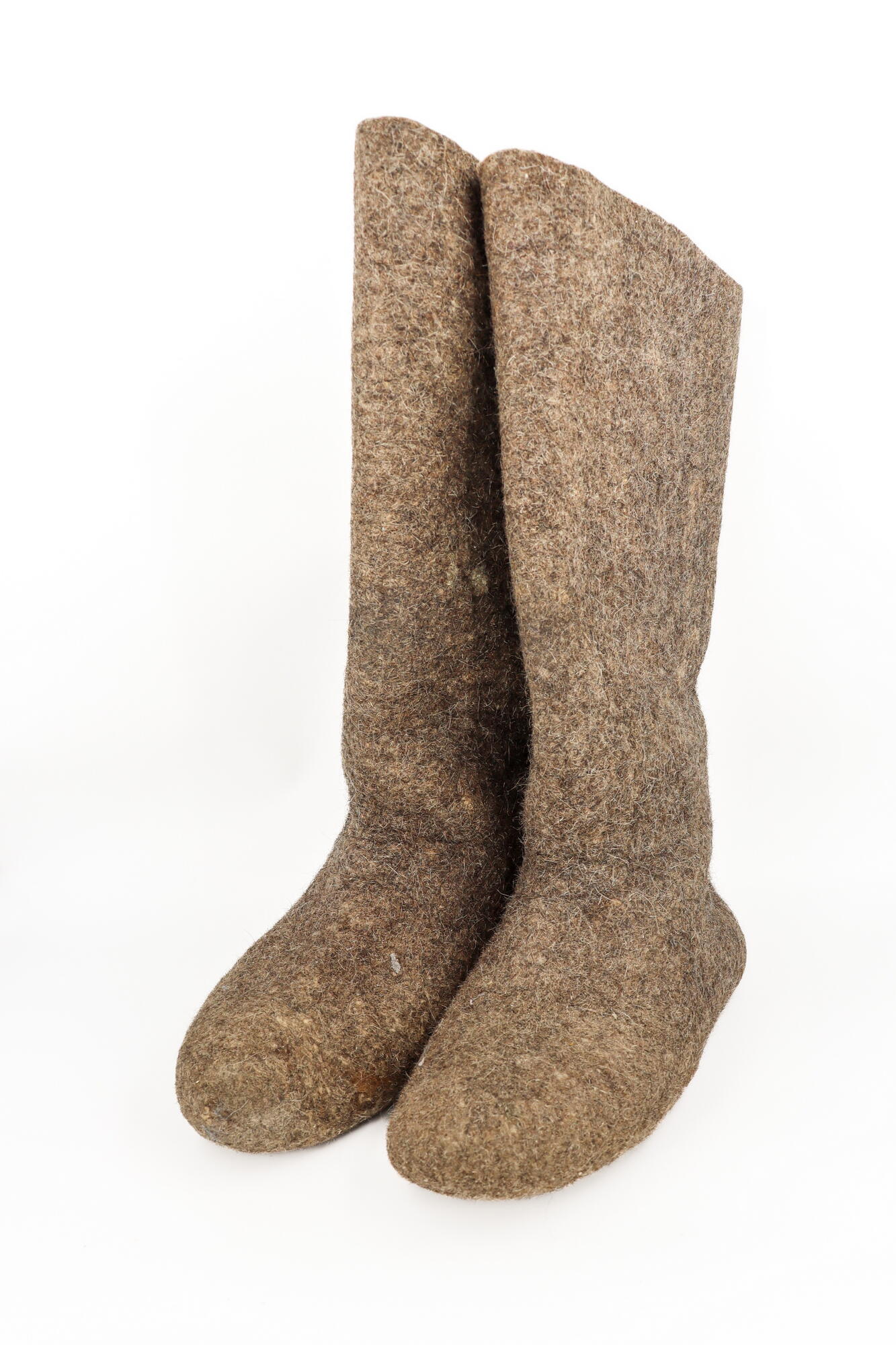


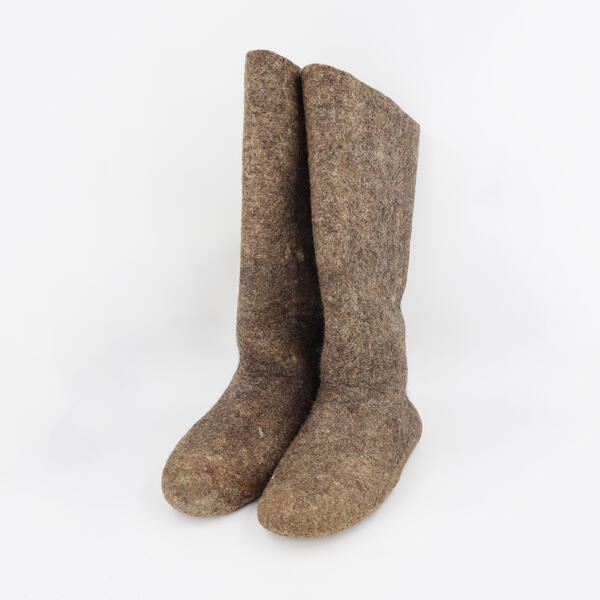
In cold weather, along with army boots, valenki were also used at the front — they were warm soft felt boots made of sheep wool.
In Russia, the first industrial production of valenki was established in the 18th century in the city of Myshkin. In pre-revolutionary times, the main factories of valenki production were located in the Kalyazin district of the Tver governorate, the Semyonov district of the Nizhny Novgorod governorate, the Kineshma district of the Kostroma governorate, and the village of Kukmor of the Kazan governorate. Making valenki was a laborious process, its particulars were kept secret and passed down the generation of craftsmen.
During the Great Patriotic War, Kazan became one of the centers of valenki production in the country. In December 1941, Moscow milling and felt factories were partially evacuated to Kazan and reconstructed near the local ones. The “Krasny Tekstilshchik” factory in Kukmor not only produced new pairs of valenki, but also mended those that had already been in use at the front.
Before becoming a pair of valenki, sheep wool is processed in several stages. First, it is cleaned from unnecessary particles and washed. Then, it is treated with a variety of solutions (sulfuric acid, copper sulfate, and others), and after that, the material is again washed and dried. Next, the wool is combed, loosened, and wound on bobbins. At first, a boot, formed from raw wool, is made much bigger than necessary. At this stage, it is important to ensure the even thickness of the wool layer throughout the boot. Then felting begins: valenki acquire their final shape through exposure to steam and hot water. The last stage requires high-temperature drying.
In winter, especially during the war, valenki were indispensable, for they did not cause deformation of the feet and kept them and the joints dry and warm. They have also become a symbol of the Russian people. During the Great Patriotic War, the song “Valenki” performed by Lidia Ruslanova enjoyed unprecedented popularity. The Merited Artist of the USSR performed this song at numerous frontline concerts. On May 2, 1945, Ruslanova, together with the Cossack ensemble, gave a concert on the steps of the Reichstag. The list of songs included the song “Valenki”.
In Russia, the first industrial production of valenki was established in the 18th century in the city of Myshkin. In pre-revolutionary times, the main factories of valenki production were located in the Kalyazin district of the Tver governorate, the Semyonov district of the Nizhny Novgorod governorate, the Kineshma district of the Kostroma governorate, and the village of Kukmor of the Kazan governorate. Making valenki was a laborious process, its particulars were kept secret and passed down the generation of craftsmen.
During the Great Patriotic War, Kazan became one of the centers of valenki production in the country. In December 1941, Moscow milling and felt factories were partially evacuated to Kazan and reconstructed near the local ones. The “Krasny Tekstilshchik” factory in Kukmor not only produced new pairs of valenki, but also mended those that had already been in use at the front.
Before becoming a pair of valenki, sheep wool is processed in several stages. First, it is cleaned from unnecessary particles and washed. Then, it is treated with a variety of solutions (sulfuric acid, copper sulfate, and others), and after that, the material is again washed and dried. Next, the wool is combed, loosened, and wound on bobbins. At first, a boot, formed from raw wool, is made much bigger than necessary. At this stage, it is important to ensure the even thickness of the wool layer throughout the boot. Then felting begins: valenki acquire their final shape through exposure to steam and hot water. The last stage requires high-temperature drying.
In winter, especially during the war, valenki were indispensable, for they did not cause deformation of the feet and kept them and the joints dry and warm. They have also become a symbol of the Russian people. During the Great Patriotic War, the song “Valenki” performed by Lidia Ruslanova enjoyed unprecedented popularity. The Merited Artist of the USSR performed this song at numerous frontline concerts. On May 2, 1945, Ruslanova, together with the Cossack ensemble, gave a concert on the steps of the Reichstag. The list of songs included the song “Valenki”.