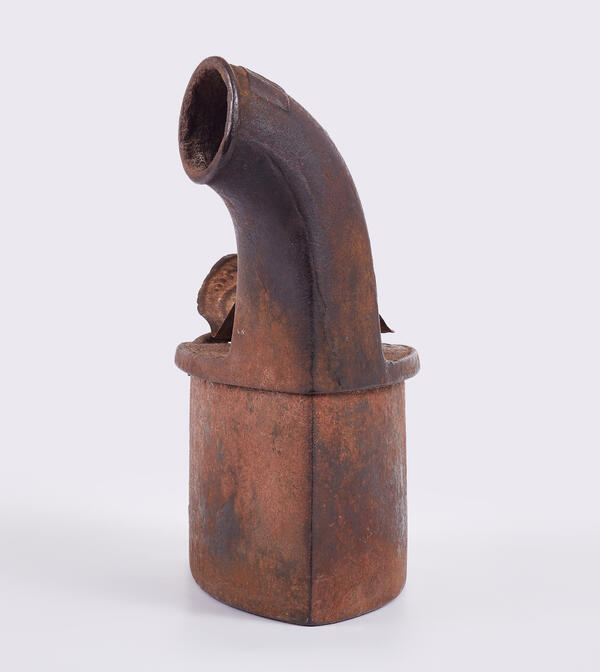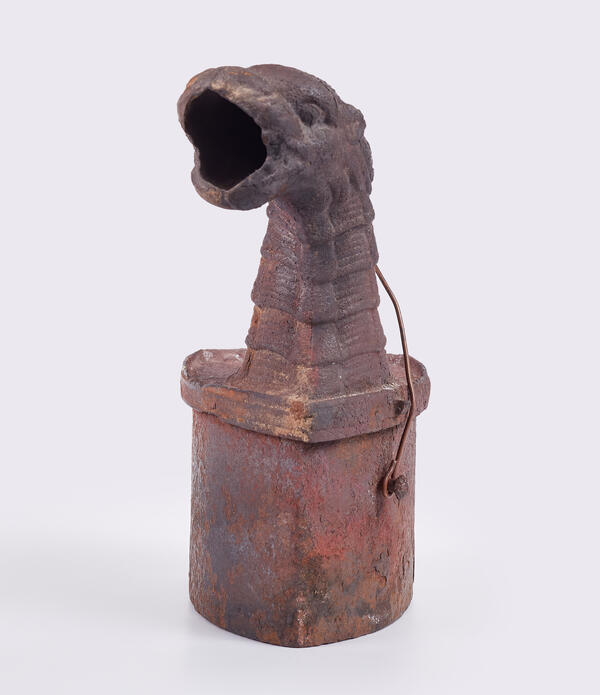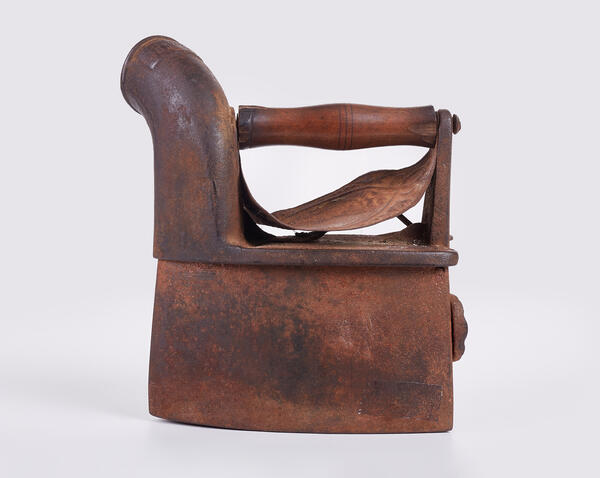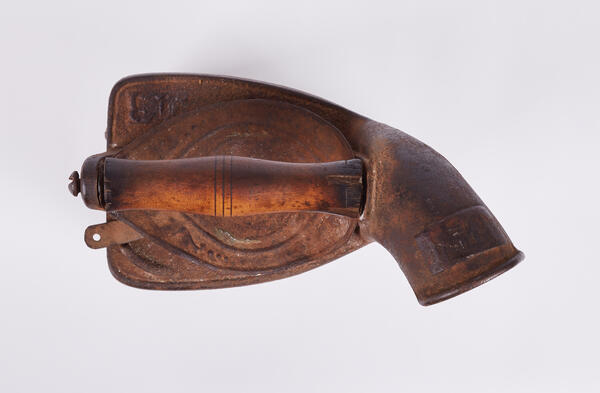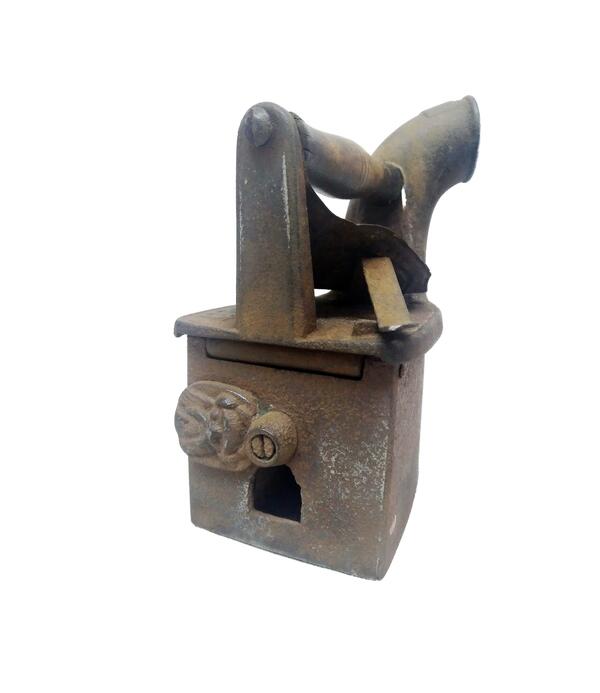
The Zheleznodorozhny Local Lore Museum presents an interesting exhibit — a coal iron with an image of an old man on the flap.
There is a legend that the iron was designed by craftsmen from the town called Vereya and the old man on the flap is actually Leo Tolstoy. The writer’s likeness was placed near hot coals, at the very entrance to the symbolic fiery Gehenna, the heat of which was reminiscent of the hellfire that awaited every unrepentant sinner. Thus, anyone could “fry” Tolstoy in hell by pouring hot coals into the iron or even “spit in the heretic’s face” to check whether the iron was hot enough. In this way, the Orthodox people expressed their attitude toward the writer’s views which were considered heretical at the time.
The fact is that nine years before Count Leo Tolstoy died, the Holy Synod decided to excommunicate the great writer from the Orthodox Church. It was then forbidden to pray for him in either churches or monasteries. According to historians and theologians, Tolstoy’s excommunication from the Church by the Synod was more of a statement of a fait accompli rather than actually banishing him. By that time, Tolstoy had not attended services or sacraments for years and openly declared his dislike for the Church.
However, the legend requires proof. In his article “Trumpeters, Werewolves, and Other Irons”, the famous iron collector Vladimir Goryachev regards Leo Tolstoy’s involvement in the history of this iron image as just a story, explaining that the iron depicts the Greek god of fire Hephaestus, a blacksmith and patron of blacksmiths. His opinion is shared by the Vologda collector Vyacheslav Rukhlov, “We came to the conclusion that this old man could be a god from some mythology, either Vulcan, Hephaestus, or Stribog. But definitely not Leo Tolstoy.” The staff of the local lore museum also turned to Yury Vladimirovich Komarovsky, the director of the Museum of Local History in the city of Vereya, and received the following answer, “We still adhere to Leo Tolstoy version, but due to the lack of proof, we always add ‘according to legend’ when telling the story.”
To this day, none of the versions has been
officially confirmed.