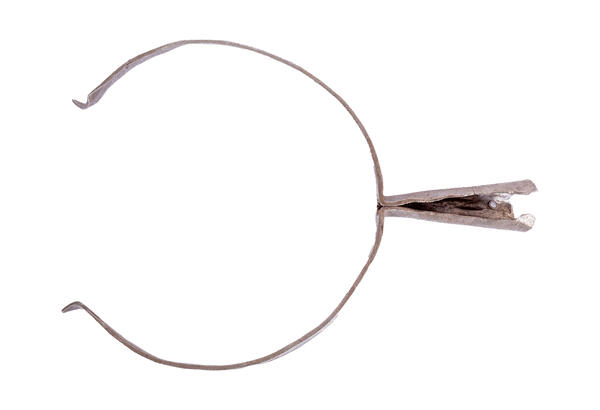
An oven fork (vily, rogach) is a metal arc on a long wooden handle, designed for moving clay and cast-iron pots in the oven. There was a different one for each size of a pot. Therefore, there were usually a few different-sized oven forks in the household. Like other oven utensils, oven forks were kept under the oven and in the care of the mistress.
Oven forks were made by blacksmiths. The wedge-shaped plate had to be cut lengthwise by about two thirds, and then the whole part was split and twisted in the form of a sleeve to be put on the handle. Two strips from the split part were bent into a loose ring-arc, and the ends were bent apart to protect the pots from scratches.
The symbolism of the oven fork was largely determined by its connection with the oven. In the childbirth ritual, the woman in labor stepped over the oven fork to facilitate childbirth. This rite was based on the likeness of the woman’s womb and the oven. The connection of the oven fork with the hearth and its horned form determined the warding functions of the object: to protect the woman in labor from the evil power, she put it with its horns facing the oven and when leaving the house, the woman in labor took it as a staff. In the funeral ritual, the oven fork was placed where the deceased lay to protect the house from death; the oven fork was knocked over and leaned against the oven to protect the house from sorcerers.
The “grabbing” function of the oven fork became symbolic in the rituals: during matchmaking, the matchmaker, before asking about the bride, touched the oven with tied fork ovens to get a positive answer; an oven fork was used along with other items: when removing the veil from the bride’s head to “make her a member” of the new family; at Christmas time girls rode the oven fork around the house of the guy they liked, to “grab” him, that is, to enchant him.
The direct connection with the oven and the presence of horns makes the oven fork an object closer to the netherworld. The demonic characteristics of this utensil are described in the riddle: “Without a body, without a soul, with one leg and two horns”. According to beliefs, witches used to fly on oven forks, at Christmas, guisers would imitate a bull or a horse with the help of this item. After the wedding, the guests would take the young couple to the bathhouse, smear themselves with soot, equip themselves with oven forks and similar tools, and noisily ride through the village, imitating a witches’ sabbath and warding off evil spirits. The oven forks were used to block the oven so as not to let the house spirit out accidentally.