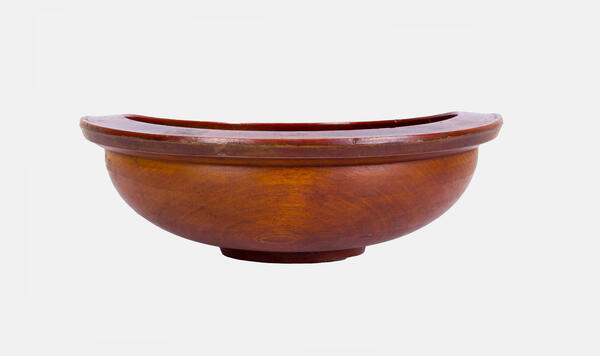
A serving dish (blyudo) is a wooden or metal utensil of round or oval shape with a low base. In peasant life there were mainly wooden dishes made by chiseling, carving and turning. Such a plate could be “completed” with a round salt shaker turned in the center. Festive dishes were further decorated with paintings.
Such dishes were primarily used in table settings to serve food. At the same time, the main purpose of the dish determined its symbolic meaning and its use in various rituals. It was often used as a container for good fortune, health, and even the future.
In the birth rite, a serving dish was used for “washing hands”: the woman in labor put silver coins into a dish with water, and the midwife washed her breasts, face and hands with this water. Gifts for the midwife were also placed in a gruel dish.
In wedding ceremonies, ribbons from the bride’s plaits — “maiden’s beauty” — were collected on a serving dish, which was also used to present gifts to the bridegroom’s parents. Girls took the plate and walked around the guests, singing songs of praise to each of them and collecting their offerings: men were given silver, women — usually copper coins. After the feast the dish together with other utensils was sewed into a tablecloth; after the newlyweds visited the bath house, they opened this gift.
On New Year’s Day, the host raised a blyudo with a roast pig, a symbol of abundance, three times to the icons. The family sang prayers to St. Basil for the livestock to breed.
The serving dish was also used for divinations on Epiphany Eve. The girls who were fortune-telling filled a deep dish with water, put rings, earrings and other personal items into it, and covered it with a kerchief. While singing one of the girls took a piece of jewelry out of the dish. The song was supposed to unveil the fortune of the owner of the removed item. They also predicted the number of future children by the frozen bubbles in a dish of water.
To find out the character of the betrothed, a dish of water was placed on the floor, spring barley and millet were poured beside it, and a rooster was brought out — if it went to the water, a drunkard husband was expected, if towards the grain — an economical one.
In all divinations, the dish was perceived as the border between our world and the netherworld; water for divinations was brought from an ice-hole or a well, also symbolically associated with the realm of spirits.