

Some types of clothing today are associated with adherents of a particular religion. One of these attributes is a tubeteika, which many Muslims wear when visiting a mosque, as well as in everyday life. Despite the fact that each nation has its own headdress design, the purpose of the tubeteika is the same for all the faithful: to cover the head of a Muslim.
In the modern world, religion is greatly influenced by local national customs and traditions, which, in turn, has led to some differences in spiritual practice and the performance of religious rites, and in views on Islamic canons among different peoples. As a result, it became difficult to draw the line between religion and the national tradition.
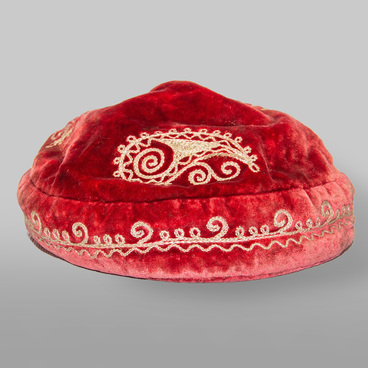
Various Turkic peoples have their own name for the national headdress. Among the Muslims of Russia, most of whom are Tatars, the headdress is called a tubeteika. This word comes from the Tatar “tyube” (“top”). Any nation has a variety of tubeteikas that come in different shapes and colors. This is due to the fact that since ancient times tubeteikas differed depending on the city of residence, the person’s social status, gender and even age. There are surviving tubeteikas of various types — round and square, spherical and pointed, low and high. In addition, various patterns were embroidered in different colors.
A tubeteika was believed to protect from the evil eye, damage and witchcraft. For this reason, it was forbidden to wear someone else’s tubeteika, since people believed that a person could receive its owner’s fate along with the headdress. This was especially true of the tubeteikas of the dead.
Nowadays, tubeteikas are also very popular among various segments of the population, and not only among the Turkic peoples. Some prefer it to other headgear. Some wear tubeteikas exclusively for going to the mosque on Fridays and on holidays.
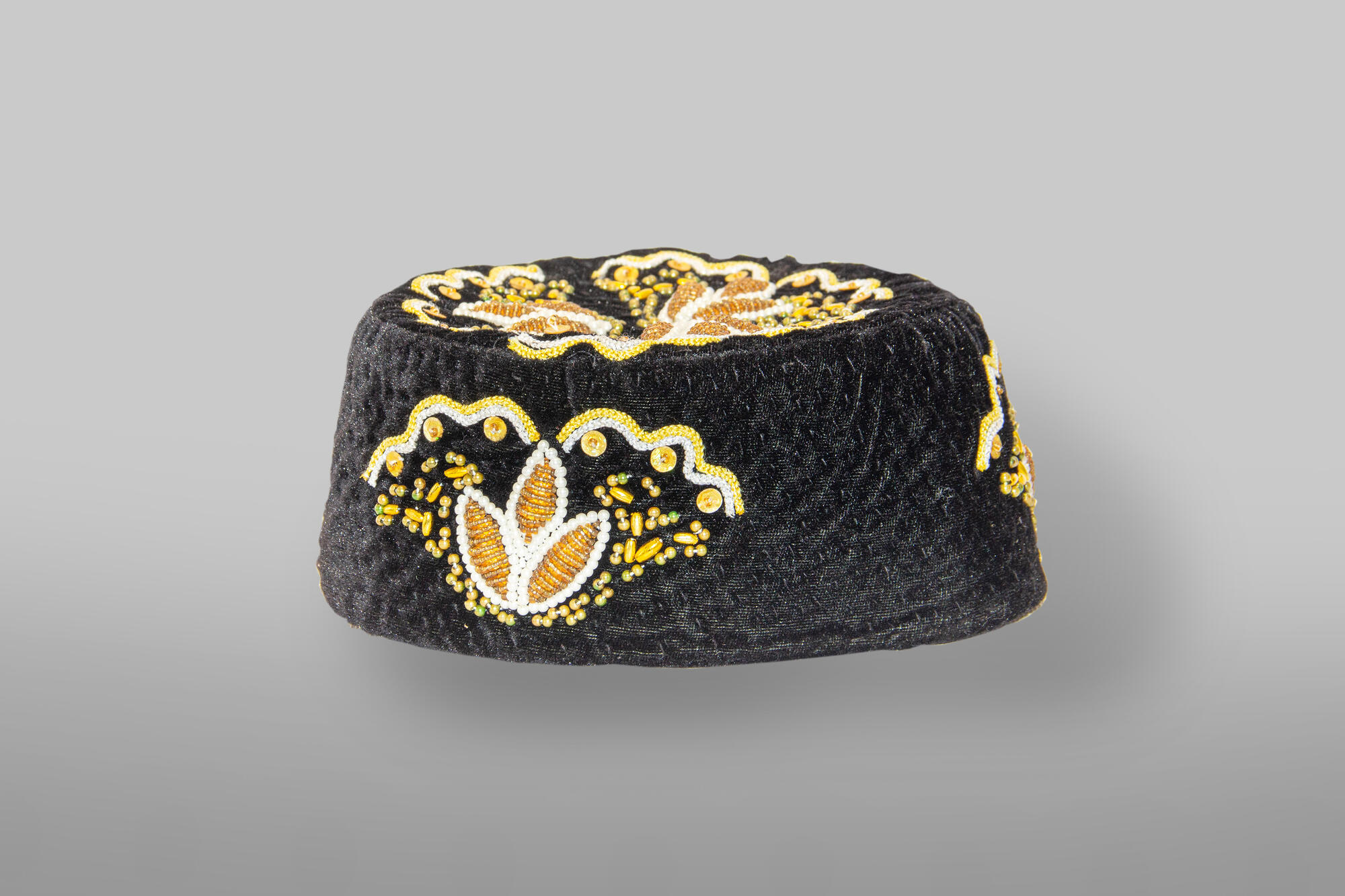
The museum exhibition includes a Tatar tubeteika, embroidered with beads of several colors on a black background. The embroidery looks elegant and smart.
In the modern world, religion is greatly influenced by local national customs and traditions, which, in turn, has led to some differences in spiritual practice and the performance of religious rites, and in views on Islamic canons among different peoples. As a result, it became difficult to draw the line between religion and the national tradition.
Various Turkic peoples have their own name for the national headdress. Among the Muslims of Russia, most of whom are Tatars, the headdress is called a tubeteika. This word comes from the Tatar “tyube” (“top”). Any nation has a variety of tubeteikas that come in different shapes and colors. This is due to the fact that since ancient times tubeteikas differed depending on the city of residence, the person’s social status, gender and even age. There are surviving tubeteikas of various types — round and square, spherical and pointed, low and high. In addition, various patterns were embroidered in different colors.
A tubeteika was believed to protect from the evil eye, damage and witchcraft. For this reason, it was forbidden to wear someone else’s tubeteika, since people believed that a person could receive its owner’s fate along with the headdress. This was especially true of the tubeteikas of the dead.
Nowadays, tubeteikas are also very popular among various segments of the population, and not only among the Turkic peoples. Some prefer it to other headgear. Some wear tubeteikas exclusively for going to the mosque on Fridays and on holidays.
The museum exhibition includes a Tatar tubeteika, embroidered with beads of several colors on a black background. The embroidery looks elegant and smart.