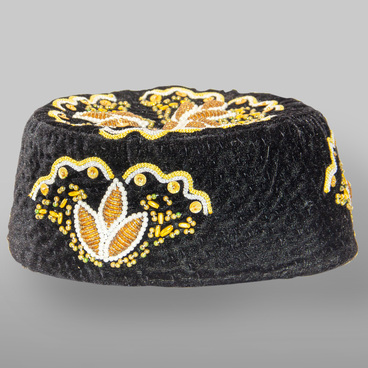


In the East, a tubeteika is a kind of passport. The shape and decoration of this small cap tell about the nationality and class that its wearer belongs to. All men had to wear this headdress when attending the mosque, a celebration, a funeral or a repast. Today, this vintage headwear is making a comeback in modern day costume.
The word “tubeteika” derives from the Turkic word “tyube” (or “tobe”), which means “top”. In the East, the top of the head is believed to be a point of contact with the Universe, and this headpiece acts as a talisman, protecting the most vulnerable part of a person’s body from evil spirits and attracting well-being and health.
There was a saying in the East, “A tubeteika adorns everyone — the gray hair of a sage and a bride’s braids.” People speak of this cap in a friendly way: “A tubeteika is not a burden for a horseman”, “If there is no one to talk to, address your tubeteika.”
Once upon a time, people could immediately identify where a person came from and what he did for a living simply by looking at his tubeteika. Contemporary tubeteikas also carry information, but not everyone has the clue.
A tubeteika originated long ago. Experts say that it existed in Central Asia long before the arrival of Islam. Previously, people did not wear tubeteikas on the top of their heads: the rims tightly covered the wearer’s forehead and reached the very eyebrows to protect against negative influences. When Islam came to Central Asia, the tubeteika retained its importance, but in a slightly different form. True Muslims were not supposed to leave the house with their heads uncovered, and in order to comply with this rule, men began to wear tubeteikas on a constant basis. Gradually, tubeteikas became the main decoration of the traditional costume. Along with the role of a religious attribute and adornment, tubeteikas also perform a more practical function. For example, cotton “araqchin” tubeteikas were used in the same way that nightcaps had once been used in Europe.
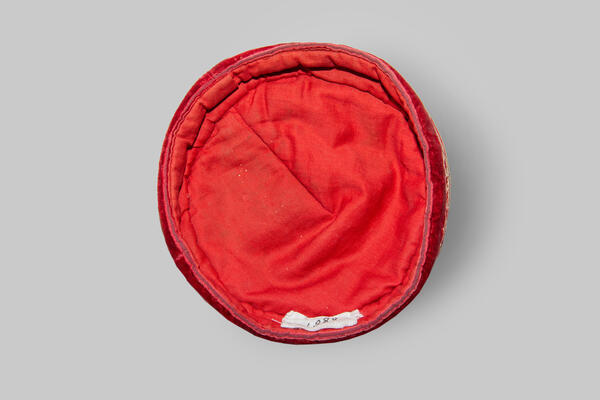
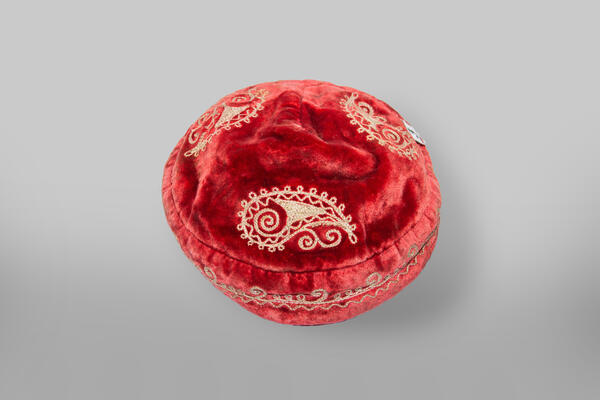
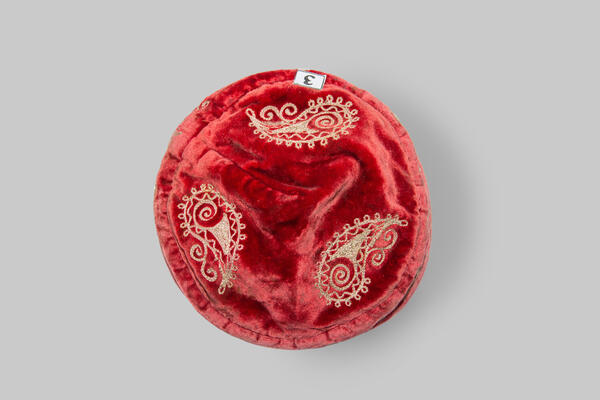
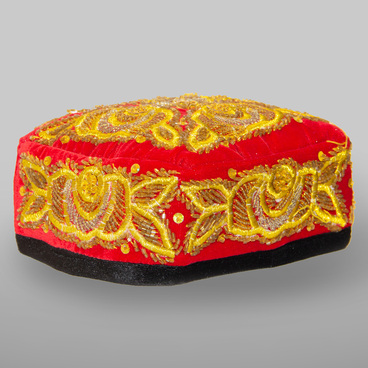
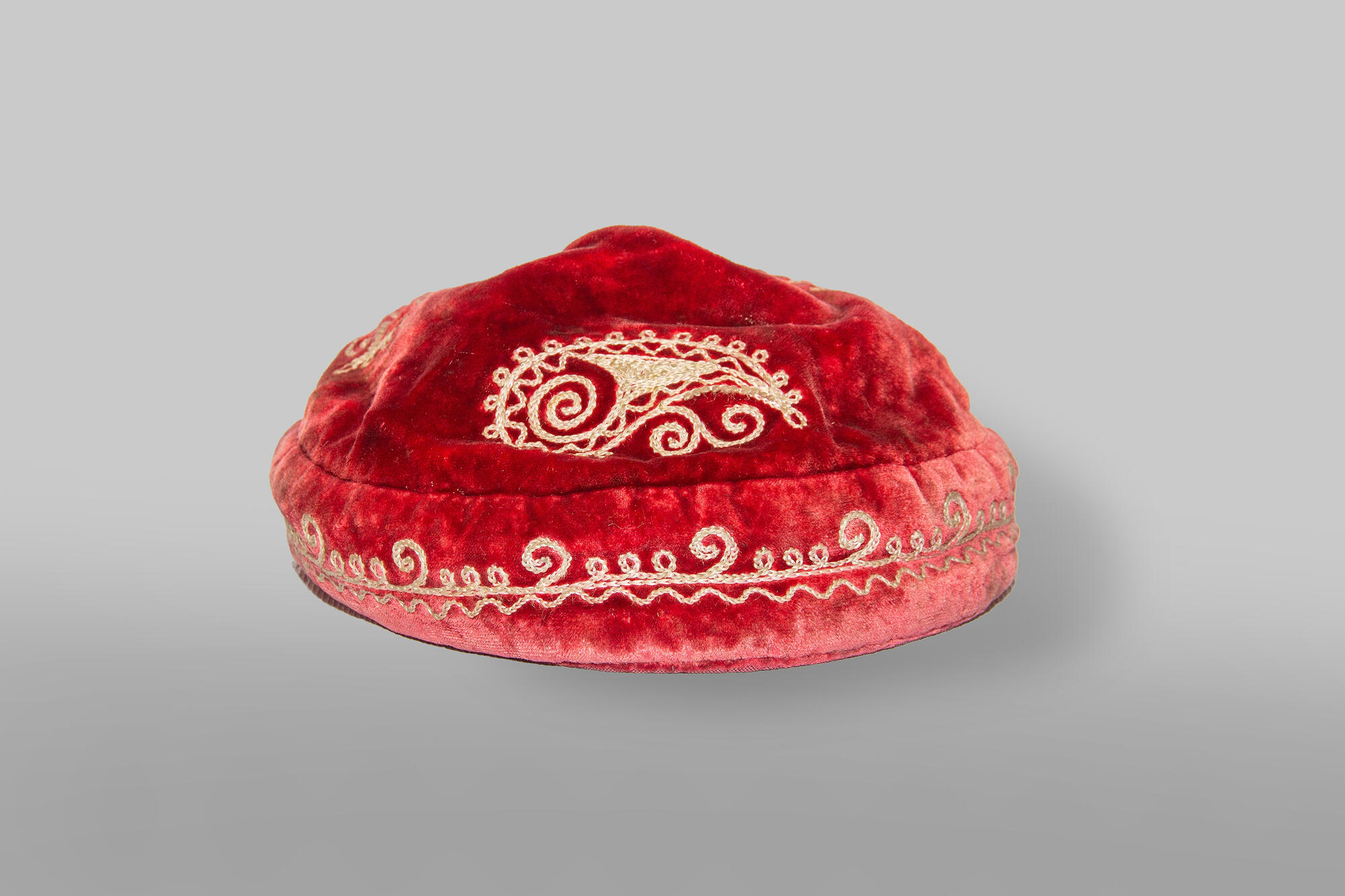
The museum’s exhibition includes a tubeteika made of dark red velvet, decorated with embroidery. A floral pattern is embroidered with a tambour stitch in yellow. The cotton lining on the inside is the same color as the top.
The word “tubeteika” derives from the Turkic word “tyube” (or “tobe”), which means “top”. In the East, the top of the head is believed to be a point of contact with the Universe, and this headpiece acts as a talisman, protecting the most vulnerable part of a person’s body from evil spirits and attracting well-being and health.
There was a saying in the East, “A tubeteika adorns everyone — the gray hair of a sage and a bride’s braids.” People speak of this cap in a friendly way: “A tubeteika is not a burden for a horseman”, “If there is no one to talk to, address your tubeteika.”
Once upon a time, people could immediately identify where a person came from and what he did for a living simply by looking at his tubeteika. Contemporary tubeteikas also carry information, but not everyone has the clue.
A tubeteika originated long ago. Experts say that it existed in Central Asia long before the arrival of Islam. Previously, people did not wear tubeteikas on the top of their heads: the rims tightly covered the wearer’s forehead and reached the very eyebrows to protect against negative influences. When Islam came to Central Asia, the tubeteika retained its importance, but in a slightly different form. True Muslims were not supposed to leave the house with their heads uncovered, and in order to comply with this rule, men began to wear tubeteikas on a constant basis. Gradually, tubeteikas became the main decoration of the traditional costume. Along with the role of a religious attribute and adornment, tubeteikas also perform a more practical function. For example, cotton “araqchin” tubeteikas were used in the same way that nightcaps had once been used in Europe.
The museum’s exhibition includes a tubeteika made of dark red velvet, decorated with embroidery. A floral pattern is embroidered with a tambour stitch in yellow. The cotton lining on the inside is the same color as the top.