

Over the rich centuries-old history of the Tatars, the image of the national costume has constantly changed, reflecting the features of one or another subgroup of the Tatar people. Not only the Tatars themselves influenced this change: serious events influenced both the Tatar government structure and the territory of their residence. However, there are several groups and factors that have had the greatest impact. Among them are the Volga Tatars, neighboring eastern peoples and, of course, the religion — Islam. Combining many styles and historical periods, the Tatar national costume is a true historical evidence.
Traditional Tatar footwear included boots “chitek” or “ichigi” — they were worn throughout the year and put on woven stockings. Models with soft skin were used in summer, with rough skin — in winter. Everyday boots were black, festive ones were decorated with mosaic ornaments, appliqué and embroidery. Traditional work shoes resembled Russian bast shoes and were called “chabata”. Boots always curled up at the toe: Tatars believed that one should not hit the native land with toes.
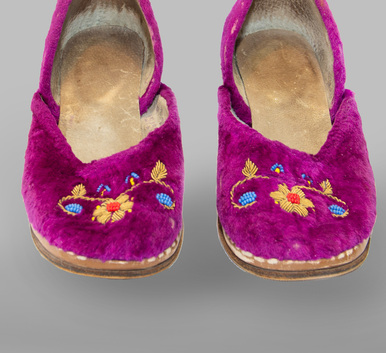
Traditional men’s and women’s shoes were different. Women’s shoes were distinguished by the fact that they had a heel, a reduced size of the shaft, and were decorated with beads, a border, appliqué and embroidery. Galoshes (“kevesh”, “kata”) have remained an everyday pair of boots. And the shoes (“bashmak”) were considered to be for festive occasions. Shoes were patterned and often had heels. Women’s slippers were made of velvet, richly embroidered with gold and silver threads, beads and freshwater pearls. In winter, everyone wore felt boots (“kiezitek”, “pima”, “puima”) — both short and high ones. Wealthy Tatars wore colored “Kukmor” felt boots. The famous felting factory appeared in the village of Kukmor in 1867 and now operates as the Kukmor Felt-Fulling Factory.
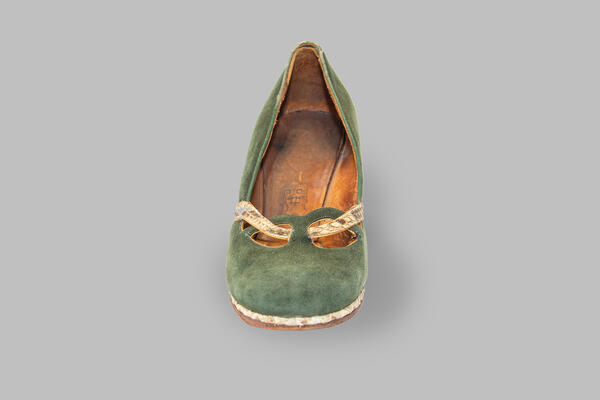
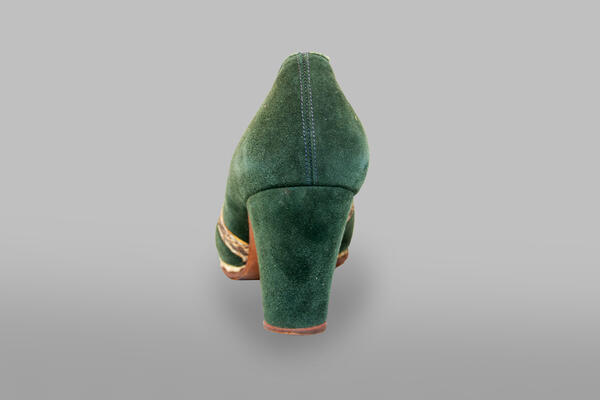
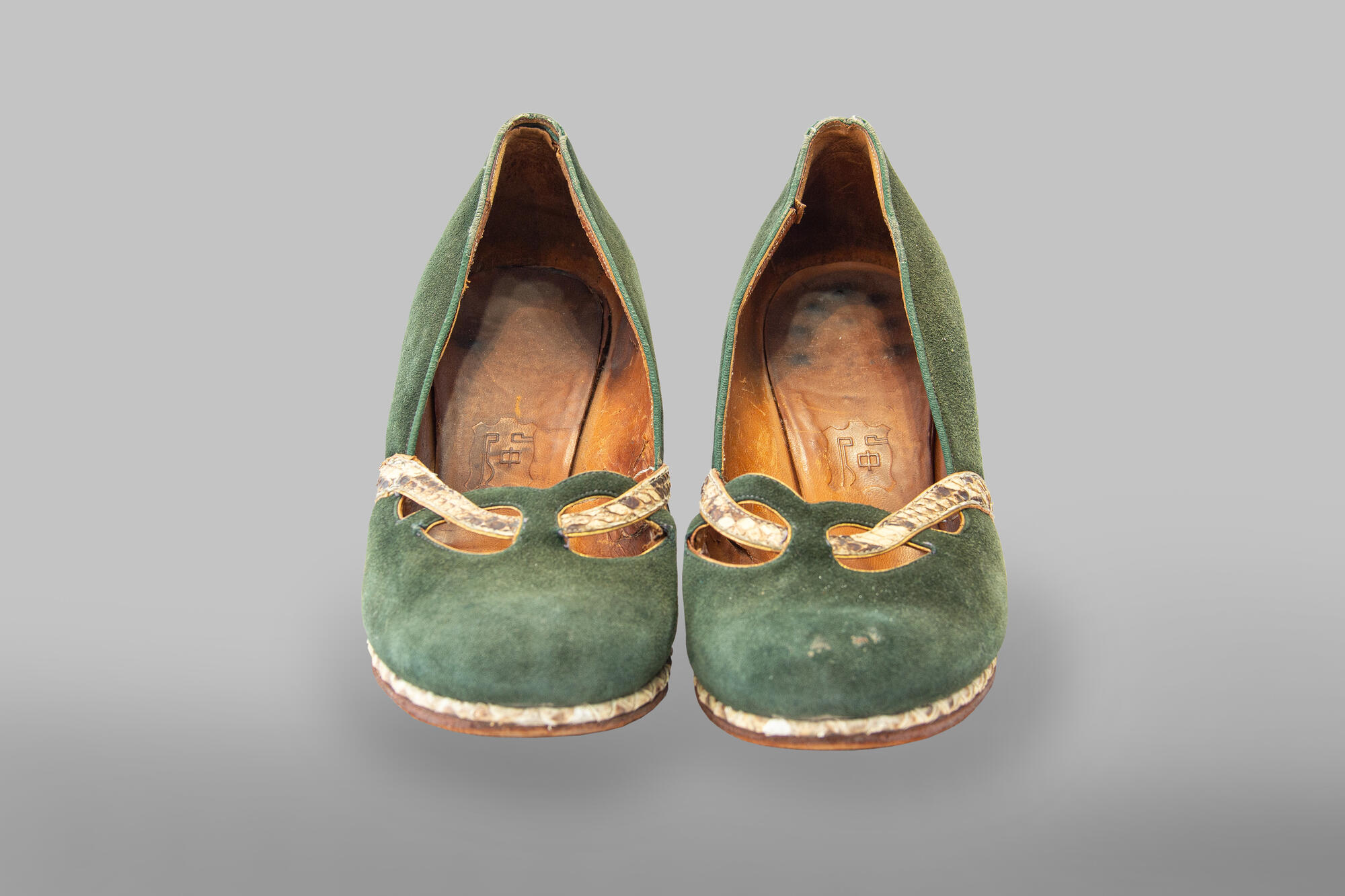
The pumps are made of green suede. The toe box is decorated with four holes with a brown leather strap. An 8-centimeter heel is covered in suede. The sole is made of leather. The leather lining is brown
Traditional Tatar footwear included boots “chitek” or “ichigi” — they were worn throughout the year and put on woven stockings. Models with soft skin were used in summer, with rough skin — in winter. Everyday boots were black, festive ones were decorated with mosaic ornaments, appliqué and embroidery. Traditional work shoes resembled Russian bast shoes and were called “chabata”. Boots always curled up at the toe: Tatars believed that one should not hit the native land with toes.
Traditional men’s and women’s shoes were different. Women’s shoes were distinguished by the fact that they had a heel, a reduced size of the shaft, and were decorated with beads, a border, appliqué and embroidery. Galoshes (“kevesh”, “kata”) have remained an everyday pair of boots. And the shoes (“bashmak”) were considered to be for festive occasions. Shoes were patterned and often had heels. Women’s slippers were made of velvet, richly embroidered with gold and silver threads, beads and freshwater pearls. In winter, everyone wore felt boots (“kiezitek”, “pima”, “puima”) — both short and high ones. Wealthy Tatars wore colored “Kukmor” felt boots. The famous felting factory appeared in the village of Kukmor in 1867 and now operates as the Kukmor Felt-Fulling Factory.
The pumps are made of green suede. The toe box is decorated with four holes with a brown leather strap. An 8-centimeter heel is covered in suede. The sole is made of leather. The leather lining is brown