The village of Embaevo, located on the left bank of the Tura River, was founded by Bukharans. Siberian Tatars also lived in the area, although there were few of them. Judging by the census of 1782, 597 people lived in Embaevo, of which 95 were Siberian Tatars.
Residents of Embaevo were engaged in agriculture, cattle breeding, fishing, felt and leather production. The Bukharans brought the craft of dressing leather and making Russian leather (“yuft”), and the Tatars and Russians adopted it from them. Leather was made at the enterprise of Gabdulla Niyazov. The enterprise employed two artisans and four laborers, who manufactured shoes and horse harness and conducted the trade. The traditions and art of the entire Tatar people, closely connected with the Russian people, were followed in the manufacture of national products. “Chobots” and shoes are old Russian products that were borrowed from the Tatars. At all times, the national costume, including shoes, served as one of the criteria for national identity.
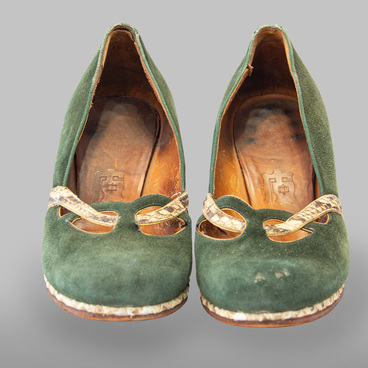
Today, the collection of the Embaevo village museum contains unique ancient examples of rawhide leather shoes, Tatar-style bast shoes (“chabata”), which were considered work shoes, because they were as light and comfortable as possible. In winter, the Tatars wore short and high felt boots, as well as leather boots with hard soles. For everyday use, they used bast shoes and galoshes, which were worn over woven stockings. And the festive shoes were made of multi-colored leather. Most often, women’s shoes had heels. Tatar women’s shoes for festive events were patterned and made in compliance with ancient traditions using the technique of leather mosaic.
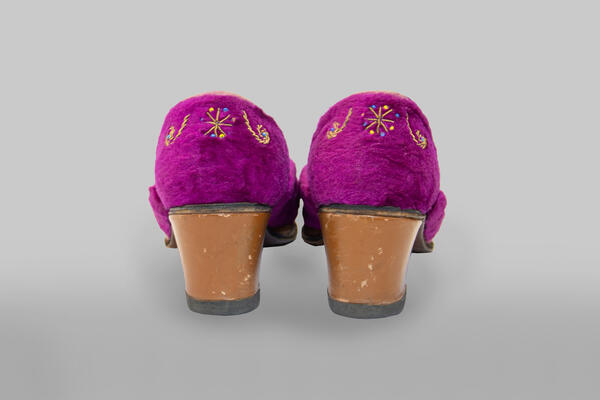
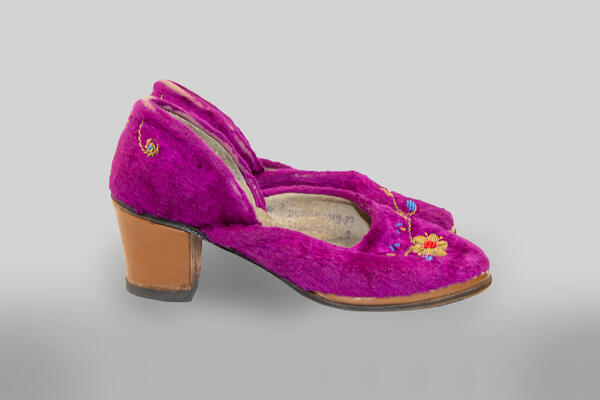
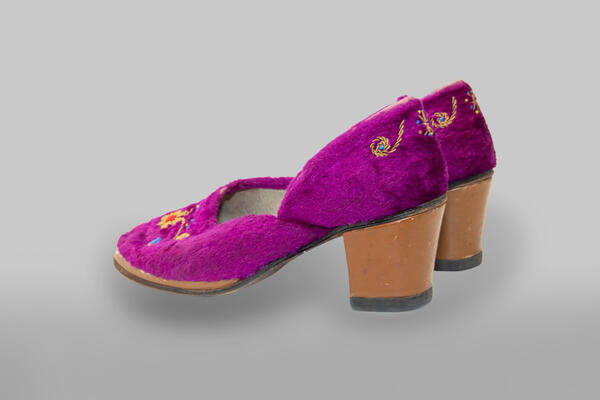
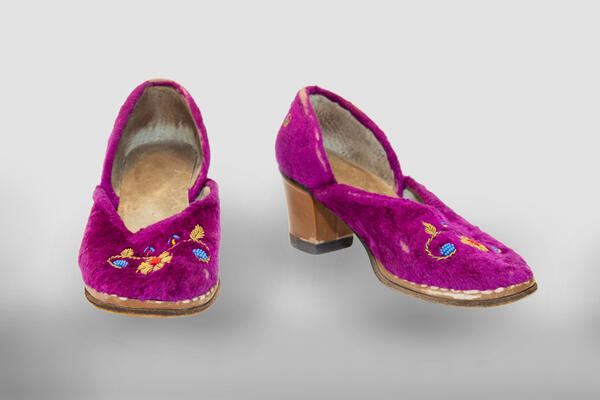
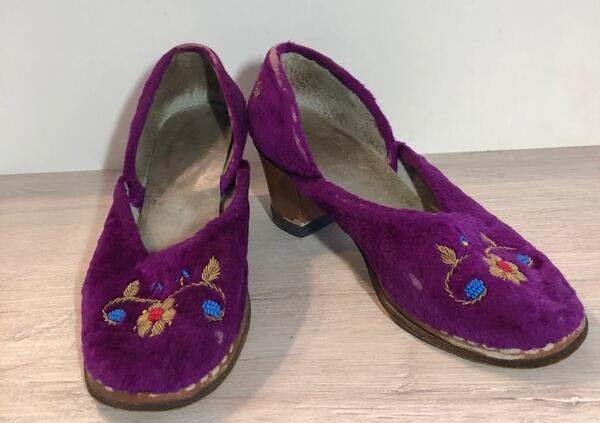
“Oriental colors” were used in the design of women’s pumps. The upper part is made of purple plush, the toe cap and back are decorated with beaded floral embroidery, and the high heel is covered in brown leather. The sole of the shoes was also made from leather, the lining — from gray satin. Such shoes were considered very convenient and comfortable. Bright colors and expensive fabrics testified that the wearer had style and taste.
Residents of Embaevo were engaged in agriculture, cattle breeding, fishing, felt and leather production. The Bukharans brought the craft of dressing leather and making Russian leather (“yuft”), and the Tatars and Russians adopted it from them. Leather was made at the enterprise of Gabdulla Niyazov. The enterprise employed two artisans and four laborers, who manufactured shoes and horse harness and conducted the trade. The traditions and art of the entire Tatar people, closely connected with the Russian people, were followed in the manufacture of national products. “Chobots” and shoes are old Russian products that were borrowed from the Tatars. At all times, the national costume, including shoes, served as one of the criteria for national identity.
Today, the collection of the Embaevo village museum contains unique ancient examples of rawhide leather shoes, Tatar-style bast shoes (“chabata”), which were considered work shoes, because they were as light and comfortable as possible. In winter, the Tatars wore short and high felt boots, as well as leather boots with hard soles. For everyday use, they used bast shoes and galoshes, which were worn over woven stockings. And the festive shoes were made of multi-colored leather. Most often, women’s shoes had heels. Tatar women’s shoes for festive events were patterned and made in compliance with ancient traditions using the technique of leather mosaic.
“Oriental colors” were used in the design of women’s pumps. The upper part is made of purple plush, the toe cap and back are decorated with beaded floral embroidery, and the high heel is covered in brown leather. The sole of the shoes was also made from leather, the lining — from gray satin. Such shoes were considered very convenient and comfortable. Bright colors and expensive fabrics testified that the wearer had style and taste.