

In the Tatar tradition, both women and men wear jewelry. Men’s jewelry is limited to rings and belt buckles. A much greater variety of women’s jewelry is associated with the Muslim tradition, when a man’s wealth is determined by the amount of expensive clothes and precious jewelry belonging to his women.
Jewelry was one of the brightest elements in the Tatar women’s look. It matched harmoniously all the elements of the national costume, which was a unique system of folk arts and crafts. Traditionally, Tatar women wore a large number of jewelry — its total weight reached six kilograms. These were items made of silver, turquoise, jasper, coral, and amber. Earrings are one of the most archaic and consistent elements in the costume of Tatar women. Girls put on earrings at the age of three or four and wore them until old age. Tatar women wore and still wear round three-bead earrings to decorate their faces and almond-shaped earrings with pendants. In addition to the traditional earrings, Tatar women also wore earrings borrowed from the Russians, the peoples of the Caucasus, Central Asia and Kazakhstan.
The main materials for making jewelry were silver and gold. Tatar jewelers skillfully used all kinds of jewelry techniques. Turquoise, corals, mother-of-pearl, malachite, carnelian, amethyst, aquamarine, and ruby were used for inlays, but mostly jewelers made use of imitation materials.
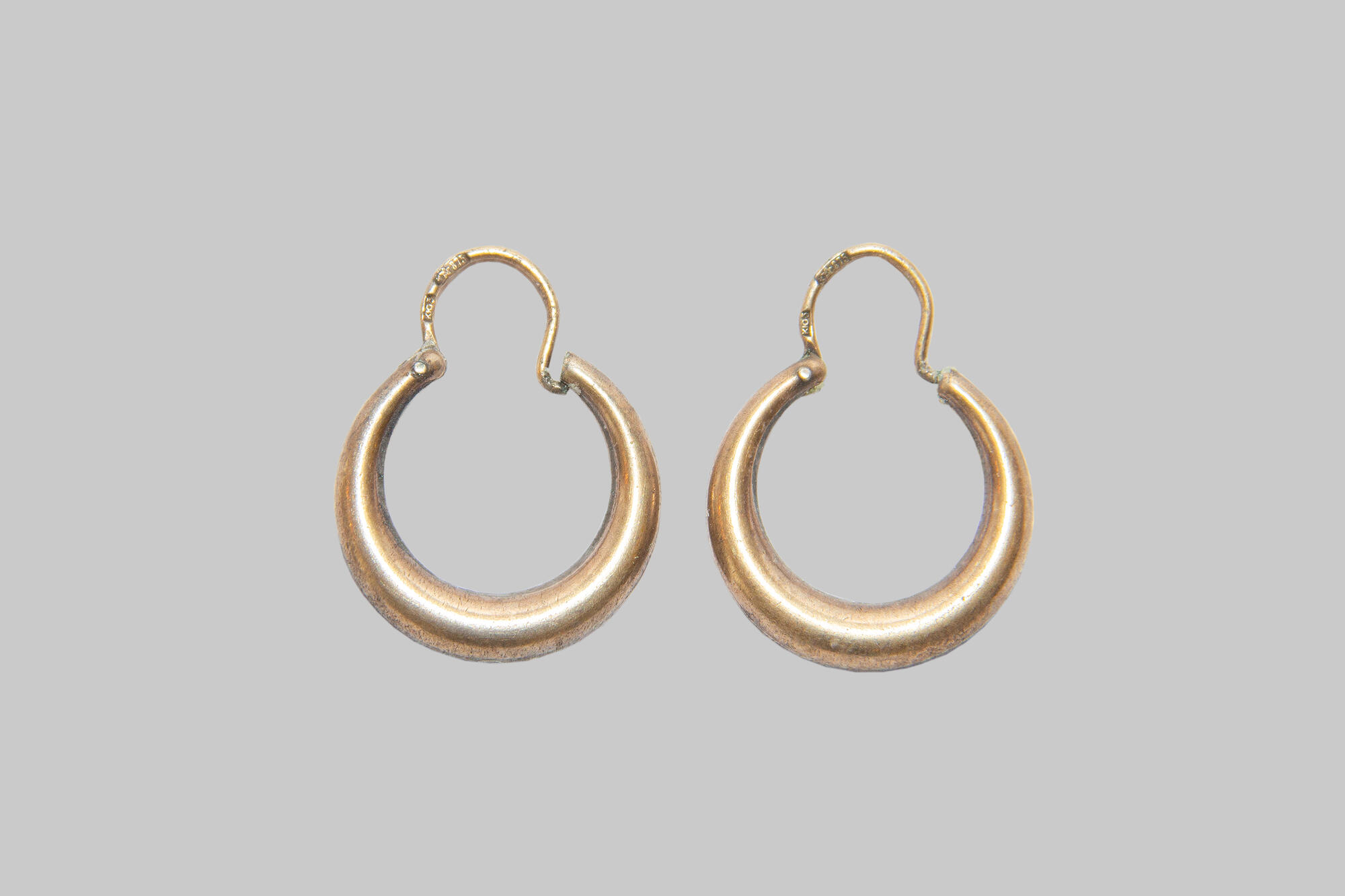
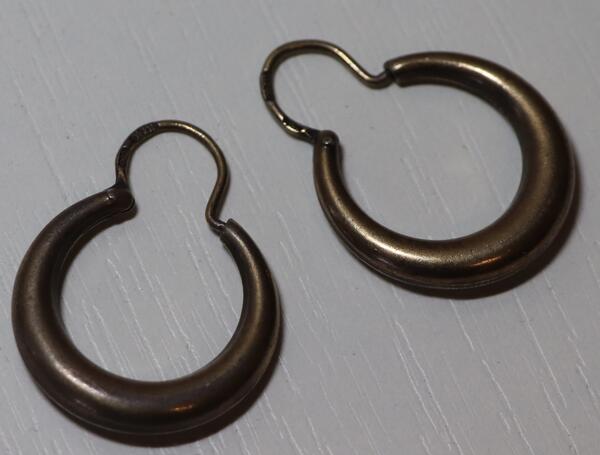
The museum exhibit — the “inflated” earrings — is a moon-shaped ring that is hollow inside and has a detachable movable arc. The main difference between solid and hollow jewelry is that the former is made from solid wire, while the latter has a metal wire inside, which is smelted at one of the production stages using special chemical procedures.
“Inflated” jewelry means that spectacular jewelry of large sizes can be purchased at an attractive price. The main advantage is that such items are ergonomic — they are easy and comfortable to wear. Voluminous, “inflated” earrings have been at the peak of popularity for a long time. These “inflated” earrings were used by the family of Albina Gubaidullina, a resident of the village of Embaevo.
Jewelry was one of the brightest elements in the Tatar women’s look. It matched harmoniously all the elements of the national costume, which was a unique system of folk arts and crafts. Traditionally, Tatar women wore a large number of jewelry — its total weight reached six kilograms. These were items made of silver, turquoise, jasper, coral, and amber. Earrings are one of the most archaic and consistent elements in the costume of Tatar women. Girls put on earrings at the age of three or four and wore them until old age. Tatar women wore and still wear round three-bead earrings to decorate their faces and almond-shaped earrings with pendants. In addition to the traditional earrings, Tatar women also wore earrings borrowed from the Russians, the peoples of the Caucasus, Central Asia and Kazakhstan.
The main materials for making jewelry were silver and gold. Tatar jewelers skillfully used all kinds of jewelry techniques. Turquoise, corals, mother-of-pearl, malachite, carnelian, amethyst, aquamarine, and ruby were used for inlays, but mostly jewelers made use of imitation materials.
The museum exhibit — the “inflated” earrings — is a moon-shaped ring that is hollow inside and has a detachable movable arc. The main difference between solid and hollow jewelry is that the former is made from solid wire, while the latter has a metal wire inside, which is smelted at one of the production stages using special chemical procedures.
“Inflated” jewelry means that spectacular jewelry of large sizes can be purchased at an attractive price. The main advantage is that such items are ergonomic — they are easy and comfortable to wear. Voluminous, “inflated” earrings have been at the peak of popularity for a long time. These “inflated” earrings were used by the family of Albina Gubaidullina, a resident of the village of Embaevo.