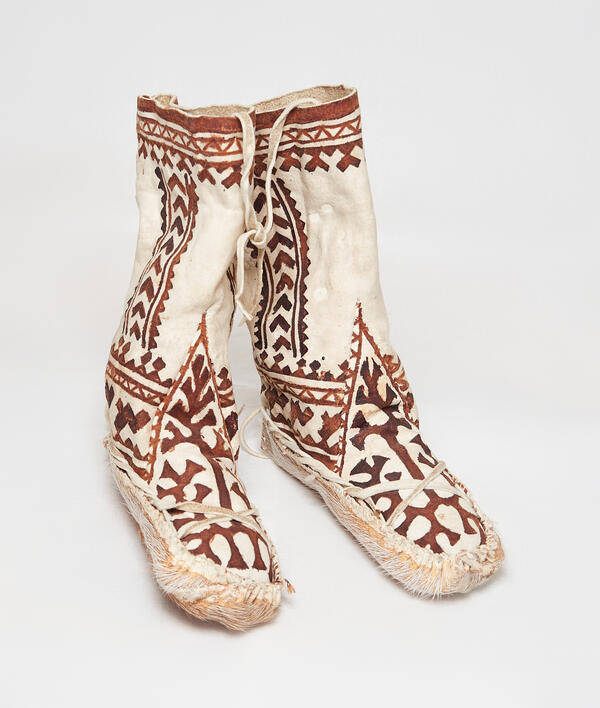
In a Khanty family, women managed all household chores. In addition to everyday tasks, they were engaged in the processing of skins and leather, including the preparation of various solutions for softening, dyeing and gluing materials. Garments were spun, woven and knitted, belts and mats were woven using threads made of tendons, wool and vegetable fibers. Women’s duties also included the harvesting and processing of birch bark, in particular, the manufacture of birch bark roofing, dishes and other utensils.
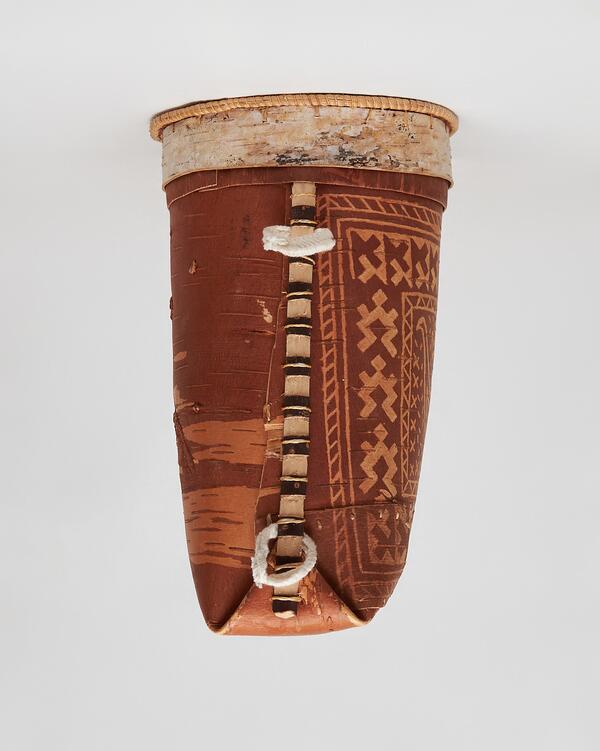
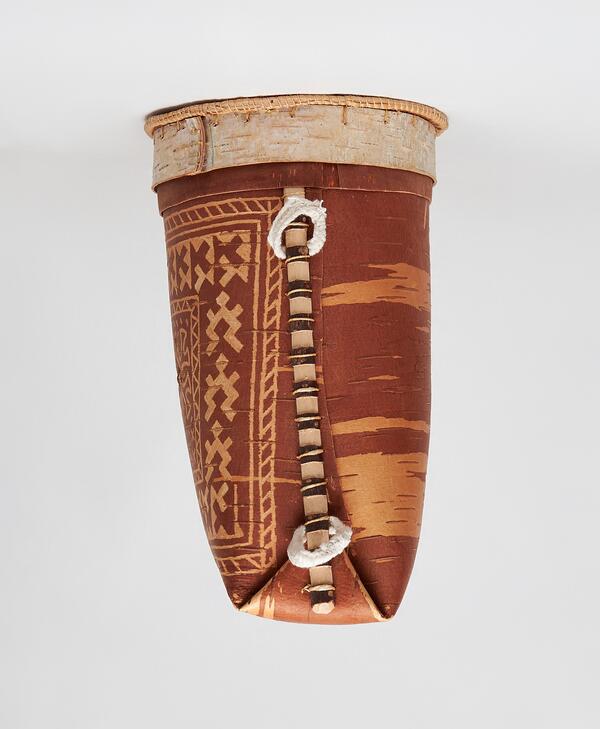
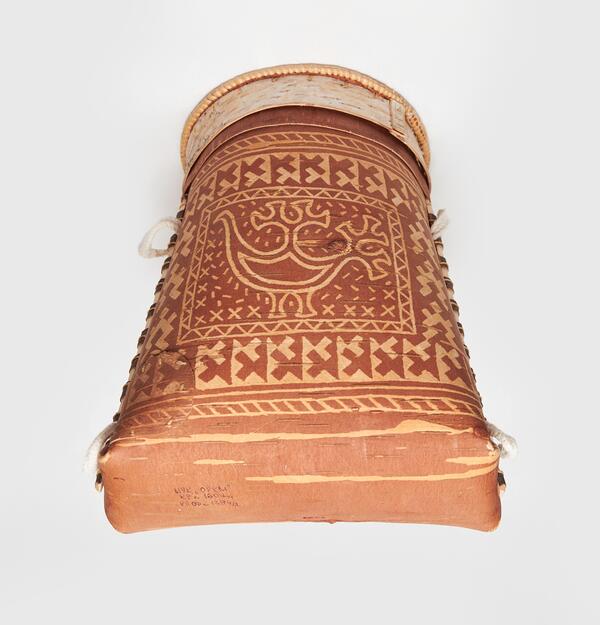
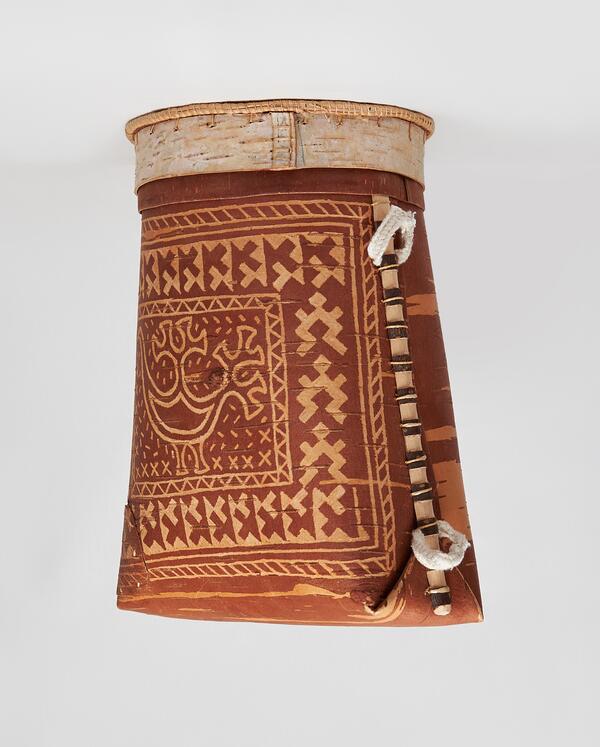
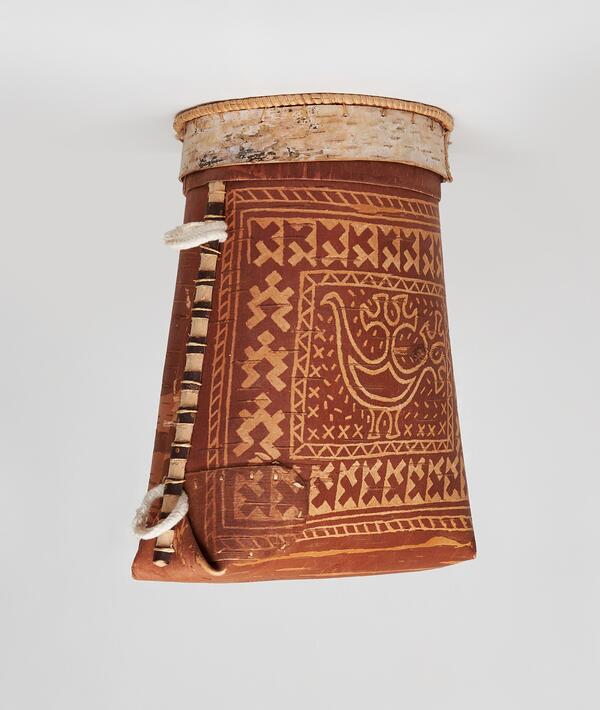
Each woman had braided cylindrical or oval birch bark boxes with a tightly fitted bottom and lid. Such a box was called a tuyes. Birch bark and an insulating layer between the outer and inner walls made these containers airtight. They kept the contents dry and had bactericidal properties. Often, a tuyes was used as a thermos. Salt and pickles (which acquired a special taste), and honey were stored in them; in a tuyes, linseed, sunflower and hemp oil would not go rancid, even if stored for a long time; dairy products would not curdle, and drinks would keep their temperature. Vegetables, cereals, and flour were kept in larger containers. Going to the forest for blueberries, raspberries, cranberries and strawberries, women also brought a tuyes container with a handle.
In the early 20th century, the Tobolsk local historian Grigory Matveyevich Dmitriyev-Sadovnikov described in detail the process of harvesting and processing of removing birch bark for such products.
The harvesting time was determined by natural signs: spring crust, rosehip bloom and autumn leaf fall. When searching for suitable trees with smooth trunks, the Khanty went deep into the woodland, where birches grow among aspens. They made three incisions on the tree — one vertical and two horizontal ones — and manually removed the desired layer of birch bark. For the manufacture of canopies, boats and coverings for the dwelling, large panels of this pliable material were selected. Smaller items, like dishes, floats and hunting calls, were made from sliced layers with a white film removed. The item was sewn with a bird cherry thread; before the appearance of the awl, a piece of rib of a young elk or deer was used.
The finished tuyes container or other object was decorated by embossing, scratching, applique, carving with a separate background, profiling the edges, painting, stamping, impaling or stitching pieces of birch bark painted in different colors.
The presented artifact was made by Agafya Alexandrovna Voldina, People’s Artist of Russia and a specialist in national applied art.