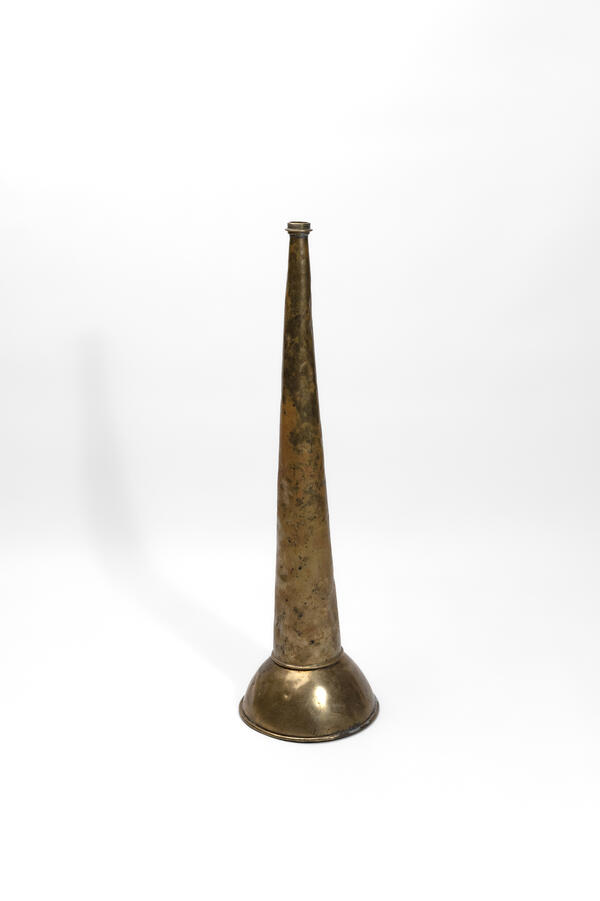
The foghorn is a device used to warn vehicles of navigational hazards such as rocky coastlines, shoals, and headlands. Sometimes, especially in foggy conditions, an audible warning was used to alert boats of the presence of other vessels.
When visual navigation aids such as lighthouses were obscured, foghorns became the main means of communication. Foghorns were also used on ships to help others identify their location in poor visibility conditions. All foghorns used a vibrating column of air to create an audible tone, but the method of setting up this vibration differed.
Some horns, such as the Daboll trumpet, used vibrating plates or metal reeds, a similar principle to a modern electric car horn. Others used air forced through holes in a rotating cylinder or disk, in the same manner as a siren.
Semi-automatic operation of foghorns was achieved by using a clockwork mechanism or “coder” to sequentially open the valves admitting air to the horns. Each horn was given its own timing characteristics to help mariners identify them.
Since automation of lighthouses became common in the 1960s and 1970s, most older foghorn installations have been removed to avoid the need to run the complex machinery associated with them. They have been replaced with electrically powered diaphragm or compressed air horns.
The trumpet from the museum collection is part of a foghorn that was manufactured around the turn of the 20th century. This device belonged to Yakov Feoktistovich Bokin and was installed on the Maria cargo yacht. According to records from 1914, the vessel was built in the village of Nimenga in the Onega Uyezd in 1897.
The vessel was made of pine, spruce, and copper. It had a carrying capacity of 6,000 poods (more than 98 tons). As of 1914, it was registered in the town of Onega.