From the 9th century, the cultivation of flax by Slavic peoples for the production of oil and, most importantly, yarn saw incredible development. Linen fabrics and clothes are repeatedly mentioned in the chronicles, a separate paragraph in the Church Statute of Prince Yaroslav the Wise is dedicated to them.
Under “Property offenses” it is indicated that those convicted of “theft of goods important in agricultural and peasant life, namely: theft of bread, hemp, flax, canvases in pieces” are subject to the spiritual court and payment of penalties.
In 1715, Peter I contributed to the development of Russian linen production by signing the decree “On the Propagation of Flax and Hemp Crafts in all Provinces”. The document called to prepare the land and increase the sowing, as well as to specially train the peasants in this craft “for the benefit of the nation and their personal profit”.
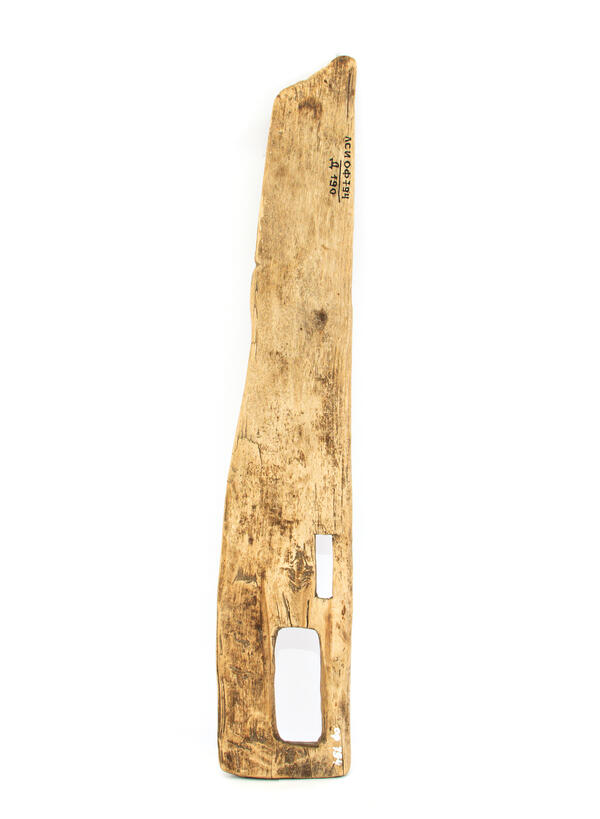
The key point in the processing of flax was cleaning it from the bits of stem. This stage was called scutching, and it was done with a scutching knife. These sword-shaped boards were made thin and light — for weak and tangled flax; and long and heavy — for tough flax with strong and healthy fibers. These tools were made from solid pieces of coniferous wood, maple, oak or birch.
When scutching, the woman would cover her face with a kerchief to protect it from dust, wind a bunch of already crumpled stems on her left hand, laid them out on her knees or threw them over a transverse board nailed to a post, and with her right arm she would beat the flax on both sides with the scutching knife getting rid of the bits of stem and tangled fibers. In addition to fine fibers for yarn, coarse tow was also collected at the end of the work day. The latter was used for weaving ropes and other household needs.
Any man in the village could cut out a fine scutching knife. Craftsmen could then be commissioned to decorate the tool with carvings or paintings — such products were considered a good gift for a bride or a young wife. In addition to the patterns, the initials of the owner were often carved on the wood. This mark helped identify the tailor-made scutching knife among others and avoid the tool from going missing.
In the popular consciousness, a scutching knife in the hands of a woman was equated to an ax in the hands of a man. Working with both required endurance and considerable physical strength.