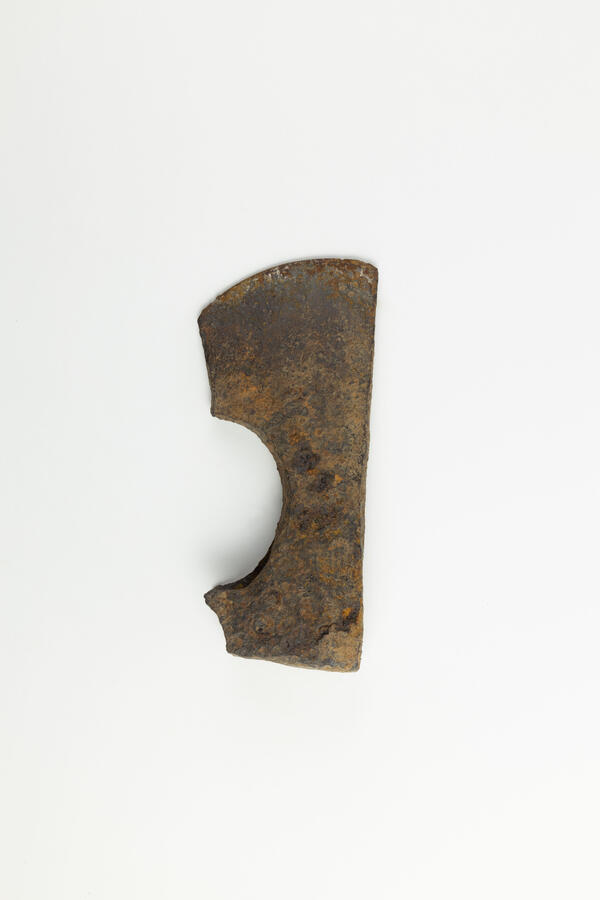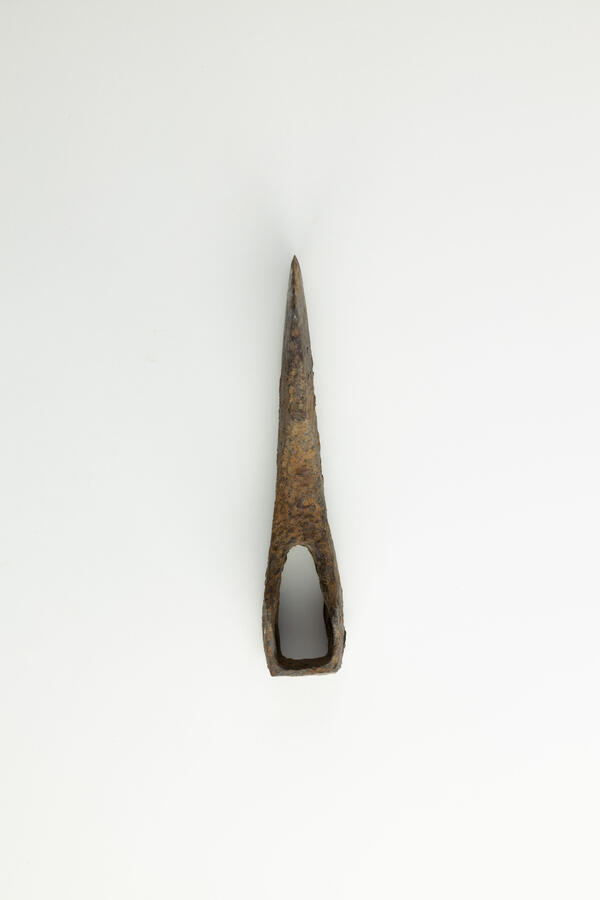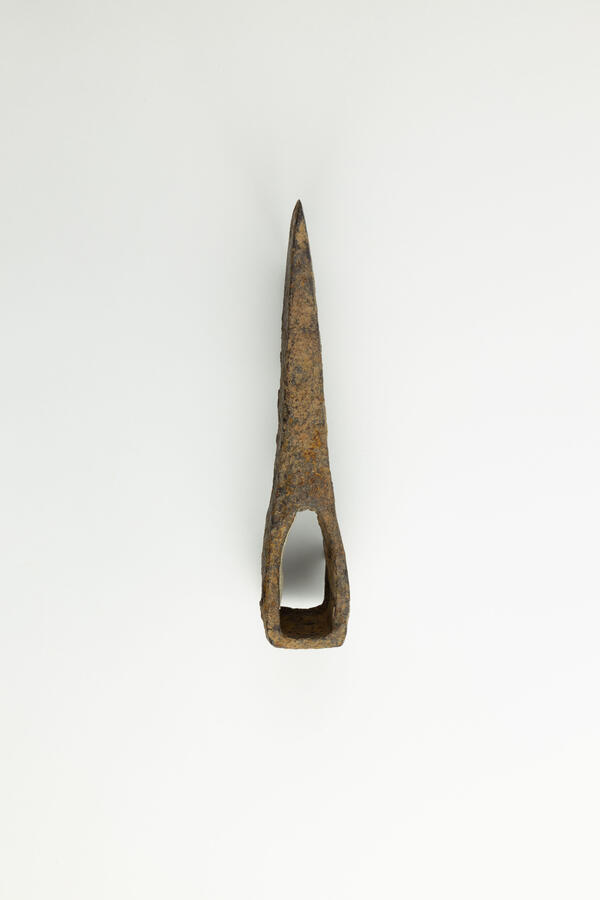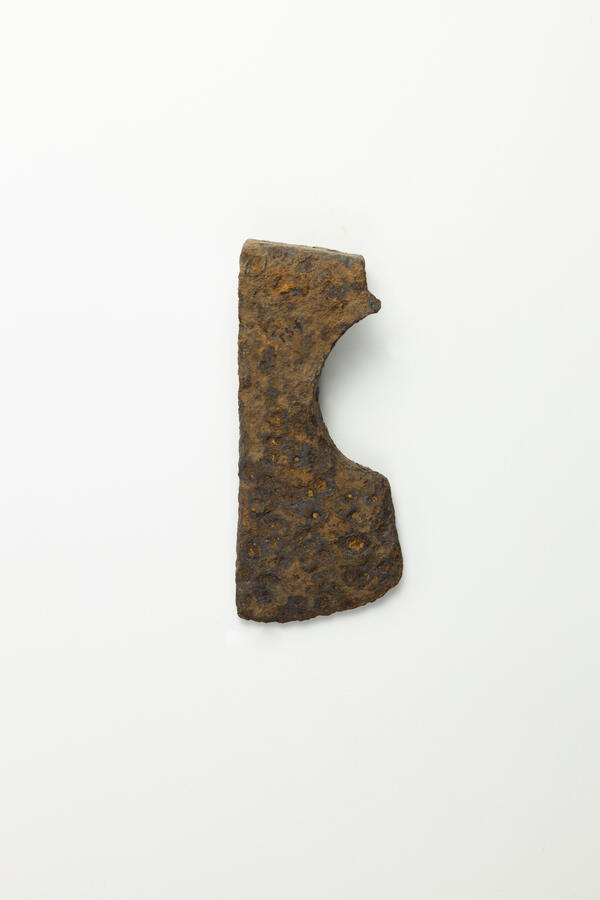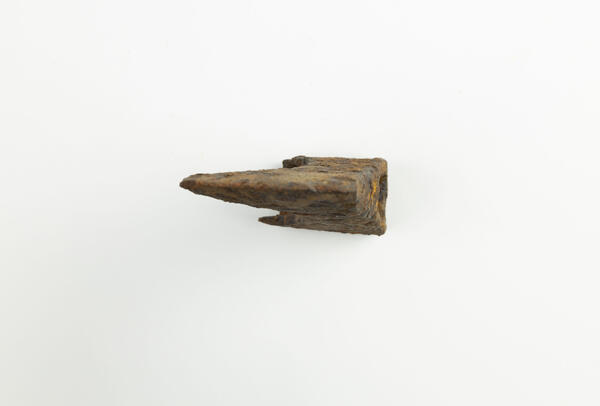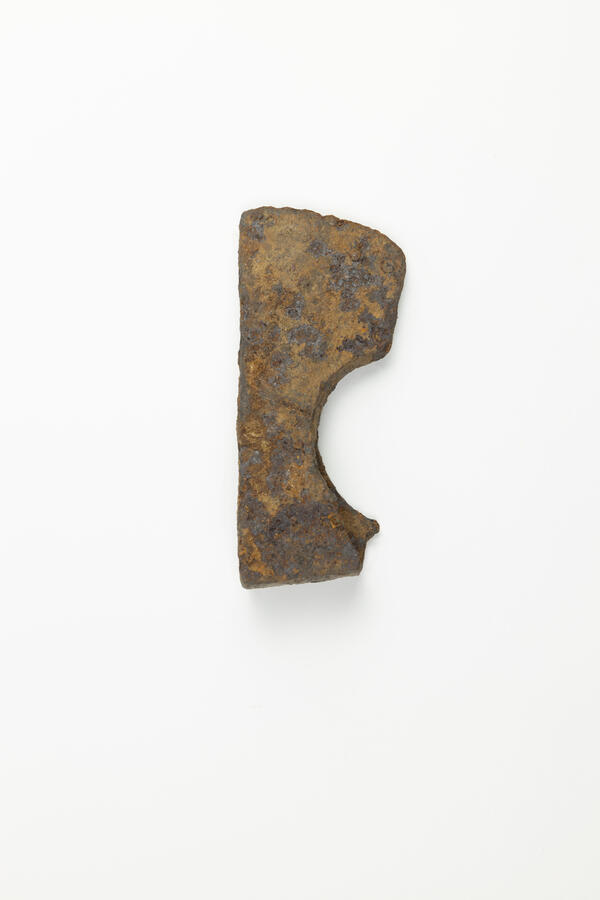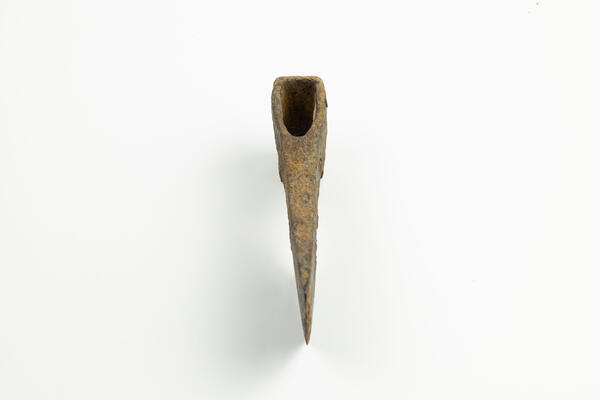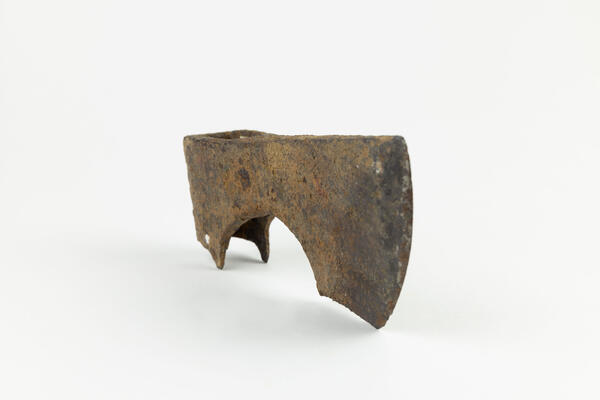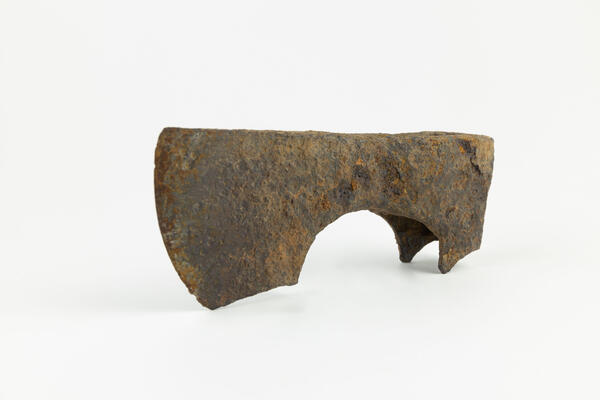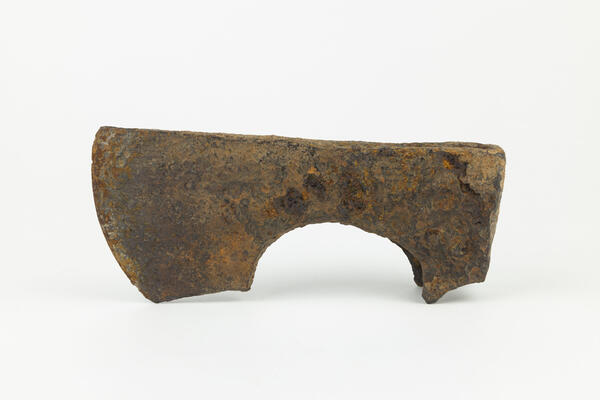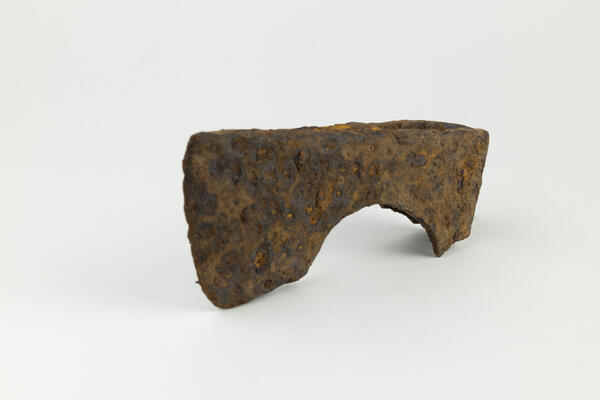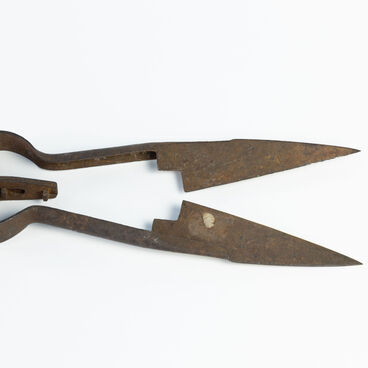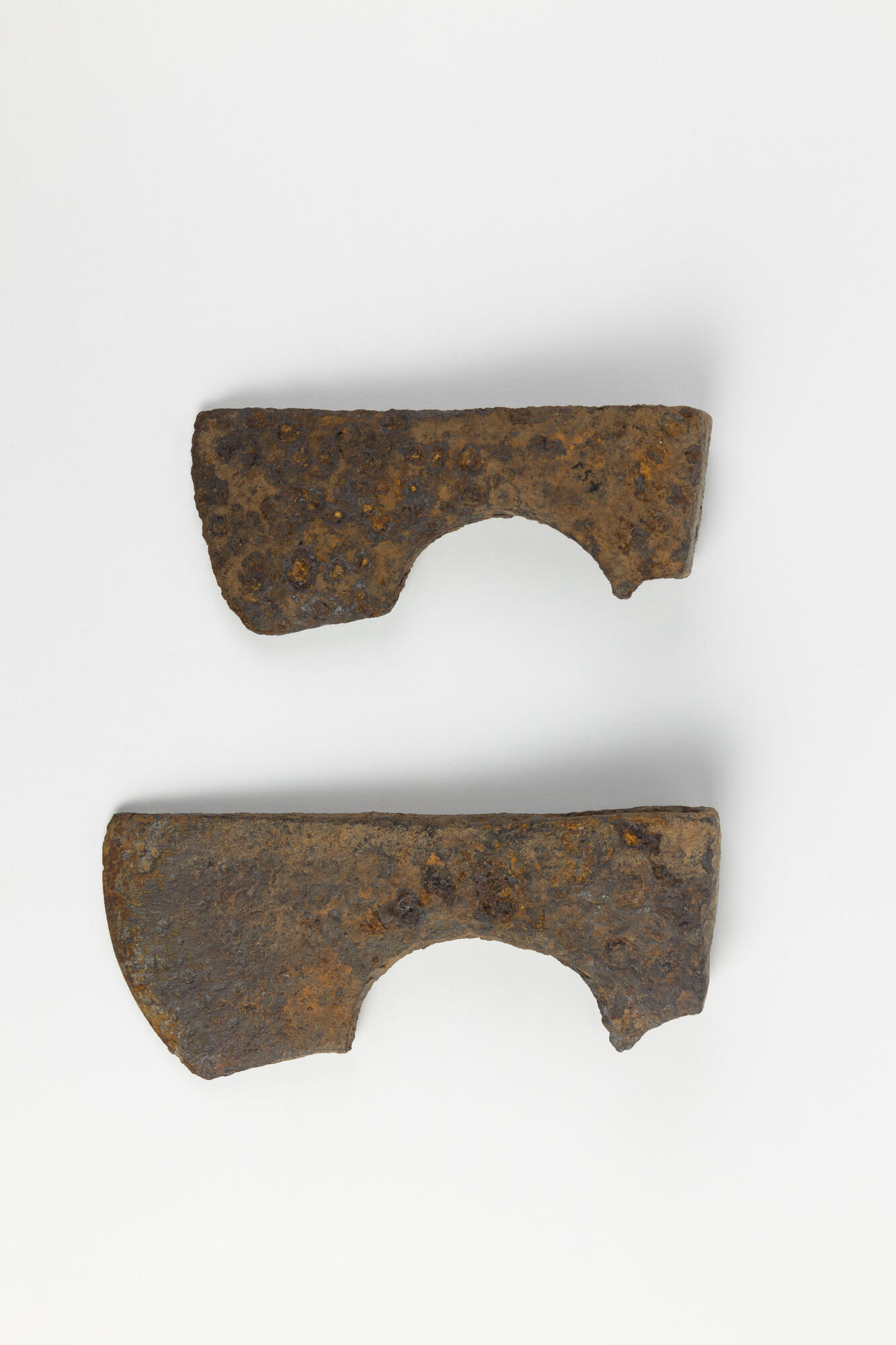


The eyed axes from the collection of the Glazov Museum were used by lumberjacks to clean up the forest for crops. Slash-and-burn agriculture is one of the most ancient and primitive farming method. The ancestors of the northern Udmurts cut down tree trunks in the forest, waited for them to dry out, then chopped down the trunks and burned them. The remaining hard soil around the stumps and between the roots was tilled by using iron pick-axes, and then, after sowing the grain, harrowed. The ash fertilized the soil well, and in difficult climate conditions, they had a better harvest.
The axes were found during excavations at the medieval settlement of Idnakar. Idnakar is a major archaeological site of federal significance. It has preserved the largest number of artifacts that help recreate the culture and way of life of the ancestors of the northern Udmurts. Idnakar literally translates as “the city of Idna”. The Udmurt epic about the ancient heroes led by Dondy tells the legend of how the hero Idna founded a settlement on a mountain and began to reign over the Udmurts who lived in the Cheptsa River area.
Idnakar was well protected by a moat and a rampart, and had an advantageous geographical location — it was on a mountain. It produced everything that was necessary for its population, as it was a craft and trade center of the Kama-Cheptsa interfluve. Skilled ceramists, blacksmiths, metallurgists, spinners and bone-cutters worked there. Animal husbandry and agriculture were also well developed in Idnakar.
Axes of different shapes and sizes indicate a high level of skill of metalworkers. Ore was extracted from swampy soils, dried, crushed, fired, sifted, washed and smelted in a blast furnace. The resulting iron — the bloom — was of poor quality, so it was carefully hammered and the remaining slag was “squeezed” out of it. Blacksmiths mastered most of the known methods of metal processing: free hand forging, bending, twisting, cutting, piercing, and welding. They produced tools for land preparation, adzes, knives, arrowheads, tips for spears and darts, elements of horse harness and axes.
A blacksmith was a respected man in the Udmurt settlement. Everyone knew him, because everyone had to contact him and commission a product. It is no coincidence that in the Udmurt language the words “a shop” and “a forge” are the same — kebit.
The axes were found during excavations at the medieval settlement of Idnakar. Idnakar is a major archaeological site of federal significance. It has preserved the largest number of artifacts that help recreate the culture and way of life of the ancestors of the northern Udmurts. Idnakar literally translates as “the city of Idna”. The Udmurt epic about the ancient heroes led by Dondy tells the legend of how the hero Idna founded a settlement on a mountain and began to reign over the Udmurts who lived in the Cheptsa River area.
Idnakar was well protected by a moat and a rampart, and had an advantageous geographical location — it was on a mountain. It produced everything that was necessary for its population, as it was a craft and trade center of the Kama-Cheptsa interfluve. Skilled ceramists, blacksmiths, metallurgists, spinners and bone-cutters worked there. Animal husbandry and agriculture were also well developed in Idnakar.
Axes of different shapes and sizes indicate a high level of skill of metalworkers. Ore was extracted from swampy soils, dried, crushed, fired, sifted, washed and smelted in a blast furnace. The resulting iron — the bloom — was of poor quality, so it was carefully hammered and the remaining slag was “squeezed” out of it. Blacksmiths mastered most of the known methods of metal processing: free hand forging, bending, twisting, cutting, piercing, and welding. They produced tools for land preparation, adzes, knives, arrowheads, tips for spears and darts, elements of horse harness and axes.
A blacksmith was a respected man in the Udmurt settlement. Everyone knew him, because everyone had to contact him and commission a product. It is no coincidence that in the Udmurt language the words “a shop” and “a forge” are the same — kebit.