Font
Color
Graphics
Изображение точки

To see AR mode in action:

1. Install ARTEFACT app for iOS or Android;

2. Find the exhibition «Rus and Horde: 14th Century Warfare»

3. Push the «Augmented reality» button and point your phone's camera at the exhibit;

Скрыть точки интересаПоказать точки интереса
Показать в высоком качестве

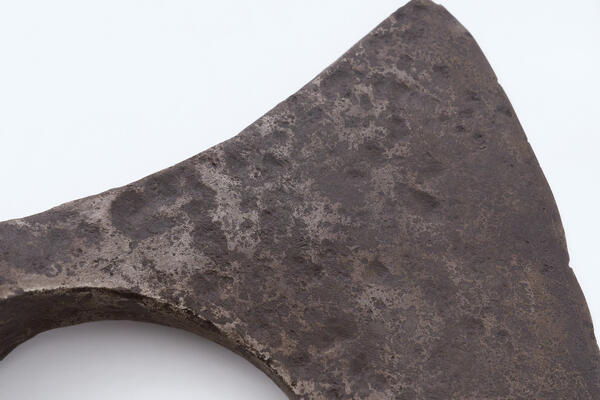
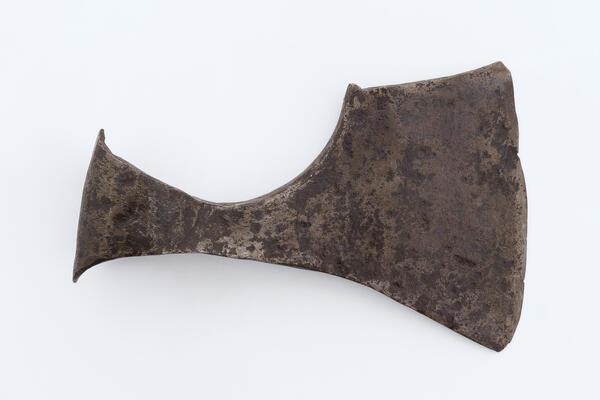
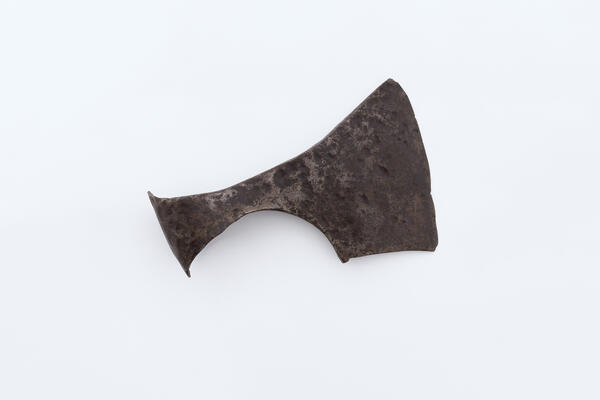
Ax

Creation period
the 12th–14th centuries
Place of сreation
Rus
Dimensions
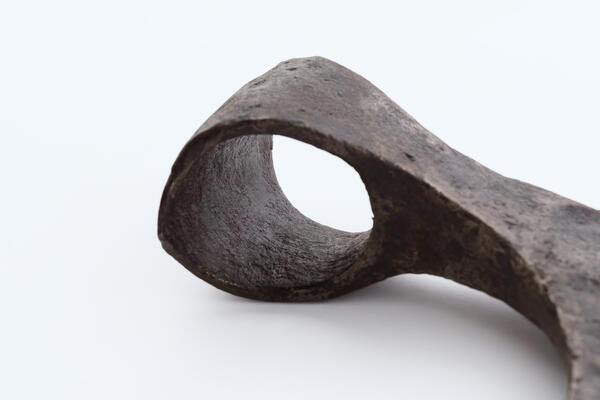
length — 19 cm; blade width — 12,3 cm; sleeve diameter — 3,7 cm
Technique
iron, forging
1
Open in app
#2
The battle ax on display at the Kulikovo Field Museum-Reserve was part of the offensive weapons used by warriors in the 12th–14th centuries.


An ancient Russian warrior could use various types of cold arms, including battle axes. Over the centuries, these weapons constantly evolved. As they had to be carried during campaigns, they became lighter and smaller.


In battle, the ax was effective due to its precision and power. A well-placed strike could shatter a wooden shield. Chain mail and soft armor could not protect the wearer against the crushing force of an ax blow.


In their book “Armament”, Anatoly Nikolayevich Kirpichnikov and Alexander Filippovich Medvedev wrote,
#4

The history of the battle ax is determined by two contradictory trends. The dominance of cavalry relegated the ax to a plebeian weapon; however, advancements in armor and the strengthening of infantry once again elevated it to a popular means of warfare. Unlike infantry, cavalrymen rarely used various axes — especially battle axes.

#5

Approximately 1,600 axes have been discovered on the territory of Ancient Rus. These axes can be divided into three groups:

#6
  1. specialized battle axes, which were decorated, have a characteristic design and are rather small;
  2. pole axes resembling working axes but smaller, used for both military and everyday purposes;
  3. large and heavy working axes that were apparently rarely employed in warfare.
#7

During the Middle Ages, axes became widespread across Ancient Rus. This process began during the pre-Mongol period, in the 12th century. During the Late Middle Ages — when the Battle of Kulikovo occurred — axes remained part of the armament of Russian warriors, although they were not as common as before. The displayed pole ax closely resembles those used before the Mongol invasion. However, the diamond-shaped design of the outer edges of its eye suggests that it dates from the second half of the 14th century.

#3
Ax
#8
View in the State Catalogue
read morehide
00:00
00:00
1x

Ax

Creation period
the 12th–14th centuries
Place of сreation
Rus
Dimensions
length — 19 cm; blade width — 12,3 cm; sleeve diameter — 3,7 cm
Technique
iron, forging
1
Point your smartphone camera to open in the app
Share
VkontakteOdnoklassnikiTelegram
Share on my website
Copy linkCopied
Copy
Open in app
To see AR mode in action:
  1. Install ARTEFACT app for 
  2. iOS or Android;
  3. Find and download the «Paintings in Details» exhibition
  4. Push the «Augmented reality» button and point your phone's camera at the painting;
  5. Watch what happens on your phone screen whilst you flip through the pictures.
 
We use Cookies
Cookies on the Artefact Website. We use cookies to ensure that we give you the best experience on our website. If you continue without changing your settings, we'll assume that you are happy to receive all cookies on the Artefact website. However, if you would like to, you can change your cookie settings at any time.
Learn more about useHide
Content is available only in Russian

X

Нашли опечатку?...

%title%%type%