The art of woodworking is almost as old as agriculture. People who lived near a forest inevitably used this material to make their dwellings, furniture, tools and household utensils like spinning wheels, looms, spoons, and fishing gear, as well as sleds and carts.
The Candidate of Historical Sciences Andrey Nikolaevich Toropov calls the ax and the adze the oldest and most popular carpentry tools.
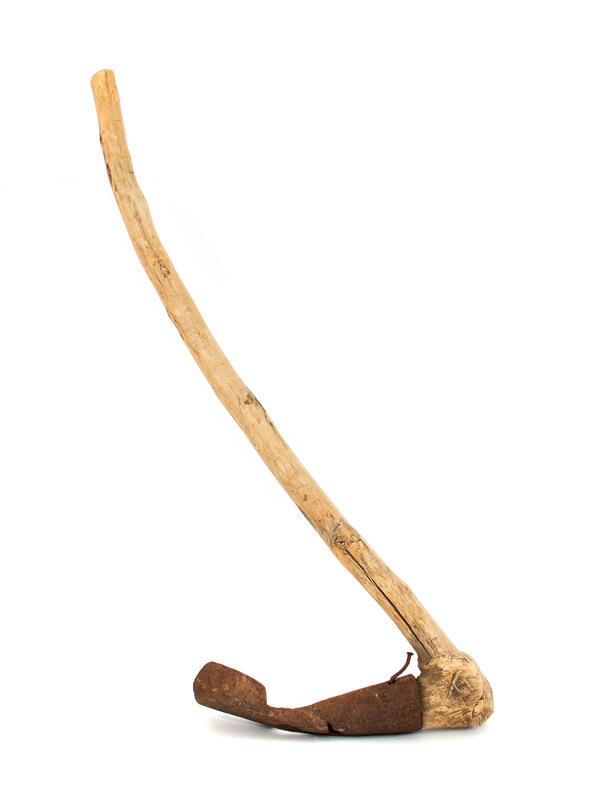
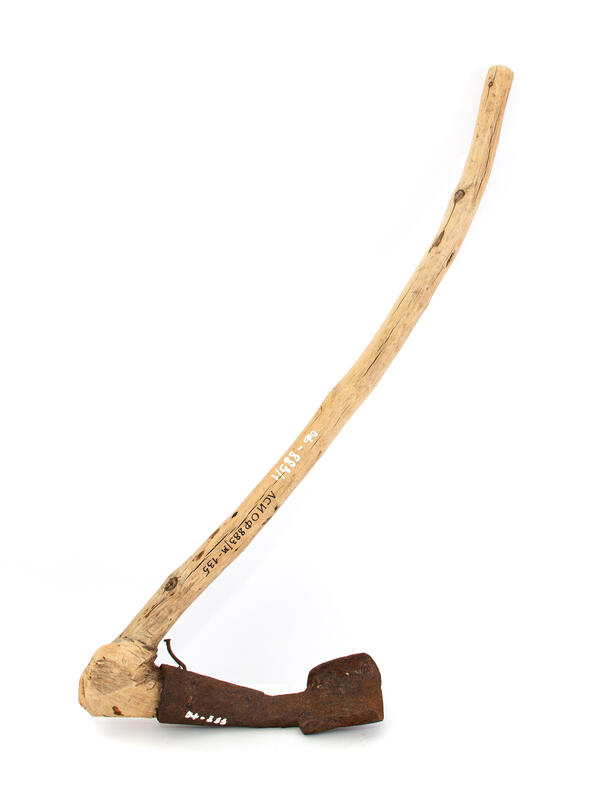
Adzes vary in weight (heavier ones are used for rough shaping, lighter ones for detail work) and shape of the blade, which can be straight or rounded. Ones with rounded blades are more in demand: they are suitable for trimming the inner corners of a log house, making dugout boats, barrels, troughs and other rounded containers. They are also used for creating a round profile, for example, when cutting mortises in logs. There are two stages to making a mortise. First of all, a U-shaped profile was achieved by rough ax cutting; then one needed to scrape the wood out of hard-to-reach places with the help of a hand adze.
Adzes were required to carve out all kinds of grooves (from shallow log grooves to deep ones for making gutters). One used an adze to make a smooth transition between a round log and a flat door and window openings, trimming out the “round corners” in the interior.
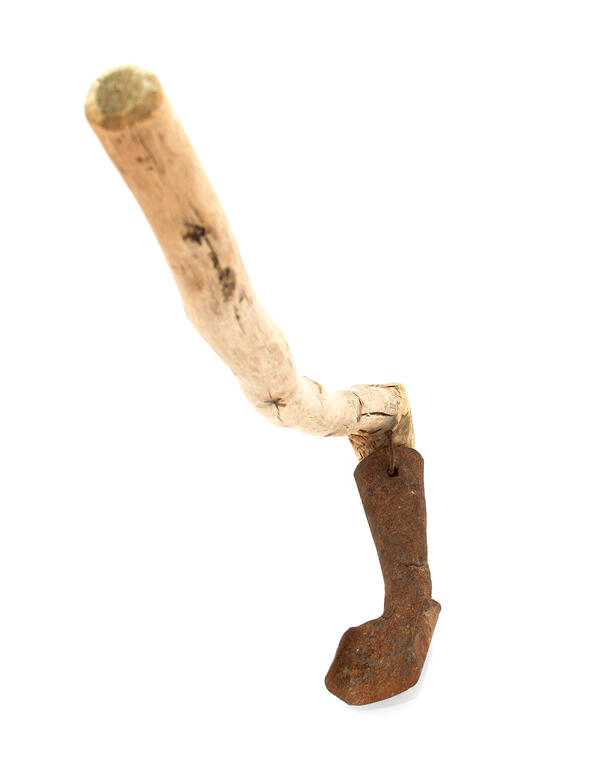
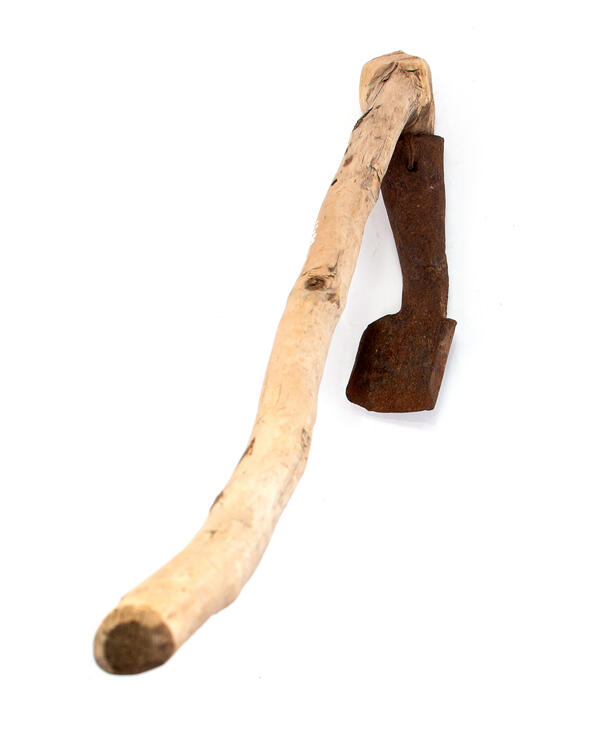
The first adzes were made of stone or mammoth tusks; later — from copper, bronze and iron. With the discovery of iron, the tool took the shape of an ax. To make carving more convenient, the working edge of the adze was widened and rounded, sometimes giving it the shape of a gutter or a scoop.
Handles were usually made of hardwood, and depending on the tool’s purpose, they were of different length. When carving small objects like spoons, the master squeezed the workpiece between his knees and used a short-handled adze. If the workpiece was heavy and bulky, it was laid on the ground and handled with a longer adze, which significantly reduced the carpenter’s workload.
According to the Soviet archaeologist Boris Alexandrovich Kolchin, the design of the tool remained virtually unchanged from the 9th–10th century until the 20th century.